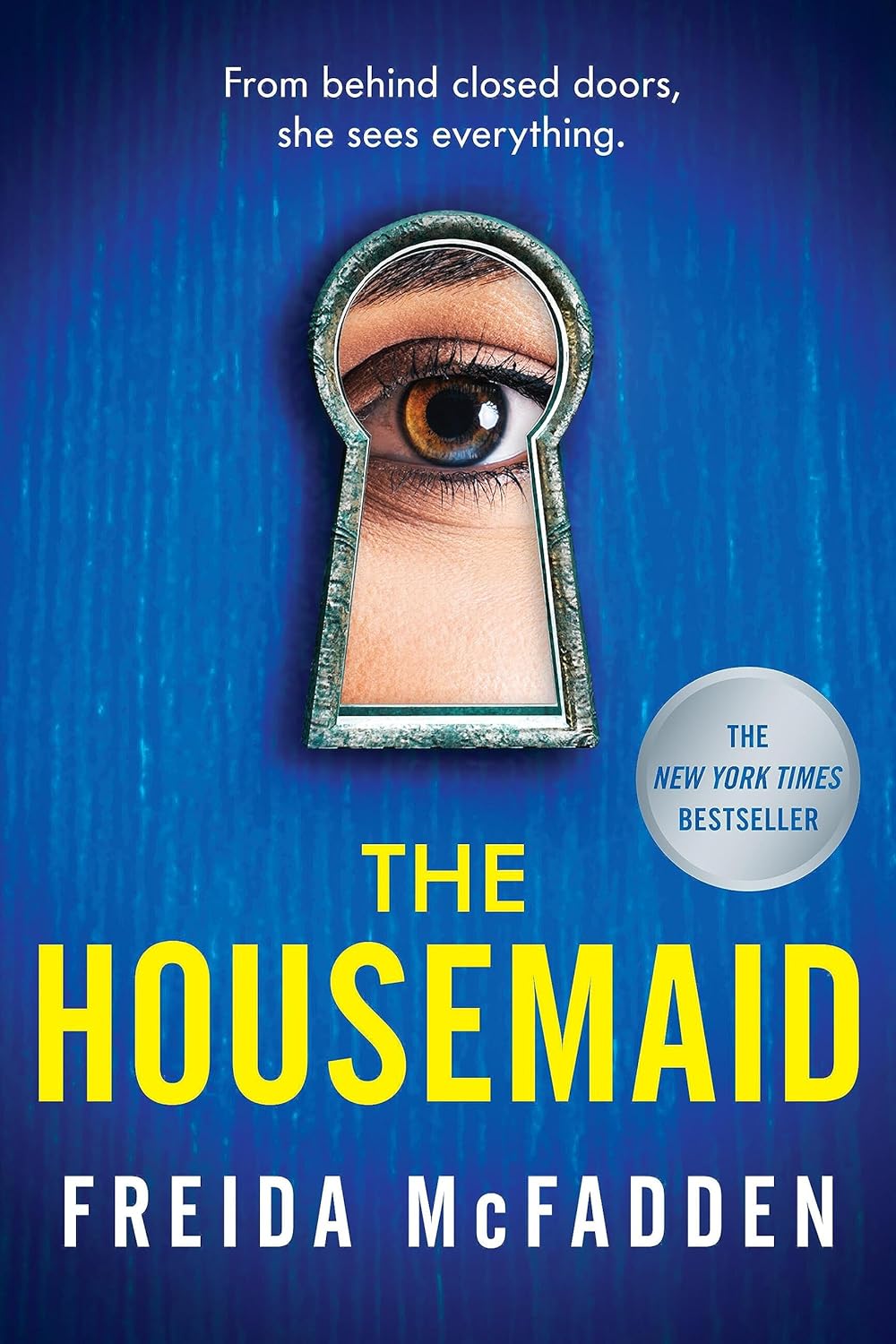
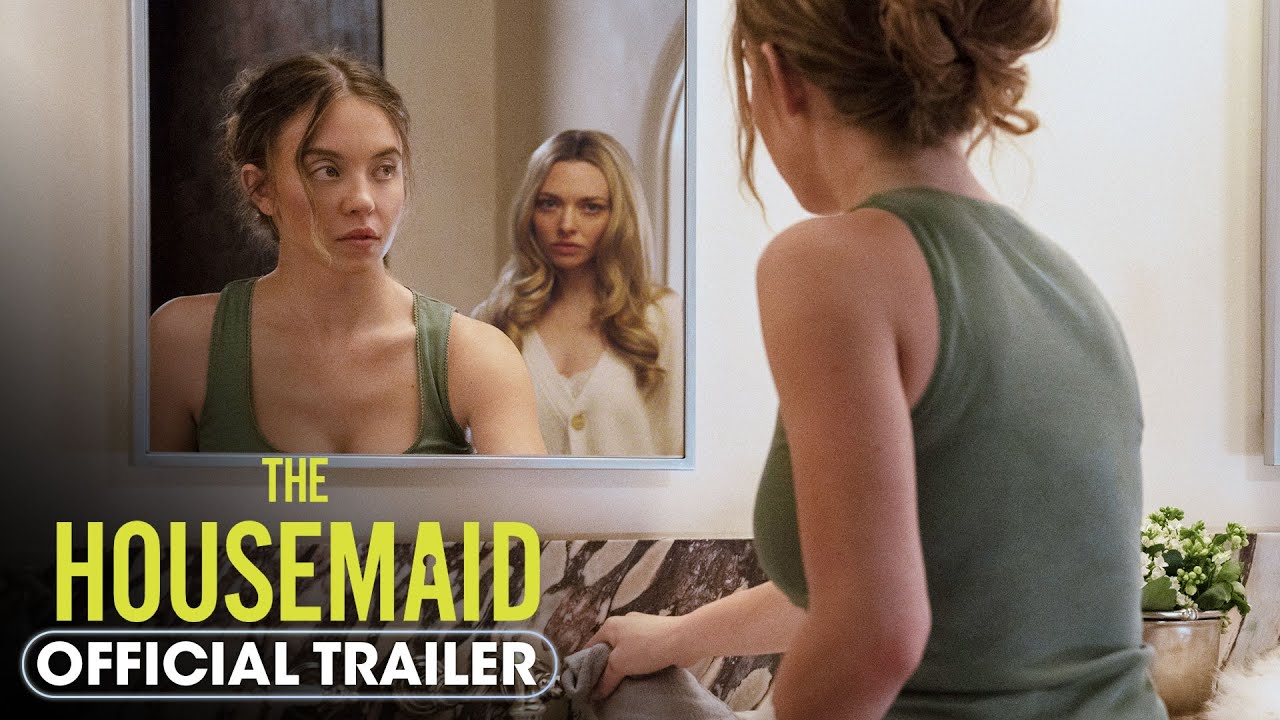
The Story in Brief
Millie Calloway, recently released from prison for a crime she claims was self-defense, takes a job as live-in housemaid for the wealthy Winchester family in Great Neck, Long Island. Her employers are Nina Winchester — brittle, demanding, prone to sudden rages — and Andrew, Nina's handsome and seemingly sympathetic husband. Their young daughter Cece is quiet and watchful. The pay is extraordinary, the house is beautiful, and Millie's quarters are a locked attic bedroom with a bolt on the outside.
Freida McFadden's novel became a BookTok phenomenon in 2022, selling over three million copies and spawning two sequels. Paul Feig's film adaptation, released in December 2025, starred Sydney Sweeney as Millie and Amanda Seyfried as Nina. It grossed nearly four hundred million dollars worldwide and earned generally positive reviews, with particular praise for Seyfried's performance. Lionsgate announced a sequel within two weeks of release.
The story is a twist-driven psychological thriller in the tradition of Gone Girl and The Woman in the Window, built around a carefully constructed revelation about who the real protagonist is and what is actually happening inside the Winchester house. Both versions hinge on that twist, though they deliver it with different levels of accumulated dread.
| Character | In the Book | In the The Movie |
|---|---|---|
| Millie Calloway Sydney Sweeney |
First-person narrator with a voice of dry observation and carefully revealed calculation; her prison record and wariness define her perspective. | Sweeney plays her with interior wariness and watchful silence, though the performance lacks the novel's narrative voice and some critics found it too subdued. |
| Nina Winchester Amanda Seyfried |
Brittle, unpredictable, and cruel, but ultimately revealed as more victim than villain; McFadden's Nina is straightforwardly pitiable once the twist lands. | Seyfried's most discussed performance — theatrical, volatile, and more interesting than the book's version; she plays Nina as a woman performing madness so completely she's lost the boundary. |
| Andrew Winchester Brandon Sklenar |
Charming, sympathetic, and revealed as the story's true monster; McFadden constructs his menace through Millie's gradual realization. | Sklenar plays Andrew with surface charm and underlying menace, though the film's shorter runtime makes his villainy more visible earlier. |
| Cecelia (Cece) Winchester Anya Taylor-Joy (cameo) |
The Winchesters' young daughter, quiet and observant; her presence adds tension but she's not central to the plot. | Aged up slightly in the film; Taylor-Joy's brief appearance as adult Cece in the framing device was a surprise casting choice that divided audiences. |
Key Differences
The Twist's Construction
McFadden's novel is engineered around a revelation that reframes the entire narrative — Millie is not the vulnerable ex-con she appears to be, and Nina is not the villain. The novel holds this twist with precision across 300 pages, using first-person narration to control what the reader knows and when.
The film preserves the twist but the 110-minute runtime means less accumulation of misdirection. Readers of the novel will clock the mechanics more easily than first-time viewers, and even viewers unfamiliar with the book may sense the reversal coming. Feig's direction is less interested in sustained dread than in genre pleasure, which makes the twist feel more like a satisfying genre move than a genuine shock.
Amanda Seyfried's Nina
Seyfried's performance is the film's most discussed element and its strongest asset. Her Nina is theatrical, unpredictable, alternately threatening and pitiable — a woman who has internalized a form of performance so completely that she no longer knows where it ends.
This is more interesting than the novel's Nina, who is more straightforwardly a victim once the twist reveals Andrew's abuse. Seyfried plays Nina as someone performing madness, performing victimhood, performing wealth, until the performances collapse into something genuine. Critics who found the film uneven largely exempted Seyfried. She earned a Golden Globe nomination and is considered a likely Oscar contender.
Sydney Sweeney's Millie
Sweeney's Millie divided critics. Some found her performance too interior for a thriller, others felt she captured Millie's wariness and calculation precisely. The challenge is that McFadden's Millie is rendered in first person, which gives her a voice of dry observation that Sweeney cannot replicate through expression alone.
The novel's Millie is funny, sharp, and gradually revealed as far more dangerous than she appears. Sweeney's Millie is watchful and guarded, but the performance lacks the novel's wit. The film adds a framing device — Millie narrating the story to a police detective — that attempts to restore some of the book's narrative voice, but it feels grafted on rather than organic.
Feig's Tonal Shift
Paul Feig directed A Simple Favor and brought a similar quality of knowing camp to The Housemaid. The film is aware of its genre pleasures and leans into them — the production design is lush, the score is melodramatic, and Seyfried's performance is pitched at a level of theatricality that signals the film is enjoying itself.
This is partly what made it commercially effective and partly what divided critics who wanted a straighter thriller. The novel is somewhat more earnestly tense; McFadden plays the genre straight and trusts the twist to deliver the payoff. The film is more interested in being entertaining than suspenseful, which makes it a better communal viewing experience but a less gripping solo one.
The Attic as Metaphor
Both versions use the locked attic bedroom as the story's central spatial metaphor — the space that contains the secret the house is built to hide. In the novel, Millie's confinement in the attic is claustrophobic and sustained; McFadden gives the reader extended time inside Millie's imprisonment, which makes the eventual revelation of what the attic represents more powerful.
The film's attic is effectively menacing — production designer Jess Gonchor made it feel both prison and tomb — but the shorter runtime means less time spent inside it. The film also adds a visual motif of Nina staring up at the attic ceiling from below, which makes the metaphor more explicit than the novel's approach. It's effective but less subtle.
Yes. The novel's twist lands harder when built over the full reading experience, and McFadden's construction of the reveal is more satisfying with the accumulated dread of 300 pages. The film's twist is effective but abbreviated — the shorter journey means less investment in the misdirection and less payoff when it's revealed. Reading first also allows you to appreciate how Feig adapted the novel's structure, particularly the challenge of translating first-person narration to screen.
That said, the film is worth watching even if you know the twist, largely because of Amanda Seyfried's performance. Nina is more interesting on screen than on the page, and the film's knowing camp makes it a better communal viewing experience. Read first for the full mechanism, then watch for Seyfried and enjoy the film as a glossy genre exercise that knows exactly what it is.
Should You Read First?
Yes. The novel's twist lands harder when built over the full reading experience, and McFadden's construction of the reveal is more satisfying with the accumulated dread of 300 pages. The film's twist is effective but abbreviated — the shorter journey means less investment in the misdirection and less payoff when it's revealed. Reading first also allows you to appreciate how Feig adapted the novel's structure, particularly the challenge of translating first-person narration to screen.
That said, the film is worth watching even if you know the twist, largely because of Amanda Seyfried's performance. Nina is more interesting on screen than on the page, and the film's knowing camp makes it a better communal viewing experience. Read first for the full mechanism, then watch for Seyfried and enjoy the film as a glossy genre exercise that knows exactly what it is.
McFadden wrote a precision-engineered thriller that rewards its readers with a well-constructed payoff. Feig made a knowingly camp, commercially savvy film of it with one excellent performance at its centre. The novel is the more complete experience. The film is the more entertaining one to watch with an audience. Read first. See both. And if you want more Millie, McFadden wrote two sequels — the film's success means you'll see her again on screen too.