
The Story in Brief
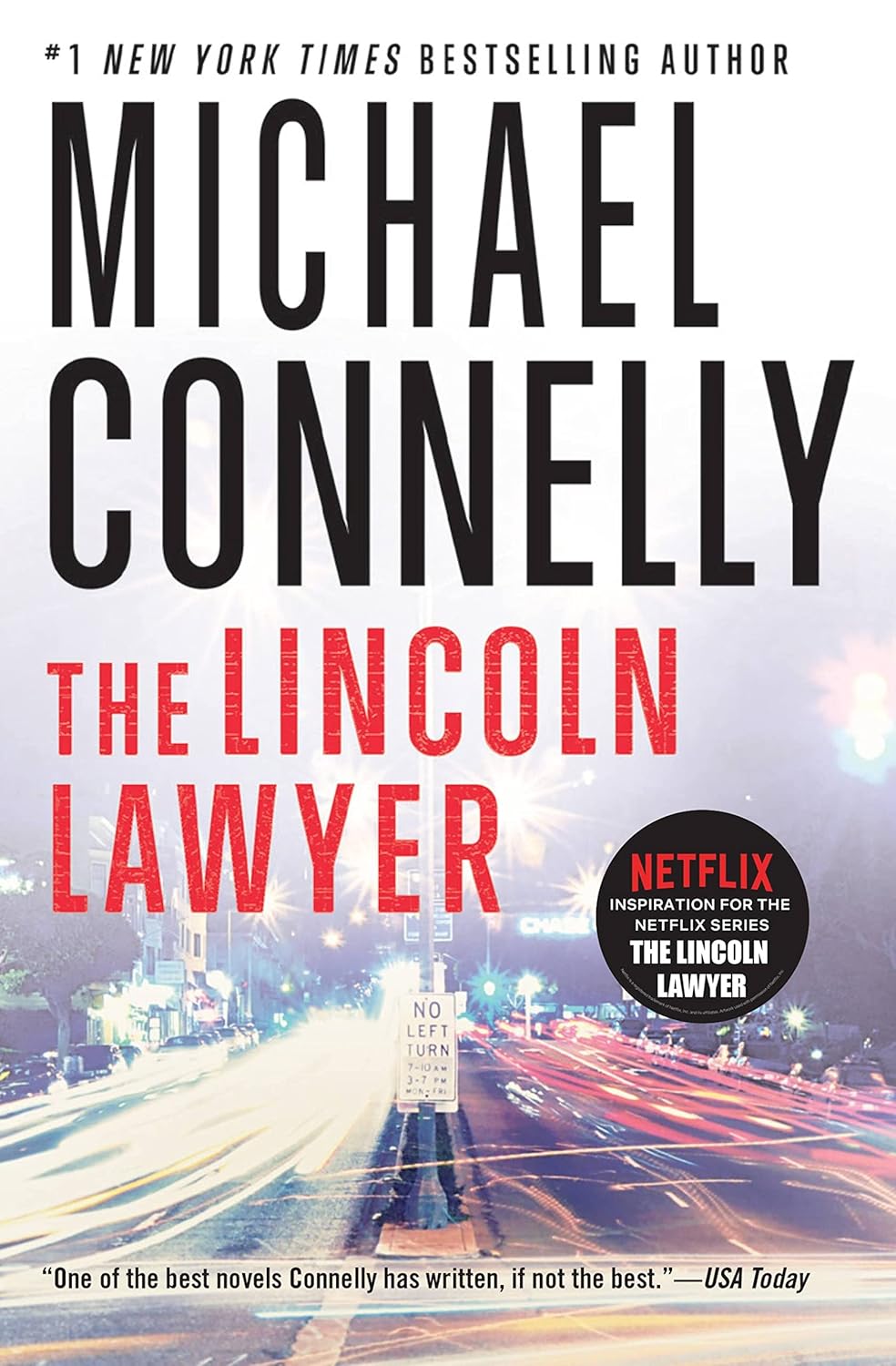
Mickey Haller is a Los Angeles defence attorney who works out of the back seat of his Lincoln Town Car, cycling between courtrooms and clients across the sprawl of the city. He is good at his job — perhaps too good — and has made peace with defending people he knows are guilty. Then he takes on a wealthy client accused of assault, and gradually realises the case connects to an older, uglier crime he may have unwittingly helped commit. Michael Connelly's 2005 novel introduces one of crime fiction's most morally complex protagonists: a man who believes in the system while operating comfortably in its shadows. Brad Furman's 2011 film, with Matthew McConaughey at his most charming, is an efficient, entertaining adaptation that sacrifices the novel's moral weight for forward momentum.
Key Differences
Mickey Haller's moral complexity
The novel is built around a genuine ethical dilemma: a defence attorney bound by privilege and professional ethics who knows his client is guilty of something terrible and cannot act on that knowledge without destroying his career and possibly his freedom. Connelly works through the legal constraints carefully — this isn't a thriller that treats attorney-client privilege as an obstacle to be sidestepped, but as a real and painful bind. The film simplifies this considerably, pushing Haller toward hero status faster than the book earns it.
Matthew McConaughey
The casting is inspired and the performance is one of McConaughey's best from his pre-McConaissance period — charming, sharp, with just enough visible damage to suggest a man who has made compromises he lives with. What the film can't give him is the interior monologue that makes the novel's Haller tick: the specific legal reasoning, the cost-benefit calculations, the professional pride that makes his eventual predicament feel earned rather than convenient.
The procedural detail
Connelly spent time researching LA's criminal defence bar, and it shows: the novel is full of specific, credible detail about how defence attorneys actually work — the fee structures, the relationships with bail bondsmen, the courthouse rhythms, the negotiating dynamics with prosecutors. This procedural texture gives the story its authenticity and makes the legal trap Haller finds himself in feel genuinely inescapable. The film moves too quickly to carry much of this, and loses some of the novel's authority as a result.
The supporting cast
Marisa Tomei as Haller's ex-wife and Ryan Phillippe as the client are both well-cast. Phillippe in particular lands the character's specific blend of entitlement and menace — he is believable as someone Haller might underestimate. The film handles the supporting relationships capably but at a pace that doesn't allow the slow accumulation of unease the novel achieves across several hundred pages.
The Netflix series
Worth noting that a Netflix series launched in 2022 with Manuel Garcia-Rulfo as Haller, and it has had considerably more space to explore Connelly's world across multiple seasons. Readers who want a screen version that goes deeper into the source material may find the series more satisfying than the 2011 film, which is best understood as an entertaining introduction to a character the book knows more fully.
Should You Read First?
Yes — the novel's moral architecture is the experience, and it requires more time than a two-hour film can give it. Read first and the film becomes a well-cast, entertaining companion that captures the surface pleasures of the source. The book is the more complete version of the story Connelly is telling.
Connelly's novel is a meticulous, morally serious legal thriller that earns its ethical dilemma through procedural patience. Furman's film is slick, well-cast, and enjoyable — and moves too quickly to carry the weight the book builds. McConaughey is the right Haller; the film just doesn't give him enough of the book to work with. Read first.