
The Story in Brief
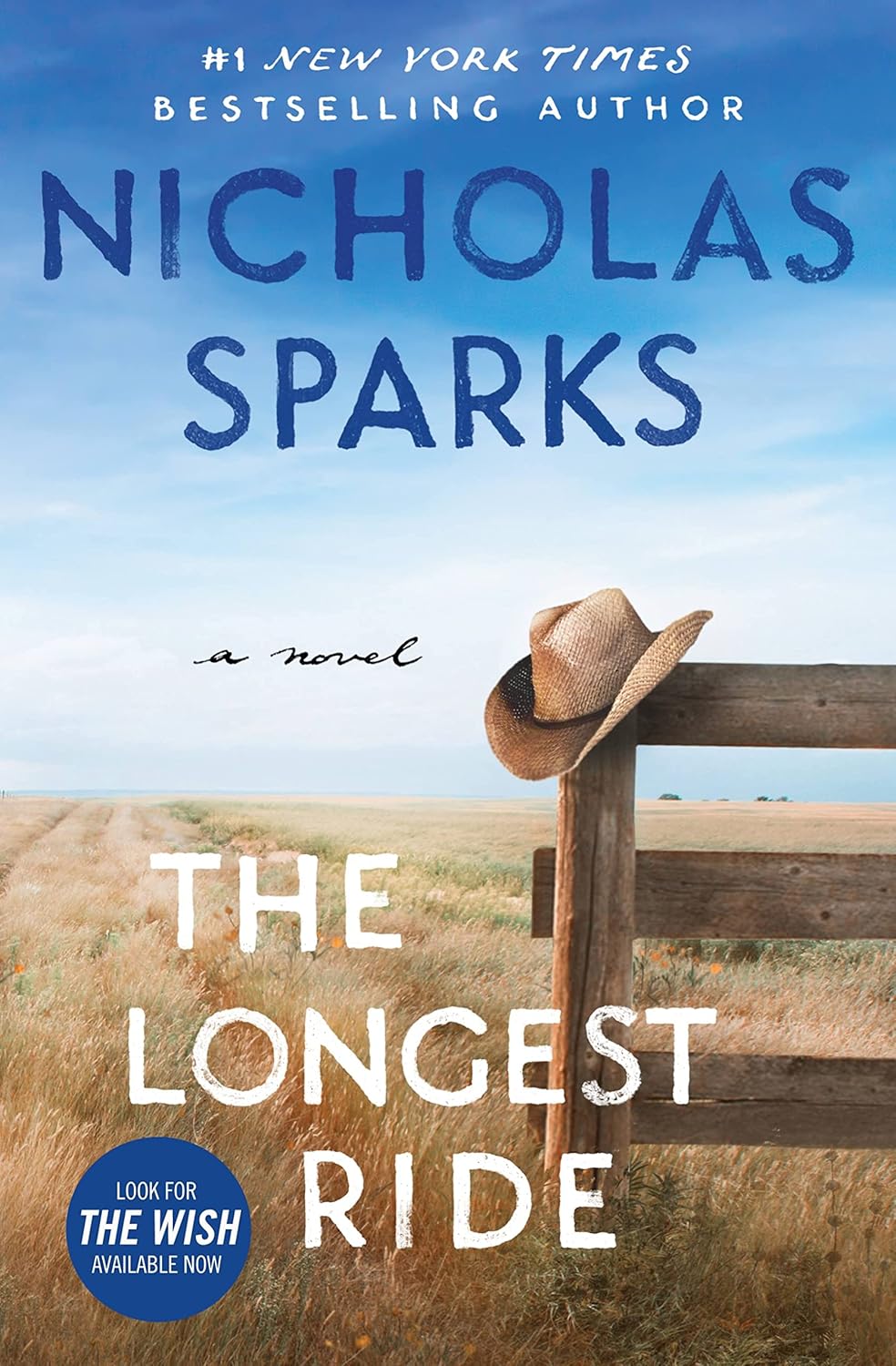
The Longest Ride runs two love stories in parallel across two timelines. In the present, Sophia Danko — an art-loving college senior from New Jersey — falls for Luke Collins, a North Carolina bull rider trying to return to the circuit despite a serious head injury that could kill him if he's thrown again. In the past, Ira Levinson, a ninety-one-year-old Jewish man now trapped in his wrecked car after an accident, relives his decades-long marriage to Ruth through letters and memory. The two stories are linked when Sophia and Luke rescue Ira from the crash and Sophia begins reading Ruth's letters aloud to him in the hospital.
Nicholas Sparks's 2013 novel is his most structurally ambitious, alternating chapters between the two narratives and asking the reader to hold both simultaneously — one about young love facing an uncertain future, the other about a long marriage remembered in its final hours. George Tillman Jr.'s 2015 film, starring Britt Robertson and Scott Eastwood, is a handsome adaptation that simplifies what the novel does carefully. The film earned $62 million domestically against a $34 million budget and received mixed reviews, with critics praising the performances of Jack Huston and Oona Chaplin as the younger Ira and Ruth while finding the present-day romance less compelling.
The novel became a bestseller and marked Sparks's continued dominance in the romantic drama genre, though some critics noted it was more formulaic than his earlier work. The film's release coincided with a wave of Nicholas Sparks adaptations in the 2010s, cementing his status as one of the most reliably adapted authors in contemporary American fiction.
| Character | In the Book | In the The Movie |
|---|---|---|
| Luke Collins Scott Eastwood |
A conflicted bull rider whose interior monologue reveals genuine fear about his injury and pride about his identity, making his decision to return to the circuit morally complex. | Physically perfect casting who handles the romance capably but lacks the interior conflict the novel builds around Luke's dangerous commitment to bull riding. |
| Sophia Danko Britt Robertson |
An art history major with specific knowledge about outsider art and a genuine intellectual passion that connects her to Ira's collection and Ruth's legacy. | Robertson brings warmth and intelligence to the role, though the film reduces Sophia's art world expertise to a plot mechanism rather than a defining trait. |
| Ira Levinson (elderly) Alan Alda |
The novel's first-person narrator for half the book, with a dry wit, precise memory, and deeply felt voice that accumulates across hundreds of pages into Sparks's best character. | Alda is affecting in limited screen time, but the film's structure gives him less room to develop the voice that makes the novel's Ira so distinctive. |
| Ira Levinson (young) Jack Huston |
A Jewish haberdasher from North Carolina who falls for Ruth, an Austrian refugee and art lover, and builds a life around her despite their inability to have children. | Huston and Oona Chaplin are the film's strongest element, bringing genuine emotion to the flashback sequences, though the film moves through their story more quickly than the novel. |
| Ruth Levinson Oona Chaplin |
An Austrian Jewish refugee whose love of art and teaching shapes the collection she and Ira build together, and whose voice comes through in letters that Ira treasures after her death. | Chaplin captures Ruth's warmth and intelligence, though the film can't fully develop her relationship to art and teaching the way the novel does across decades. |
Key Differences
The dual structure is more earned in the novel
The novel alternates chapters between Sophia and Luke's present-day romance and Ira's memories of Ruth, and Sparks earns the thematic connection between them gradually — both are stories about love that requires sacrifice, about choosing a person over a safer life. The film intercuts the two timelines but moves through Ira's story more quickly, which means the parallels feel more asserted than demonstrated.
The book gives you time to live in both relationships before asking you to see them as mirrors of each other. Ira's voice accumulates across two hundred pages before the connection to Luke and Sophia becomes explicit. The film establishes the parallel structure in the first act and then illustrates it, which is efficient but less emotionally resonant.
Ira and Ruth's story loses depth in adaptation
Jack Huston and Oona Chaplin play the younger Ira and Ruth in the film's flashback sequences, and they are affecting — their scenes are the film's emotional high points. But the novel's Ira has the advantage of first-person narration across hundreds of pages. His voice, his specific mix of dry wit and deep feeling, his precise memory of Ruth's habits and expressions, accumulates into something the film can only gesture at.
The novel's Ira remembers the exact way Ruth would tilt her head when she disagreed with him, the specific paintings she loved, the arguments they had about children and art and money. The film's Ira gets montages and key scenes. The novel's Ira is one of Sparks's best characters; the film's Ira is a moving supporting story.
The art world dimension is thinned
Sophia's passion for art history, and Ira's collection of outsider art acquired during his marriage to Ruth, is more fully developed in the novel. Sparks does actual work with the art — specific pieces, specific artists, specific arguments about what art does and why people collect it. Ruth teaches Sophia about the emotional value of art over its market value, and this becomes the thematic link between the two timelines.
The film uses the art collection as a plot mechanism and a visual element without fully inhabiting Sophia's relationship to it. This matters because the art is what connects the two storylines, and its thinning weakens the link. The novel makes you understand why Sophia cares about Ira's collection; the film tells you she does.
Luke's injury carries less moral weight on screen
Luke's decision to return to bull riding despite a traumatic brain injury is the novel's most sustained tension — Sparks gives it real medical weight and genuine moral complexity, making it hard to decide whether Luke is admirably committed or dangerously reckless. The novel spends chapters inside Luke's head as he weighs his identity as a rider against the risk of death or permanent disability.
The film handles this but at a lighter touch, prioritizing the romance over the danger in ways that make Luke's arc feel less earned when it resolves. Scott Eastwood conveys Luke's physical confidence but not the interior fear that makes the book's Luke more interesting. The novel makes you genuinely unsure whether Luke should ride again; the film makes it feel like a romantic obstacle.
The ending's emotional payoff is compressed
The novel's final act — the art auction, the revelation about Ira's collection, and the resolution of Luke and Sophia's relationship — unfolds across fifty pages with careful attention to how each character processes what happens. Ira's death, the reading of his will, and the auction itself are given space to breathe. The film compresses these beats into a fifteen-minute sequence that hits the major plot points but doesn't give them the emotional weight the novel builds.
The novel's ending feels like the culmination of two fully developed love stories; the film's ending feels like a satisfying resolution to a well-constructed plot. Both work, but the novel's version is more affecting because you've spent more time with Ira's voice and Ruth's letters.
Yes — the dual structure is the novel's best quality and it works better across four hundred pages than it does in two hours of screen time. The novel gives Ira a voice that the film can only approximate, and that voice is what makes the book more than a standard Nicholas Sparks romance. Read first and the film becomes a pleasant companion that captures the surface of what the book does, with strong performances from Huston and Chaplin in the flashback sequences.
Watch first and you'll enjoy it without knowing that the novel's Ira is a richer, funnier, sadder creation than the film's version, and without understanding how much more carefully the book earns the connection between its two timelines. The film is a competent adaptation; the book is the fuller experience.
Should You Read First?
Yes — the dual structure is the novel's best quality and it works better across four hundred pages than it does in two hours of screen time. The novel gives Ira a voice that the film can only approximate, and that voice is what makes the book more than a standard Nicholas Sparks romance. Read first and the film becomes a pleasant companion that captures the surface of what the book does, with strong performances from Huston and Chaplin in the flashback sequences.
Watch first and you'll enjoy it without knowing that the novel's Ira is a richer, funnier, sadder creation than the film's version, and without understanding how much more carefully the book earns the connection between its two timelines. The film is a competent adaptation; the book is the fuller experience.
Sparks's most formally ambitious novel earns the connection between its two love stories through patience and accumulation — the kind of work that novels do better than films. Tillman's adaptation is warm and well-cast, with Jack Huston and Oona Chaplin delivering the film's best performances, but it simplifies the structure that makes the source distinctive. The book is the fuller experience; the film is a handsome afternoon with good-looking people in North Carolina and a moving flashback romance that deserved more screen time.