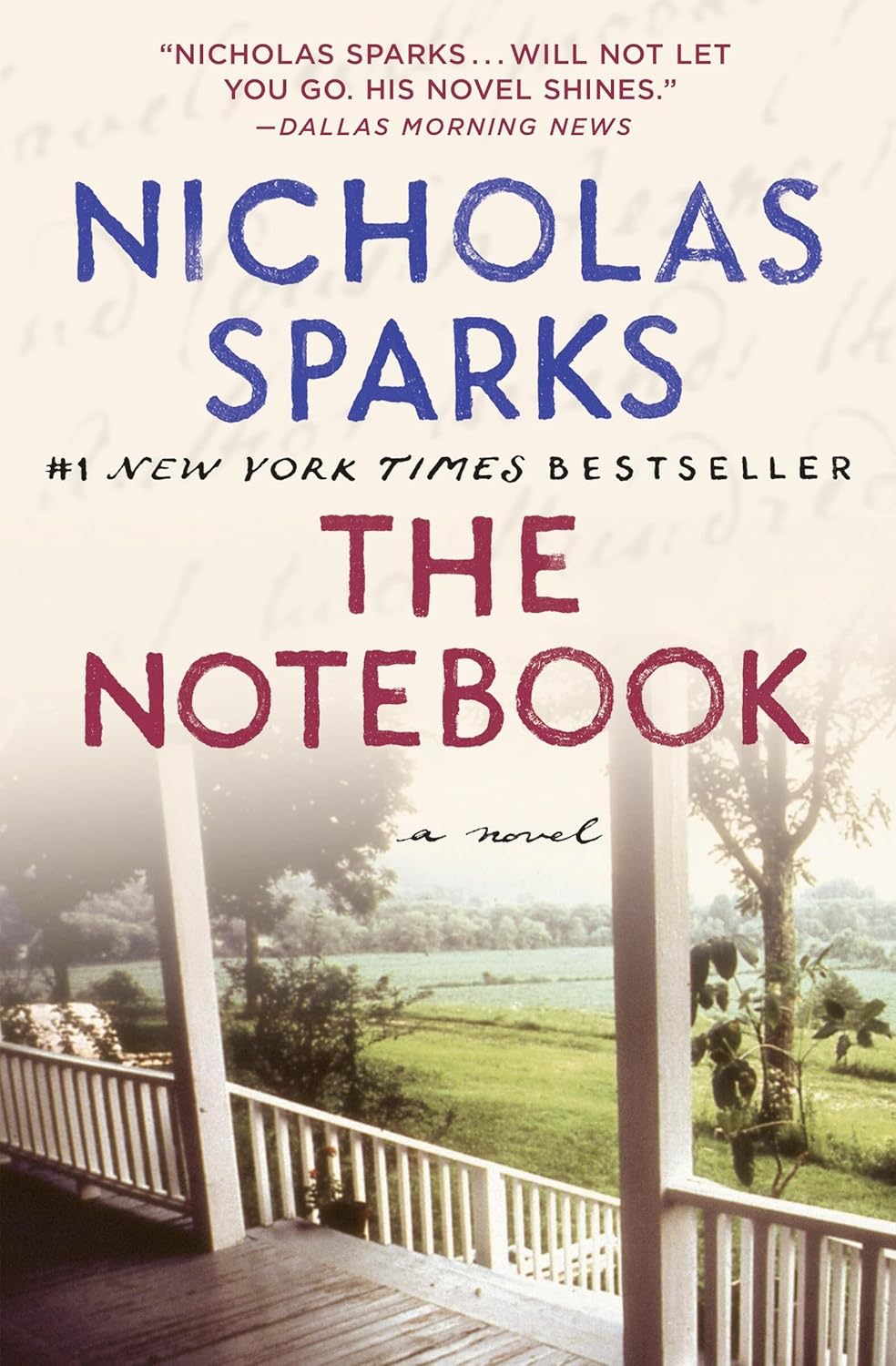
The Story in Brief
An elderly man named Duke reads to a woman with dementia in a nursing home. The story he reads is of Noah Calhoun, a poor lumber mill worker, and Allie Nelson, a wealthy girl from a prominent family, who fall in love during the summer of 1940 in Seabrook, North Carolina. Allie's parents disapprove and separate them. Fourteen years later, Allie is engaged to Lon Hammond Jr., a successful lawyer, when she sees a newspaper photo of Noah standing in front of the house he restored for her. She returns to Seabrook, and the two must decide whether to reclaim what they lost.
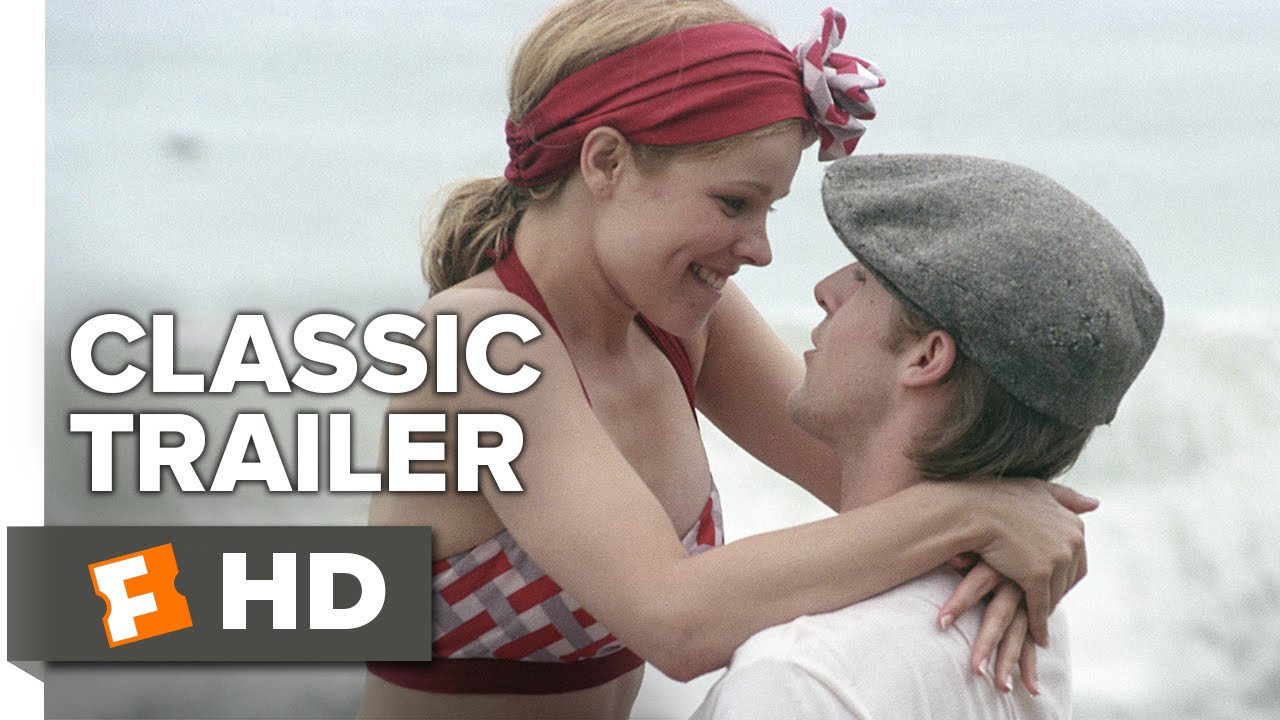
Nicholas Sparks's debut novel, published in 1996, became a bestseller and established his career as a romance novelist. Nick Cassavetes directed the 2004 film adaptation, casting Ryan Gosling as young Noah and Rachel McAdams as young Allie, with James Garner and Gena Rowlands (Cassavetes's mother) as their older selves. The film earned $115 million worldwide and became a cultural touchstone for millennial romance, winning four Teen Choice Awards and an MTV Movie Award for Best Kiss.
The film's legacy has eclipsed the novel's — it's now a shorthand for romantic devotion and one of the most-watched films on streaming platforms during Valentine's season. Gosling and McAdams's real-life romance during production added to its mythology.
Cast & Characters
| Character | In the Book | In the Film |
|---|---|---|
| Noah Calhoun Ryan Gosling / James Garner |
Introspective and haunted by loss, Noah narrates much of the story with quiet grief and obsessive devotion to Allie's memory. | Gosling plays Noah as more physically expressive and romantically bold, with less access to his internal melancholy. |
| Allie Nelson Rachel McAdams / Gena Rowlands |
Torn between duty and desire, Allie is seen largely through Noah's perspective, with less direct agency in the novel's structure. | McAdams's Allie is given more equal weight in the narrative, particularly in her choice between Lon and Noah. |
| Lon Hammond Jr. James Marsden |
A decent man who loves Allie but represents the safe, expected life her parents want for her. | Marsden plays Lon with more visible charm and less villainy, making Allie's choice genuinely difficult. |
| Anne Nelson Joan Allen |
Allie's mother, who hid Noah's letters and orchestrated their separation to protect her daughter's social standing. | Allen's Anne is given a redemptive scene where she reveals she once faced the same choice and regrets taking the safe path. |
| Fin Kevin Connolly |
Noah's close friend who provides comic relief and grounding in the novel's 1940s sections. | Connolly's Fin serves a similar role but with less page time, mostly appearing in the summer romance sequences. |
Key Differences
The film's chemistry transforms the source material
Ryan Gosling and Rachel McAdams didn't just play Noah and Allie — they became them. Their off-screen relationship during filming created an authenticity that the novel, for all its craft, cannot replicate. The rain kiss, the fight in the street, the way Gosling's Noah looks at McAdams's Allie — these are iconic because the actors brought something beyond the script.
Sparks's Noah and Allie are fully realized on the page, but they exist in prose. Gosling and McAdams made them flesh. This is one of the rare cases where casting doesn't just illustrate a book but elevates it into something culturally larger.
Noah's grief is quieter and deeper in the novel
The book gives you Noah's interiority in ways the film cannot. Sparks writes Noah as a man haunted by what he lost, someone who rebuilt a house not out of romantic optimism but out of obsessive need. The novel's Noah is contemplative, melancholic, and aware of his own damage. He reads poetry. He reflects on time and memory. He understands that love can be a form of suffering.
Gosling's Noah is more active and outwardly romantic. He builds the house, he rows the boat, he fights for Allie with physical intensity. The film's Noah is a doer. The novel's Noah is a thinker who also does. That difference matters.
Allie's choice is more balanced in the film
Cassavetes gives Allie more agency than Sparks does. In the novel, the story is largely Noah's — we see Allie through his eyes, his memory, his longing. In the film, Allie's perspective is given equal weight. Her scenes with Lon (James Marsden) are more developed, and Marsden plays him as genuinely decent, not just an obstacle. This makes her decision to leave him for Noah feel like a real sacrifice rather than an obvious correction.
The film also adds a scene where Allie's mother (Joan Allen) reveals she once faced the same choice and took the safe path, which she now regrets. This gives Allie's decision thematic weight the novel doesn't provide. It's one of the film's smartest additions.
The framing device is more dramatically resolved on screen
Both versions use the elderly Noah reading to Allie as a framing device, but the film builds to a more explicit climax. In the novel, the act of reading is quieter, more faith-driven — Noah reads because it's all he can do, and the ending is more ambiguous about whether Allie truly remembers. The film gives you a clear moment of recognition, followed by the two of them dying together in bed, hands clasped.
The novel's ending is more exhausted and less resolved. The film's ending is cathartic and visually complete. Neither is better — they serve different purposes. The novel trusts you to sit with uncertainty. The film gives you closure.
The 1940s atmosphere is a visual triumph
Cassavetes and cinematographer Robert Fraisse recreate 1940s North Carolina with evident care — the golden light, the clapboard houses, the summer heat shimmering off the lake. The film's visual world is one of its genuine pleasures and matches the nostalgic register of Sparks's prose. The novel describes this world with specificity, but the film makes you feel the humidity and the longing in equal measure.
Should You Read First?
Either order works, which is rare. Most people have seen the film first — it's culturally definitive in a way few adaptations are. If you've seen the film and loved it, read the novel for Noah's fuller interiority and Sparks's more sustained melancholy. The book won't replace the film in your memory, but it will deepen it. You'll understand why Noah is the way he is, and you'll see the story from a quieter, more introspective angle.
If you haven't experienced either, read first. The novel earns its emotional beats through accumulation rather than performance, and knowing the story won't diminish the film — Gosling and McAdams will still wreck you. But reading first lets you meet Noah and Allie in their original form, before they became icons.
Sparks wrote a clean, deliberate love story with more weight than its detractors allow. Cassavetes made a film that transcended its source through sheer chemistry. The novel is better-written. The film is more beloved. The book is the better version of the same story, but the film is the one people will remember.