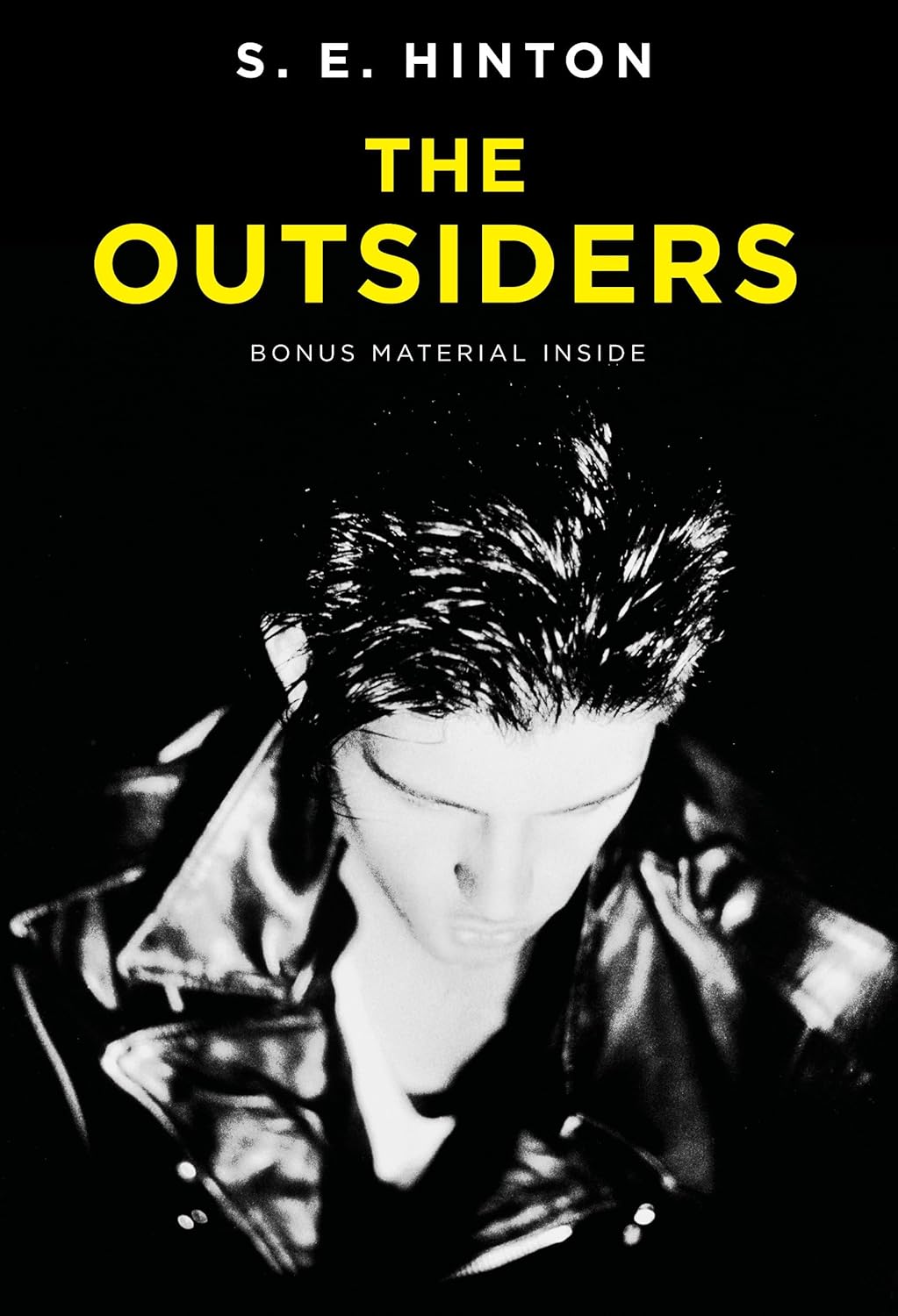

The Story in Brief
Ponyboy Curtis is a Greaser — a working-class teenager in 1960s Tulsa, Oklahoma — navigating the territorial conflict between his gang and the Socs, the wealthier kids from the other side of town. When a rumble turns fatal and Johnny Cade kills Bob Sheldon in self-defense, Ponyboy and Johnny flee to an abandoned church in Windrixville. There they hide, read Gone with the Wind, and recite Robert Frost's "Nothing Gold Can Stay" before a fire forces them back into the world. Johnny dies from injuries sustained saving children from the burning church. Dallas Winston, unable to cope with Johnny's death, provokes the police into shooting him. Ponyboy survives and writes the story as a school assignment.
S.E. Hinton wrote the novel when she was fifteen years old, frustrated by the absence of realistic fiction about teenage experience. It was published in 1967 and has never been out of print, selling over fifteen million copies and becoming required reading in American schools. Francis Ford Coppola — between Apocalypse Now and The Cotton Club — adapted it in 1983 after receiving a letter from a school librarian in Fresno, California, whose students wanted to see the book filmed. The result was simultaneously a critical disappointment and a cultural touchstone, launching the careers of an entire generation of actors.
The film received mixed reviews upon release but has grown in stature as its cast became famous. It is now considered one of the most faithful literary adaptations of the 1980s and a defining text of young adult cinema.
| Character | In the Book | In the The Movie |
|---|---|---|
| Ponyboy Curtis C. Thomas Howell |
The narrator and youngest Curtis brother, a sensitive reader who loves sunsets and poetry, caught between his Greaser identity and his intellectual aspirations. | Howell captures Ponyboy's vulnerability and intelligence but cannot replicate the first-person interiority that defines the novel's voice. |
| Johnny Cade Ralph Macchio |
The gang's pet, abused at home, who kills Bob Sheldon in self-defense and later dies a hero after saving children from the church fire. | Macchio plays Johnny with appropriate fragility, and his delivery of "Stay gold, Ponyboy" is the film's emotional center. |
| Dallas Winston Matt Dillon |
The hardened criminal of the group, the only Greaser who has been to New York, who cannot survive Johnny's death and forces the police to kill him. | Dillon brings genuine menace and charisma to Dally, making his final breakdown more visceral than the novel's more restrained account. |
| Sodapop Curtis Rob Lowe |
Ponyboy's middle brother, a high school dropout who works at a gas station, described as movie-star handsome and effortlessly charming. | Lowe embodies Sodapop's beauty and warmth, though the film reduces his role compared to the novel's more detailed portrait. |
| Darrel Curtis Patrick Swayze |
The eldest Curtis brother, who gave up college to raise Ponyboy and Sodapop after their parents died, stern and exhausted from responsibility. | Swayze plays Darry with quiet authority, capturing the character's burden without the novel's access to Ponyboy's gradual understanding of his brother's sacrifice. |
| Cherry Valance Diane Lane |
A Soc girl who befriends Ponyboy and serves as a bridge between the two worlds, revealing that Socs have problems too. | Lane brings intelligence and complexity to Cherry, though the film compresses her role and her relationship with Ponyboy. |
Key Differences
Ponyboy's first-person narration is the novel's soul
Hinton writes in Ponyboy's first person — a voice of raw, earnest intelligence that is the novel's most distinctive quality. Ponyboy is a reader in a world that doesn't value reading, a thinker among people who survive by not thinking too much, and his narration has a quality of self-awareness that gives the novel unexpected depth. He quotes Robert Frost, describes sunsets with genuine lyricism, and reflects on class and identity with a precision that feels both adolescent and wise.
C. Thomas Howell captures Ponyboy's sensitivity on screen but cannot replicate the specific texture of a voice that exists in Hinton's prose. The film adds voiceover narration in places, but it's sparse and cannot carry the weight of the novel's continuous interior monologue. This is the adaptation's central limitation — not a failure of execution but a consequence of medium.
The ensemble cast became a generation of stars
Coppola cast the film with unknowns who would not remain unknown for long: Tom Cruise as Steve Randle, Rob Lowe as Sodapop, Emilio Estevez as Two-Bit, Patrick Swayze as Darry, Matt Dillon as Dallas, Ralph Macchio as Johnny, Diane Lane as Cherry. The ensemble has a quality of collective energy that the novel — narrated by one boy — cannot replicate. When the Greasers gather in the Curtis house or prepare for the rumble, the film captures group dynamics that first-person narration necessarily limits.
This is one of the cases where the film's medium works in its favor. The Greasers feel like a real gang, with hierarchies and tensions and affection that the novel describes but the film embodies. Watching them together, you understand why Ponyboy belongs to them even as he's different from them.
"Stay gold" carries the same weight in both versions
Johnny's dying instruction to Ponyboy — "Stay gold" — referring to the Robert Frost poem Ponyboy recited to him while hiding in the church, is the novel's emotional core and one of YA fiction's most enduring phrases. Both versions handle it with appropriate gravity. In the novel, Johnny whispers it and dies immediately after. In the film, Ralph Macchio delivers the line with quiet intensity, and the moment lands with the same force.
The film's delivery is slightly more theatrical than the novel's, which is appropriate given that the film's emotional register runs slightly warmer throughout. Coppola underscores the moment with music and close-ups, while Hinton lets it sit in Ponyboy's memory. Both approaches honor the line's significance without overplaying it.
The Complete Novel cut restores Hinton's pacing
Coppola released a longer "Complete Novel" cut in 2005 that restores twenty-two minutes of footage cut from the 1983 theatrical release. The restored material includes more scenes of the Curtis brothers at home, additional dialogue between Ponyboy and Cherry, and a longer sequence of Ponyboy and Johnny in the church. The Complete Novel version is generally considered the more satisfying cut — it's closer in pacing and tone to the novel's more measured approach to its characters.
If you watch the film, seek out this cut rather than the original theatrical release. Coppola re-edited it himself, and the longer version allows the characters to breathe in a way the theatrical cut did not. It's still not as interior as the novel, but it's closer.
Class geography is rendered with period accuracy
Hinton's novel is specific about the geography of Tulsa and the class divide it encodes — the literal wrong side of the tracks that separates Greasers from Socs, the drive-in where the two groups collide, the vacant lot where the rumble takes place. This specificity is preserved in the film's production design, which renders 1960s Oklahoma with period accuracy. The Greasers' neighborhood looks genuinely working-class, not Hollywood-poor, and the Socs' cars and clothes signal wealth without caricature.
The class anger in both versions is genuine, but the novel articulates it from inside Ponyboy's consciousness in a way the film can only show from outside. When Ponyboy reflects that "it's not just money, it's feeling you don't have to take anything from anybody," the novel gives you access to the thought process behind the anger. The film shows you the anger but cannot give you the same access to its roots.
Either order works — the film is faithful enough that watching first does not significantly diminish the novel, and the novel is short enough (180 pages) that reading first takes an afternoon. The film does not spoil the novel's pleasures because the novel's primary pleasure is not plot but voice. Knowing what happens to Johnny and Dallas does not reduce the impact of Ponyboy's narration of those events.
If pressed: read first to inhabit Ponyboy's voice, then watch the film to see one of the most remarkable ensemble casts in American cinema history before any of them were famous. The novel gives you interiority; the film gives you faces and bodies and the specific chemistry of actors who would go on to define 1980s cinema. Both are worth experiencing, and the order matters less than the commitment to both.
Should You Read First?
Either order works — the film is faithful enough that watching first does not significantly diminish the novel, and the novel is short enough (180 pages) that reading first takes an afternoon. The film does not spoil the novel's pleasures because the novel's primary pleasure is not plot but voice. Knowing what happens to Johnny and Dallas does not reduce the impact of Ponyboy's narration of those events.
If pressed: read first to inhabit Ponyboy's voice, then watch the film to see one of the most remarkable ensemble casts in American cinema history before any of them were famous. The novel gives you interiority; the film gives you faces and bodies and the specific chemistry of actors who would go on to define 1980s cinema. Both are worth experiencing, and the order matters less than the commitment to both.
Hinton wrote the novel at fifteen and it has never been out of print. Coppola made a film that is faithful, beautifully cast, and as emotionally direct as the source. The novel has Ponyboy's voice — that specific first-person intelligence that makes the story more than a gang narrative. The film has an ensemble that launched careers and a visual fidelity to 1960s Tulsa that honors Hinton's specificity. This is a genuine tie and one of the more harmonious book-to-film relationships on this site. Read the novel for the interiority. See the film for the cast. Stay gold.