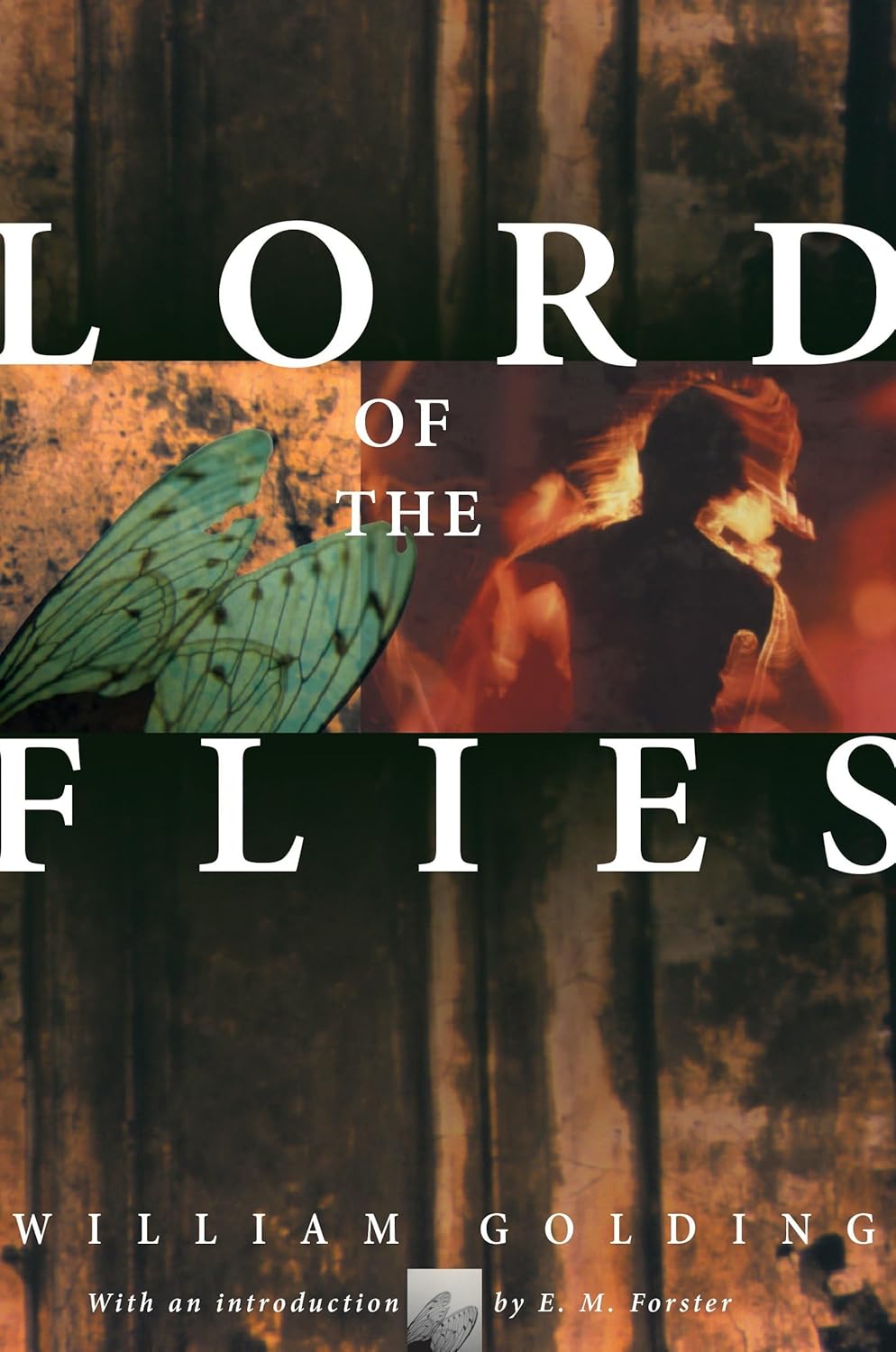
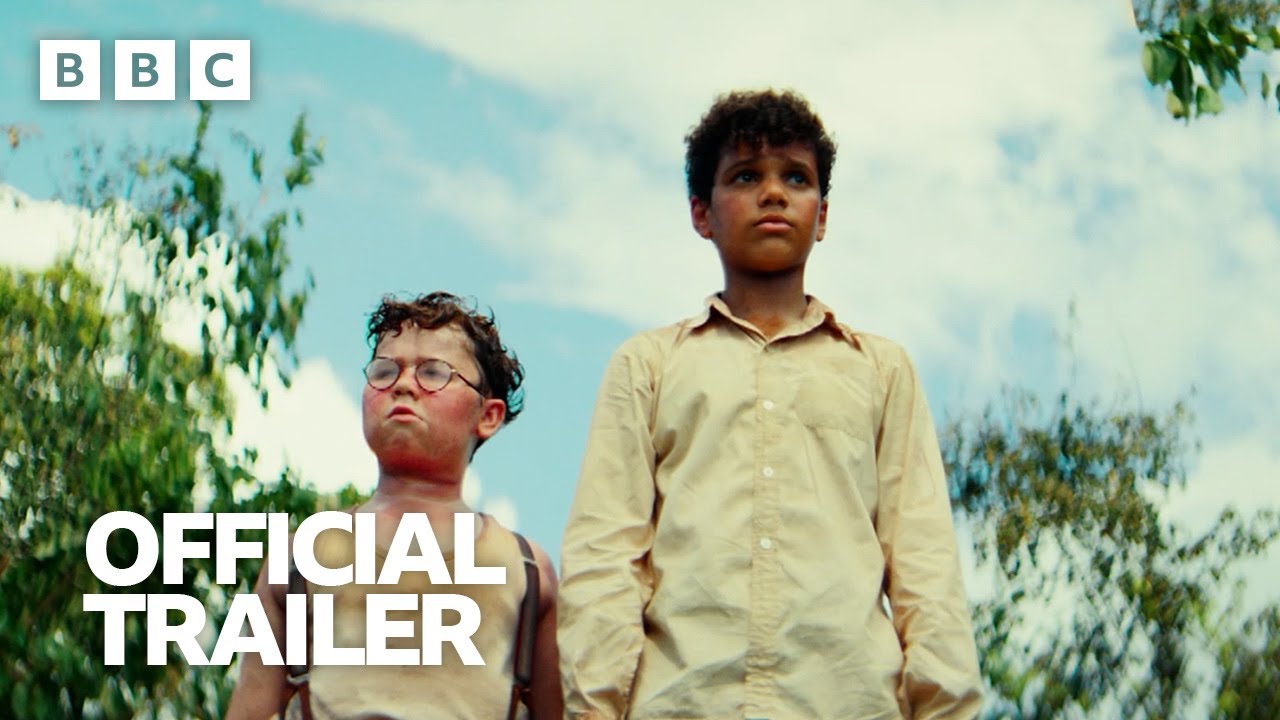
The Story in Brief
A group of British schoolboys are stranded on an uninhabited island after their plane is shot down during a wartime evacuation. Ralph, elected leader for his charisma and possession of the conch shell, attempts to maintain order alongside Piggy, the rational but physically vulnerable boy whose glasses become essential for fire-making. Jack Merridew, the head choirboy, initially accepts Ralph's authority but grows resentful and eventually splits off to form his own tribe of hunters. Simon, a quiet, epileptic boy, discovers that the "beast" the others fear is actually a dead paratrooper — but he's murdered before he can share this revelation.
William Golding's 1954 novel was rejected by twenty-one publishers before Faber accepted it, and it has since sold tens of millions of copies and become required reading in schools across the English-speaking world. Peter Brook's 1963 film adaptation, shot in black and white on location in Puerto Rico with a cast of non-professional boys, premiered at the Cannes Film Festival and was praised for its raw authenticity. Brook used improvisation and allowed the boys' genuine interactions to shape scenes, creating a documentary-like quality that professional child actors would have polished away.
The novel remains one of the most debated works in the literary canon — praised as a profound allegory about civilisation's fragility and criticised as a reductive view of human nature that ignores social context. Its influence extends beyond literature into psychology, political theory, and popular culture, where "Lord of the Flies" has become shorthand for social breakdown.
| Character | In the Book | In the The Movie |
|---|---|---|
| Ralph James Aubrey |
The elected leader who struggles to maintain democratic order and the signal fire, gradually losing authority to Jack's appeal to violence and immediate gratification. | Aubrey captures Ralph's initial confidence and slow erosion of authority, though the film cannot render the internal despair Golding describes in the novel's final chapters. |
| Jack Merridew Tom Chapin |
The head choirboy who transforms from resentful subordinate to tribal chief, painting his face and embracing violence as liberation from civilised restraint. | Chapin's Jack is physically commanding and genuinely menacing, especially once face paint allows him to hide behind a mask — the film's most effective visual metaphor. |
| Piggy Hugh Edwards |
The rational, asthmatic boy whose glasses enable fire-making and whose faith in adult authority and rules makes him the novel's most tragic figure when both fail. | Edwards plays Piggy with appropriate vulnerability and intellectual stubbornness, though the film reduces some of his more complex observations about human nature. |
| Simon Tom Gaman |
The visionary boy who understands the beast is internal, experiences a hallucinatory encounter with the pig's head, and is murdered during a ritual dance. | Gaman captures Simon's otherworldly quality, and his death scene — filmed in near-darkness with frenzied movement — is the film's most harrowing sequence. |
| Roger Roger Elwin |
Jack's lieutenant who begins by throwing stones near a younger boy but deliberately missing, then later murders Piggy by pushing a boulder directly onto him — the novel's clearest illustration of civilisation's collapse. | Elwin's Roger is quietly sadistic, and the film emphasises his progression from constrained cruelty to uninhibited violence. |
Key Differences
Golding's ironic narrative voice is the novel's argument
Golding writes in a prose style that begins in the register of boys' adventure fiction — the kind of island narrative his readers would recognise from R.M. Ballantyne's The Coral Island — and slowly corrupts it. The gap between the adventure-story style and the horror being described is where the novel's philosophical argument lives. Early chapters describe the island in language of paradise and possibility; later chapters use the same descriptive techniques to render nightmare.
Brook's film, working in images rather than prose, loses this ironic layering. The horror is presented directly rather than through a narrative voice that implicates the viewer in the boys' initial excitement. What the novel does through style — making the reader complicit in the fantasy before revealing its darkness — the film cannot replicate. This is not a failure of adaptation but a limitation of medium.
The non-professional cast creates authenticity and unevenness
Brook deliberately cast non-professional boys and encouraged improvisation, which gives the film a documentary-like rawness. James Aubrey as Ralph and Tom Chapin as Jack are genuinely compelling, but other performances are stilted or uncertain. The boys sometimes look directly at the camera or deliver lines with visible self-consciousness.
This unevenness serves the material. These look and sound like actual children rather than actors performing childhood, and the violence feels correspondingly more real. When Jack's tribe chants and dances, the frenzy appears genuine rather than choreographed. Brook's choice to prioritise authenticity over polish makes the film's horror more immediate, even as it sacrifices narrative smoothness.
Simon's hallucinatory encounter with the pig's head loses symbolic density
Simon's discovery of the dead paratrooper and his subsequent hallucination — in which the pig's head, swarming with flies, speaks to him about the beast being internal to humanity — is the novel's most symbolically dense sequence. Golding renders it in prose that blurs the line between Simon's epileptic vision and philosophical revelation. The pig's head tells Simon, "Fancy thinking the Beast was something you could hunt and kill! You knew, didn't you? I'm part of you."
Brook films this sequence with Simon staring at the mounted pig's head while flies buzz and the camera slowly zooms. It's effective as horror imagery but cannot convey the full weight of Golding's prose, which makes the encounter both visceral and metaphysical. The film shows Simon's vision; the novel makes the reader experience it as both hallucination and truth.
Piggy's death and the conch's destruction carry equal symbolic weight in both versions
The conch shell — which grants its holder the right to speak and represents democratic order — is destroyed at the same moment Roger murders Piggy by pushing a boulder onto him. Both novel and film treat this as the story's moral climax, the moment when civilisation's last symbols are obliterated. Golding writes: "The rock struck Piggy a glancing blow from chin to knee; the conch exploded into a thousand white fragments and ceased to exist."
Brook films this with appropriate brutality — the boulder falling, Piggy's body tumbling onto the rocks below, the conch shattering. The film's visual directness makes the violence more immediate than Golding's prose, which maintains a slight narrative distance even in this moment. This is one of the few sequences where the adaptation's medium gives it an advantage in raw impact.
The 1990 American remake fundamentally misunderstands the premise
Harry Hook's 1990 colour remake relocates the story to American military cadets and adds adult authority figures who already understand civilisation's fragility. This destroys Golding's central argument, which depends on the boys being products of a society that believes it has transcended barbarism. The novel's British schoolboys represent civilisation at its most confident — their descent into savagery is meant to indict that confidence.
The 1990 film also softens the violence and adds a more conventional Hollywood structure with clear heroes and villains. Brook's 1963 adaptation, despite its limitations, understands that Golding's novel is an argument rather than an adventure story. The 1990 version treats it as the latter and fails accordingly. Watch the 1963 film. Ignore the remake entirely.
Yes — Golding's prose irony is the argument, and the film presents the events without the narrative frame that makes them an indictment rather than simply a story about children behaving badly. The novel implicates the reader in the boys' initial excitement about the island, then slowly reveals that excitement as the first step toward horror. Brook's film shows the horror directly but cannot replicate the reader's complicity in the fantasy that precedes it.
Read the novel first to understand what Golding is arguing about human nature and civilisation's fragility. Then watch Brook's 1963 film as a raw, occasionally powerful illustration of the same events in a different register. The film works best as a companion to the novel rather than a replacement — it shows you what the island looked like and how the violence unfolded, but the novel tells you what it means.
Should You Read First?
Yes — Golding's prose irony is the argument, and the film presents the events without the narrative frame that makes them an indictment rather than simply a story about children behaving badly. The novel implicates the reader in the boys' initial excitement about the island, then slowly reveals that excitement as the first step toward horror. Brook's film shows the horror directly but cannot replicate the reader's complicity in the fantasy that precedes it.
Read the novel first to understand what Golding is arguing about human nature and civilisation's fragility. Then watch Brook's 1963 film as a raw, occasionally powerful illustration of the same events in a different register. The film works best as a companion to the novel rather than a replacement — it shows you what the island looked like and how the violence unfolded, but the novel tells you what it means.
Golding wrote a novel that argues for something dark about human nature through prose that implicates the reader in the boys' excitement before turning it to horror. Brook's 1963 film is a sincere, raw adaptation that presents the events without the ironic frame that makes them philosophically resonant. The novel is the essential version. Read it. See the 1963 film as a useful companion. Ignore the 1990 remake entirely — it misunderstands everything that makes Golding's argument worth having.