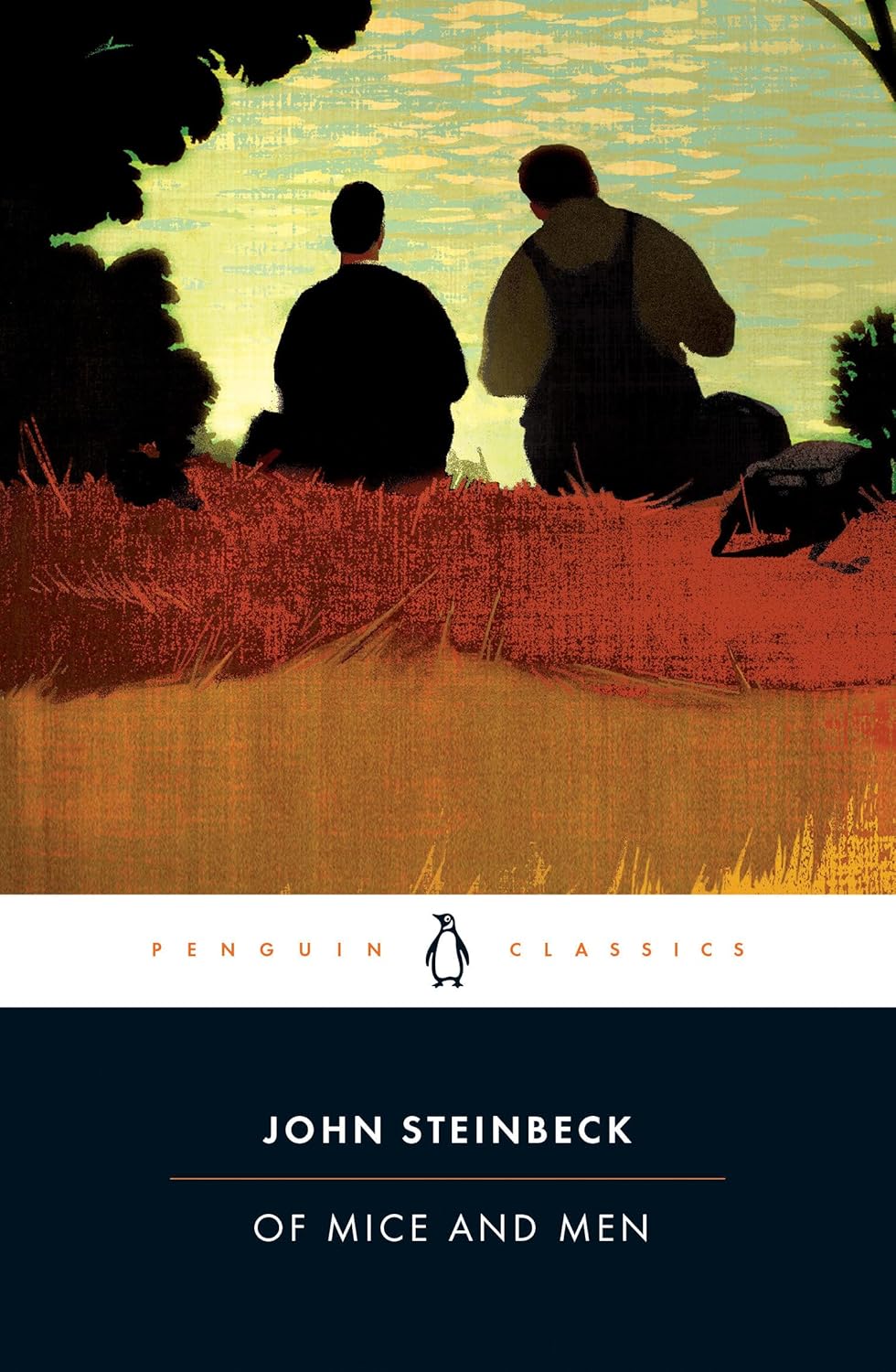
The Story in Brief
George Milton and Lennie Small are migrant ranch workers in Depression-era California, moving from job to job with nothing but each other and a shared dream. George is sharp, watchful, and burdened with responsibility; Lennie is large, gentle, intellectually disabled, and dangerous in his innocence — he loves soft things and forgets his own strength. Together they dream of owning a small farm where Lennie can tend rabbits and they can live "off the fatta the lan'." They arrive at a ranch near Soledad where they meet Candy, an aging swamper who wants to join their dream; Slim, the respected mule driver; Curley, the boss's aggressive son; and Curley's wife, lonely and desperate for attention.
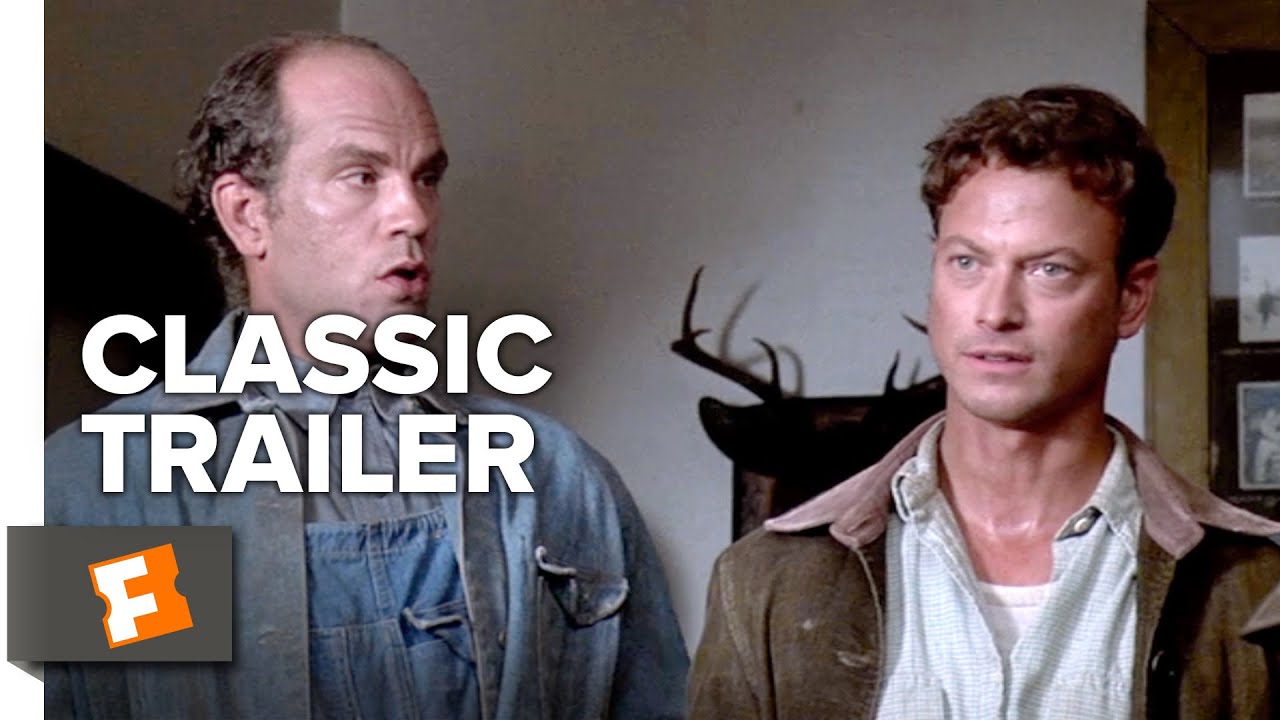
Steinbeck wrote the novella in 1936 after his dog ate an earlier manuscript — he rewrote it in two months, constructing it simultaneously as prose and stage drama. It opened on Broadway in 1937 to critical acclaim. Gary Sinise directed and starred as George in his 1992 film adaptation, with John Malkovich as Lennie and a supporting cast including Ray Walston as Candy, Joe Morton as Crooks, and Sherilyn Fenn as Curley's wife. Horton Foote, who adapted To Kill a Mockingbird, wrote the screenplay. The film was shot on location in California's Central Valley and received widespread critical praise for its fidelity to Steinbeck's vision.
The novella remains one of the most taught books in American schools and one of the most frequently challenged for its language and themes. It is a masterpiece of compression and inevitability — every element serves the ending, and the ending is there from the first page.
| Character | In the Book | In the The Movie |
|---|---|---|
| George Milton Gary Sinise |
Small, sharp-featured, restless — defined by his protective frustration with Lennie and his own trapped loneliness. | Sinise plays George with quiet exhaustion and fierce loyalty, his face registering every burden and every moment of tenderness. |
| Lennie Small John Malkovich |
Large, shapeless, with wide sloping shoulders — childlike in his love of soft things, terrifying in his inability to control his strength. | Malkovich's Lennie is one of the great film performances — he makes visible Lennie's interior life without condescension or caricature. |
| Candy Ray Walston |
Old, missing a hand, desperate to escape his inevitable fate as useless and discarded — he offers his life savings to join the dream. | Walston brings dignity and quiet desperation to Candy, particularly in the scene where his dog is shot. |
| Curley's Wife Sherilyn Fenn |
Never named, lonely and attention-seeking, trapped in a loveless marriage — Steinbeck later regretted not giving her more dimension. | Fenn plays her with vulnerability beneath the flirtation, making her final scene with Lennie genuinely tragic rather than merely inevitable. |
| Crooks Joe Morton |
The Black stable hand, isolated by segregation, bitter and intelligent — his scene with Lennie is the novella's most sustained examination of loneliness. | Morton gives Crooks appropriate gravity and pain, though his screen time is slightly reduced from the book's extended scene. |
| Slim John Terry |
The jerkline skinner, respected by all the men, almost mythic in his authority and understanding — he sees what others miss. | Terry's Slim has the same quiet authority, serving as the moral center who understands George's final act. |
Key Differences
The film is almost line-by-line faithful because Steinbeck wrote the book as a play
Steinbeck described the novella as a "play-novelette" — he wrote it simultaneously as prose and stage drama, and it opened on Broadway the same year it was published. The prose is almost entirely dialogue and physical action with very little interior narration. This makes it unusually filmable: the story exists on the surface of its scenes rather than in characters' thoughts.
Sinise's adaptation follows Steinbeck's structure and dialogue with remarkable fidelity. Horton Foote's screenplay preserves entire exchanges verbatim. The opening scene by the Salinas River, the bunkhouse conversations, the dream recitations, Candy's dog, the fight with Curley, Crooks's room, the barn — all are rendered almost exactly as written. This is one of the rare literary adaptations where "faithful" doesn't mean "compromised."
Malkovich's Lennie adds interior life that prose can only imply
Malkovich's performance is definitive — he inhabits Lennie's particular quality of innocent destructiveness without condescension or caricature. Steinbeck renders Lennie through dialogue and action; Malkovich adds an interior life through his eyes, his physicality, his voice that the prose can only suggest through George's observations and Lennie's repeated phrases.
Watch Malkovich's face when George tells him about the rabbits, or when he realizes he's done something wrong, or in the barn with Curley's wife. He makes visible the tragedy that Steinbeck builds through structure and repetition. This is one of the rare cases where a performance genuinely deepens the source material rather than simply illustrating it.
The dream accumulates differently in repetition on page versus screen
The recurring description of the farm they will own — the rabbits, the little house, the land, living "off the fatta the lan'" — appears throughout the novella with musical precision. Each recurrence is slightly different in context and emotional weight, building toward the final iteration by the river, which becomes unbearable because we've heard it so many times before.
Sinise and Malkovich play the dream sequences with appropriate tenderness, and the film includes the key recitations. But the written rhythm of repetition — the way Steinbeck varies the phrasing and context each time — cannot be fully replicated in spoken dialogue. The novella's structure makes the dream a refrain; the film makes it a recurring scene. Both work, but differently.
Candy's dog is the argument made in miniature
The shooting of Candy's old dog — killed by Carlson because he's too old, smells, and can't contribute — is the novella's dark foreshadowing. It's the same logic that will apply to Lennie: something beloved becomes something dangerous or useless, and the world has no place for it. Steinbeck gives this scene extended, excruciating attention: Candy's reluctance, Carlson's insistence, Slim's quiet authority, the long wait for the gunshot, Candy lying facing the wall afterward.
The film handles this scene with equal gravity. Ray Walston's face as he lies in his bunk, hearing the shot, is devastating. Both versions understand that this is the novella's thesis statement — the world's cruelty made visible before the larger cruelty arrives. The silence that follows in the bunkhouse is one of the great moments in both versions.
Crooks's scene has slightly less weight on screen
Crooks — the Black stable hand who lives separately from the white workers because of the ranch's segregation — has an extended scene with Lennie in his room that is the novella's most sustained examination of loneliness and exclusion. Crooks tests Lennie by suggesting George might not come back, then reveals his own isolation, then briefly allows himself to believe in the dream before Curley's wife reminds him of his place in the hierarchy.
Sinise includes this scene and Joe Morton plays Crooks with appropriate intelligence and bitterness. But the scene is slightly compressed, and some of Crooks's longer speeches about loneliness are shortened. The film gives it proper respect, but the novella gives it more room to breathe. It's one of the few places where the adaptation's fidelity is 90% rather than 100%.
Either order works because the novella takes about two hours to read and the film runs 115 minutes — you can experience both in a single evening. Steinbeck wrote it to be performed, so watching first loses less than it would with most literary sources. The film doesn't spoil the book because the book's power isn't in surprise but in inevitability. You know from the first page how this will end; the art is in how Steinbeck makes you hope otherwise.
Read first if you want Steinbeck's precise prose rhythm and the accumulating weight of repeated phrases. Watch first if you want Malkovich's Lennie as your mental image while reading — it's the correct image. Both are honest choices. This is one of the rare cases where the adaptation serves the source so completely that the order doesn't matter.
Should You Read First?
Either order works because the novella takes about two hours to read and the film runs 115 minutes — you can experience both in a single evening. Steinbeck wrote it to be performed, so watching first loses less than it would with most literary sources. The film doesn't spoil the book because the book's power isn't in surprise but in inevitability. You know from the first page how this will end; the art is in how Steinbeck makes you hope otherwise.
Read first if you want Steinbeck's precise prose rhythm and the accumulating weight of repeated phrases. Watch first if you want Malkovich's Lennie as your mental image while reading — it's the correct image. Both are honest choices. This is one of the rare cases where the adaptation serves the source so completely that the order doesn't matter.
Steinbeck wrote one of the great American novellas — spare, inevitable, and heartbreaking in its precision. Sinise made one of the great American literary films from it, with a performance from Malkovich that stands alongside the source rather than beneath it. Read the novella. See the film. This is a genuine tie between two works that honour each other completely.