The Story in Brief
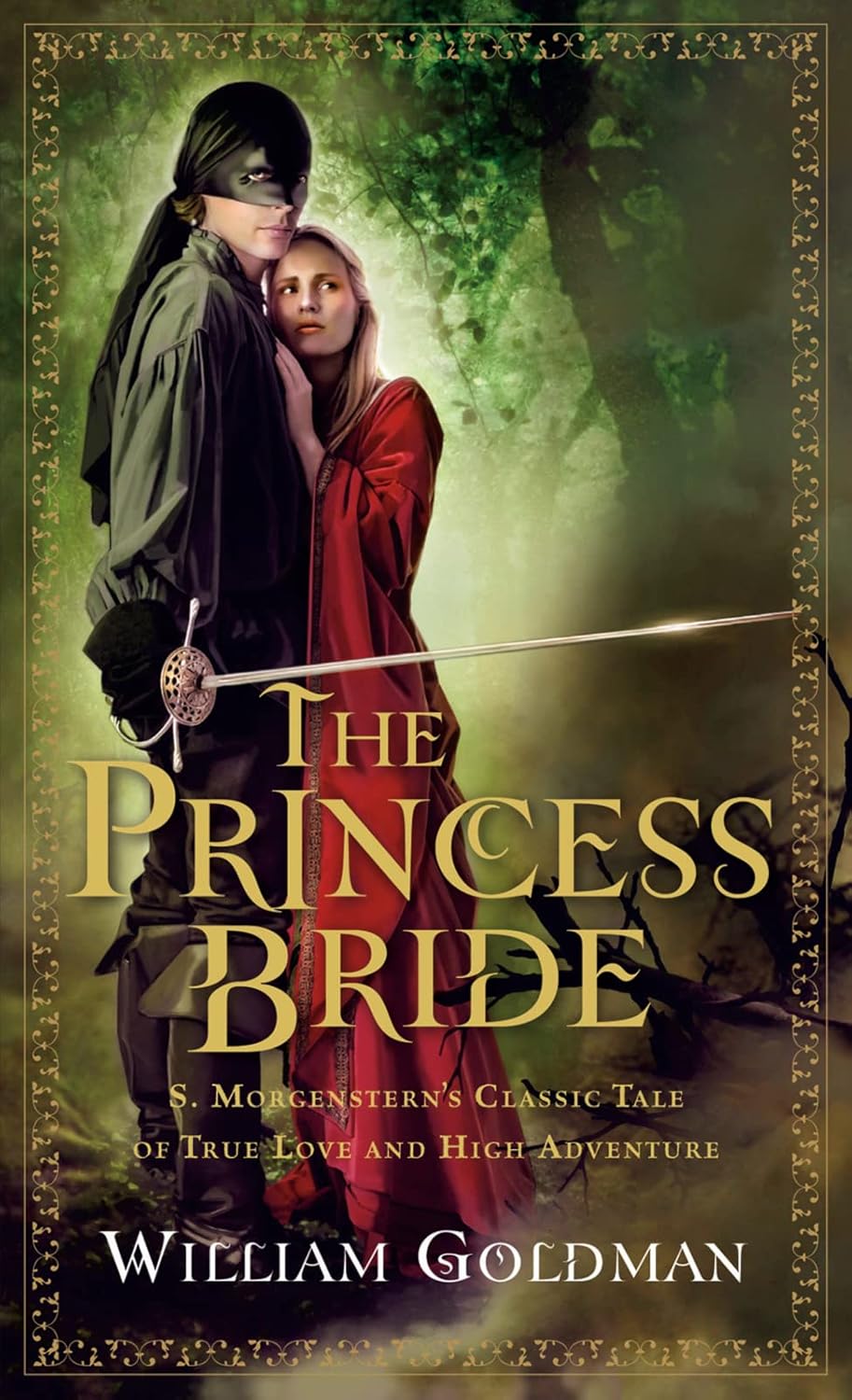
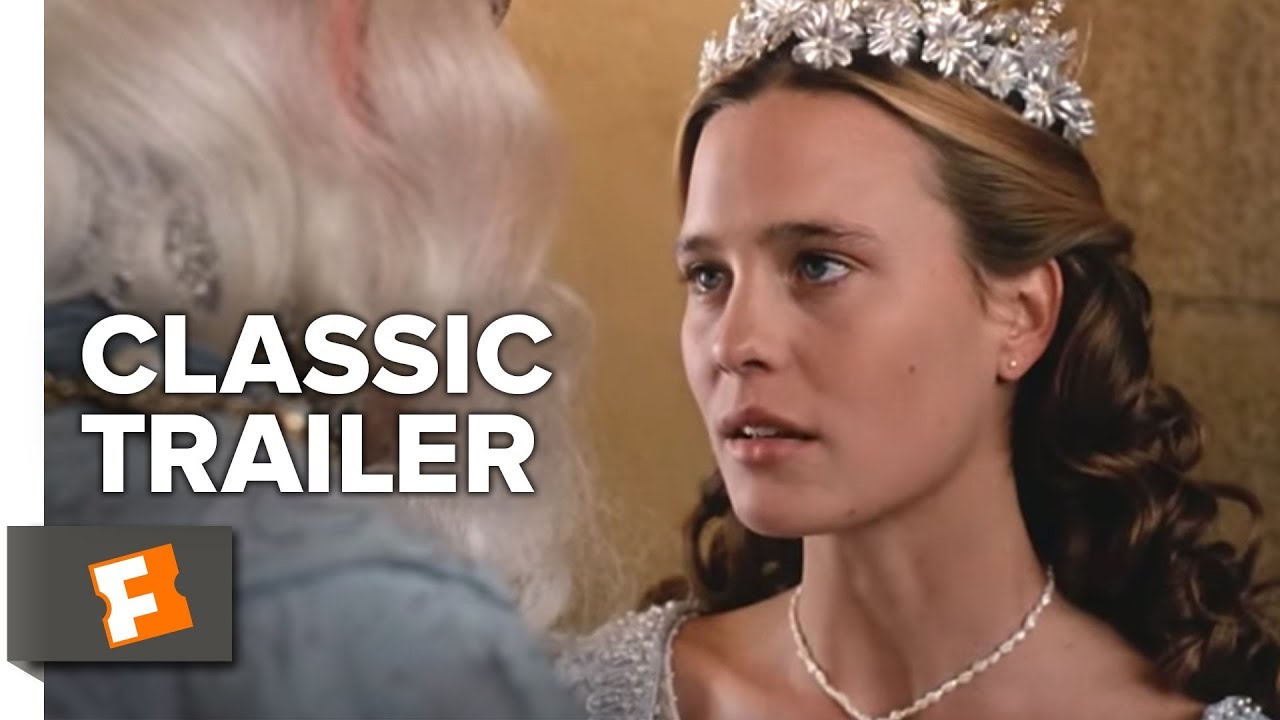
Westley loves Buttercup. He goes to sea to make his fortune, is captured by the Dread Pirate Roberts, and is presumed dead. Buttercup is betrothed to the villainous Prince Humperdinck. A man in black follows. There is also Inigo Montoya, who has spent twenty years searching for the six-fingered man who killed his father. And Fezzik the giant. And a Sicilian. William Goldman published the novel in 1973 as a mock abridgement of a fictional Florinese classic, framed by an elaborate conceit about Goldman editing his father's favourite book for his own son. He then wrote the screenplay himself. Rob Reiner's 1987 film was a modest box office success that became one of the most beloved films in the English-speaking world. This is the site's most unusual case: the author wrote both versions.
Key Differences
Goldman's framing device
The novel presents itself as Goldman's abridgement of S. Morgenstern's classic Florinese tale — a fictional source Goldman claims to be editing, cutting the boring parts about Florinese history and keeping the good stuff. This elaborate conceit, maintained throughout the novel with footnotes and editorial asides, gives the book a meta-fictional layer that is entirely absent from the film. Goldman the editor commenting on Morgenstern's choices is one of the novel's great pleasures and one that cannot survive adaptation. The film strips the frame and tells the story directly, which loses the joke and gains pace.
Inigo Montoya
Mandy Patinkin's Inigo Montoya is one of cinema's great supporting performances — his delivery of "Hello. My name is Inigo Montoya. You killed my father. Prepare to die" is among the most quoted lines in film history. Goldman's novel gives Inigo the same arc and the same great moments, but Patinkin's performance gives him a quality of operatic grief beneath the comedy that the prose can only describe. This is one of the rare cases where a performance adds a dimension the source didn't fully have.
André the Giant as Fezzik
André the Giant's casting as Fezzik is perhaps the most inspired piece of casting in the film's history — a real giant playing a fictional giant, with a gentleness that matches Goldman's characterisation perfectly. André was genuinely beloved by the cast and crew and this warmth is visible in every frame he inhabits. The novel's Fezzik is well-drawn; the film's is iconic.
The grandfather-grandson frame
Reiner replaced Goldman's elaborate fictional editor conceit with a simpler and equally effective frame: a grandfather reads the book to his sick grandson, who is initially resistant and gradually won over. Peter Falk and Fred Savage play these roles with warmth and comic timing. The frame serves the same purpose as Goldman's — reminding the audience that this is a story being told, that stories are acts of love — and is more immediately accessible than the novel's elaborate fiction.
The novel's darker edges
Goldman's novel has slightly darker edges than the film — the torture sequences are more extended, the villains more elaborately menacing, and the satire of romance conventions more pointed. The film's tone is warmer and more purely celebratory. Both tones work for the material; the novel's occasional darkness makes the comedy land differently.
Should You Read First?
Either order works — and this is the most genuine either-order recommendation on the site. Goldman wrote both and understood what each needed. The novel's framing device is a pleasure that the film's grandfather frame cannot replace; the film's cast is a pleasure the novel cannot anticipate. Read the novel to know where everything came from. See the film because Mandy Patinkin is Inigo Montoya and there is no higher praise.
Goldman wrote the novel and then wrote the screenplay and knew exactly what each medium required. The film is as good as the book — different in its pleasures, faithful in spirit, and in the case of Inigo Montoya genuinely better. This is a genuine tie made possible by the unusual fact of a single author understanding both forms equally well. Read the novel for the meta-fictional frame. See the film for the cast. Both are essential. As you wish.