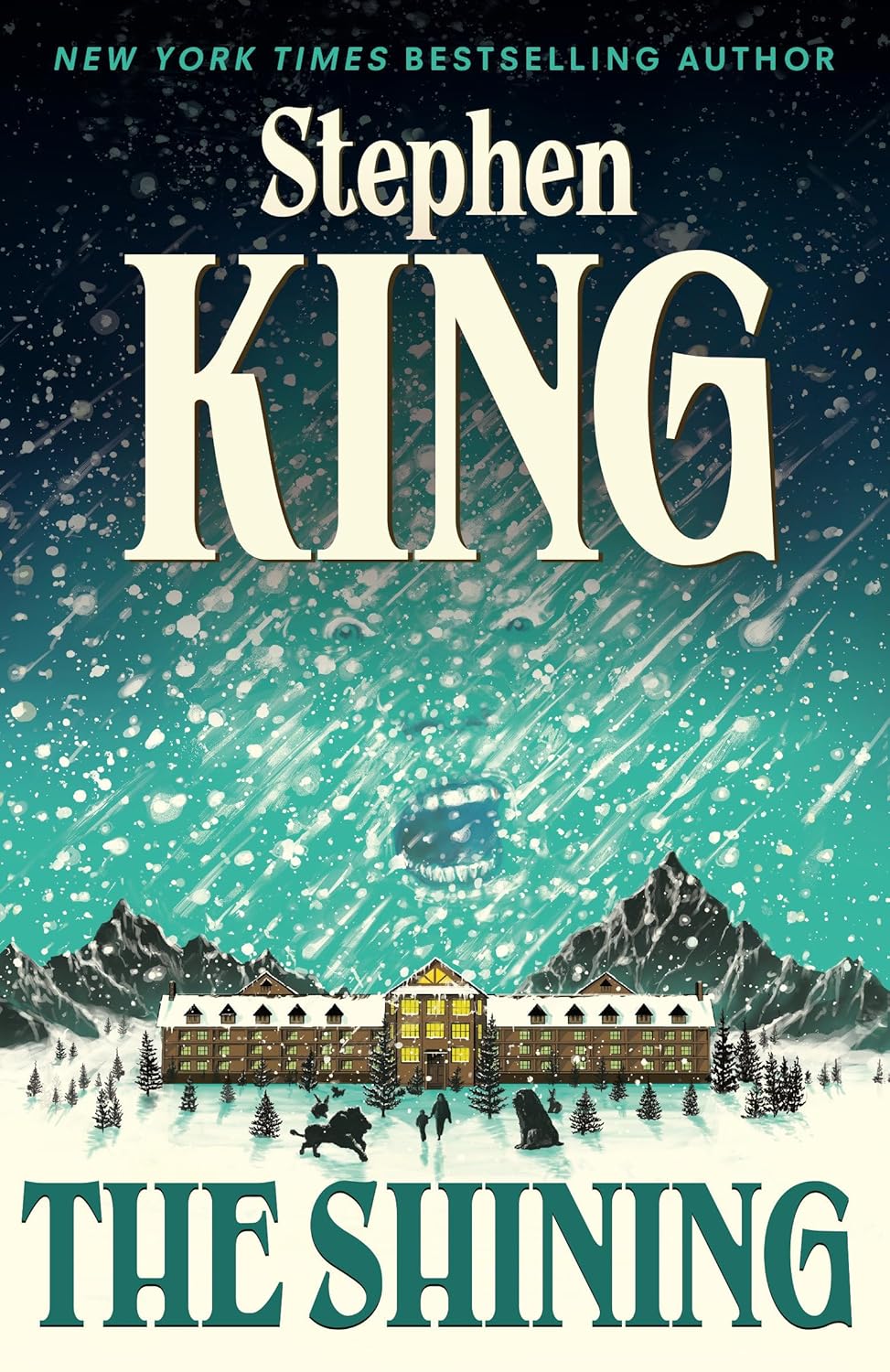
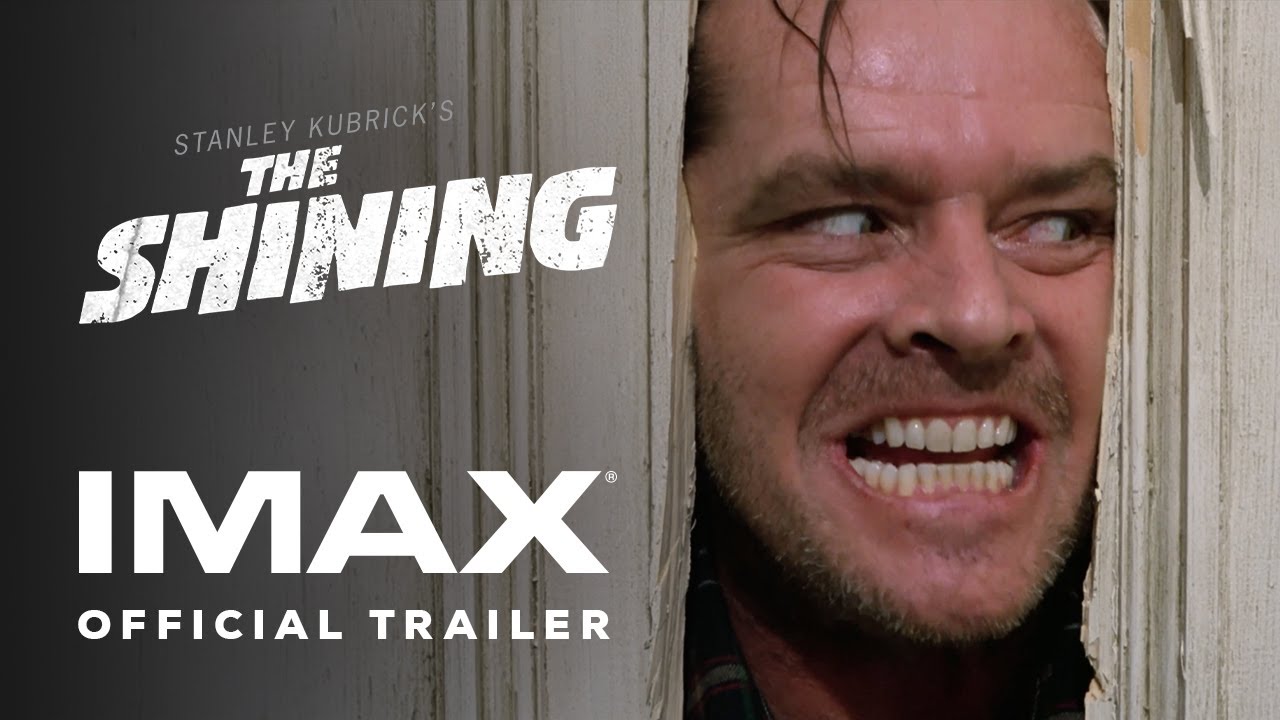
The Story in Brief
Jack Torrance, a recovering alcoholic and struggling writer, takes a job as winter caretaker of the isolated Overlook Hotel in the Colorado Rockies, bringing his wife Wendy and five-year-old son Danny. Danny possesses "the shining" — a psychic ability that lets him see the hotel's violent past and communicate telepathically with Dick Hallorann, the Overlook's cook who shares the gift. As winter closes in and snow cuts off all escape routes, the hotel's malevolent presence begins working on Jack's fragile sobriety and sanity, turning him against his family.
Stephen King wrote the novel in 1977 as a deeply personal reckoning with his own alcoholism and fears about fatherhood — he's said Jack's rage at Danny mirrors his own struggles at the time. Stanley Kubrick's 1980 adaptation took eighteen months to shoot, subjected Shelley Duvall to notoriously punishing conditions, and resulted in a film King has publicly despised for over forty years. Despite King's objections, Kubrick's version became one of the most analyzed and influential horror films ever made, with its Steadicam tracking shots, symmetrical compositions, and ambiguous supernatural elements studied in film schools worldwide.
The film was initially met with mixed reviews and modest box office, but has since been enshrined in the Library of Congress's National Film Registry and routinely appears on lists of the greatest horror films. King's novel remains one of his most popular works and was adapted again in 2019 as a three-part miniseries that hewed closer to the source material.
Cast & Characters
| Character | In the Book | In the Film |
|---|---|---|
| Jack Torrance Jack Nicholson |
A fundamentally decent man fighting alcoholism and anger issues, genuinely loving his family but vulnerable to the hotel's corruption. | Already unstable and menacing from his first scene, with Nicholson's manic energy suggesting there's little sanity left to lose. |
| Wendy Torrance Shelley Duvall |
A resourceful, complex woman with her own backstory and agency, actively fighting to protect Danny and herself. | Reduced to a trembling, passive victim who spends most of the film reacting in terror rather than acting decisively. |
| Danny Torrance Danny Lloyd |
The emotional center of the novel, with extensive interior perspective on his psychic abilities and relationship with his imaginary friend Tony. | Present but subordinated to Jack's story, with his shining compressed to a few key moments like the REDRUM sequence and visions of the Grady twins. |
| Dick Hallorann Scatman Crothers |
Survives and helps rescue Danny and Wendy, serving as a mentor figure who explains the shining and the hotel's dangers. | Makes a heroic journey back to the Overlook only to be immediately killed by Jack with an axe — a change King found particularly cruel and pointless. |
Key Differences
Jack's Descent: Corruption vs. Revelation
King's Jack Torrance is a tragic figure — a man who loves his son despite once breaking Danny's arm in a drunken rage, who's genuinely trying to stay sober and save his marriage. The Overlook's evil is an external force that exploits his weaknesses but must work to corrupt him. His final moments show him fighting the hotel's control, telling Danny to run.
Kubrick's Jack Nicholson arrives at the Overlook already radiating instability. His job interview smile is too wide, his assurance that his family will love the isolation sounds like a threat. There's no arc because there's no distance to fall — the hotel doesn't corrupt Jack so much as give him permission to be what he already is. King has called this a fundamental betrayal of the novel's emotional core, and he's right that something crucial is lost. But Kubrick's version is doing something different: suggesting that the real horror isn't supernatural corruption but the violence already lurking in ordinary men.
Wendy's Agency Erased
King's Wendy Torrance has a detailed backstory — an overbearing mother she's still processing, a history of enabling Jack's drinking, genuine complexity as someone who loves her husband but knows he's dangerous. She's resourceful throughout the novel's climax, actively fighting back and helping Danny escape.
Kubrick's Wendy exists primarily to scream and cower. Shelley Duvall's performance is committed and her terror feels genuine — partly because Kubrick's treatment of her on set was genuinely abusive — but the character has no interiority. King has cited this as one of his sharpest criticisms, calling the film's Wendy "one of the most misogynistic characters ever put on film." It's hard to argue. The novel's Wendy is a person; the film's Wendy is a victim-shaped object for Jack to menace.
The Overlook's Nature: Explicit Evil vs. Ambiguous Dread
King's Overlook Hotel is unambiguously haunted and malevolent. It has a detailed history — built on a Native American burial ground, site of mob violence and murder, host to corrupt politicians and criminals. The hotel wants Danny's powerful shining and uses Jack as a tool to get it. The ghosts are real: the woman in Room 217, the partygoers in the ballroom, the hedge animals that come alive at night.
Kubrick strips away most of this specificity and leaves the supernatural ambiguous. Are the ghosts real or projections of Jack's madness? The film never confirms. The famous photograph at the end — showing Jack at a July 4th party in 1921 — suggests something genuinely supernatural, but Kubrick refuses to explain it. This ambiguity is what makes the film endlessly analyzable and what makes it feel less like horror and more like existential dread. It's also what infuriates King, who built a carefully structured ghost story and watched Kubrick turn it into a Rorschach test.
Danny's Shining Diminished
The novel spends extensive time inside Danny's head, exploring his relationship with Tony (revealed to be his future self), his growing understanding of his psychic gift, and his terror as he realizes the hotel wants to consume him. His shining is the plot's engine — it's why the Overlook wants him and why Dick Hallorann risks everything to save him.
The film compresses Danny's perspective into a handful of iconic images: the Grady twins in the hallway, the elevator of blood, REDRUM written on the door. Danny Lloyd's performance is eerily effective, especially when speaking in Tony's croaking voice, but the character's interiority is largely absent. We see what Danny sees but rarely understand what he thinks or feels about it. The shining becomes visual shorthand rather than the novel's complex exploration of psychic ability as both gift and curse.
The Ending: Catharsis vs. Inexplicability
King's ending provides horror-novel catharsis. Jack, in a final moment of clarity, remembers he forgot to dump the Overlook's ancient boiler. The hotel explodes, destroying the evil and killing Jack. Danny and Wendy escape, traumatized but alive. Dick Hallorann survives and helps them rebuild. It's tragic but resolved — the monster is dead, the family is saved, healing can begin.
Kubrick's ending refuses resolution. Jack freezes to death in the hedge maze after Danny outsmarts him by walking backwards in his own footprints. Wendy and Danny escape in Hallorann's snowcat. Then comes the final shot: a photograph on the Overlook's wall showing Jack at the center of a July 4th party in 1921, smiling at the camera. The film ends on this image with no explanation. Was Jack always part of the hotel? Is this reincarnation? A time loop? Kubrick never says, and the ambiguity is the point. There's no catharsis because the horror isn't resolved — it's eternal, inexplicable, and still waiting in that empty hotel.
Should You Read First?
Read the book first, but understand you're reading a different story. King's novel is a character study about addiction, inherited violence, and the struggle to be a good father despite your worst impulses. It's a ghost story that plays entirely straight, with genuine warmth between Jack and Danny in the early chapters that makes Jack's corruption genuinely tragic. Kubrick's film is an exercise in dread and ambiguity that uses the novel's skeleton to build something more abstract and cold — a meditation on violence, madness, and the impossibility of escape.
Neither version spoils the other because they're after fundamentally different things. If you read first, you'll spend the film noticing what Kubrick changed and understanding why those changes enraged King. If you watch first, the novel will surprise you with how much warmer and more psychologically grounded it is. But reading first gives you the emotional foundation that makes Kubrick's departures meaningful rather than merely confusing. You'll understand what was lost and what was gained when Kubrick traded King's humanity for his own brand of icy perfection.
One of the rare cases where both versions are genuine masterworks and the argument between them is the point. King's novel is the better horror story — more humane, more frightening on its own terms, more interested in its characters as people with histories and futures. Kubrick's film is the more haunting cultural object, the one that lodges in the brain and refuses to leave, that spawns endless theories and interpretations. Read the book to understand what Kubrick left out. Watch the film to understand why he left it out. Then read King's essay "On The Shining" to understand why the author's rage is justified even if the film is brilliant.