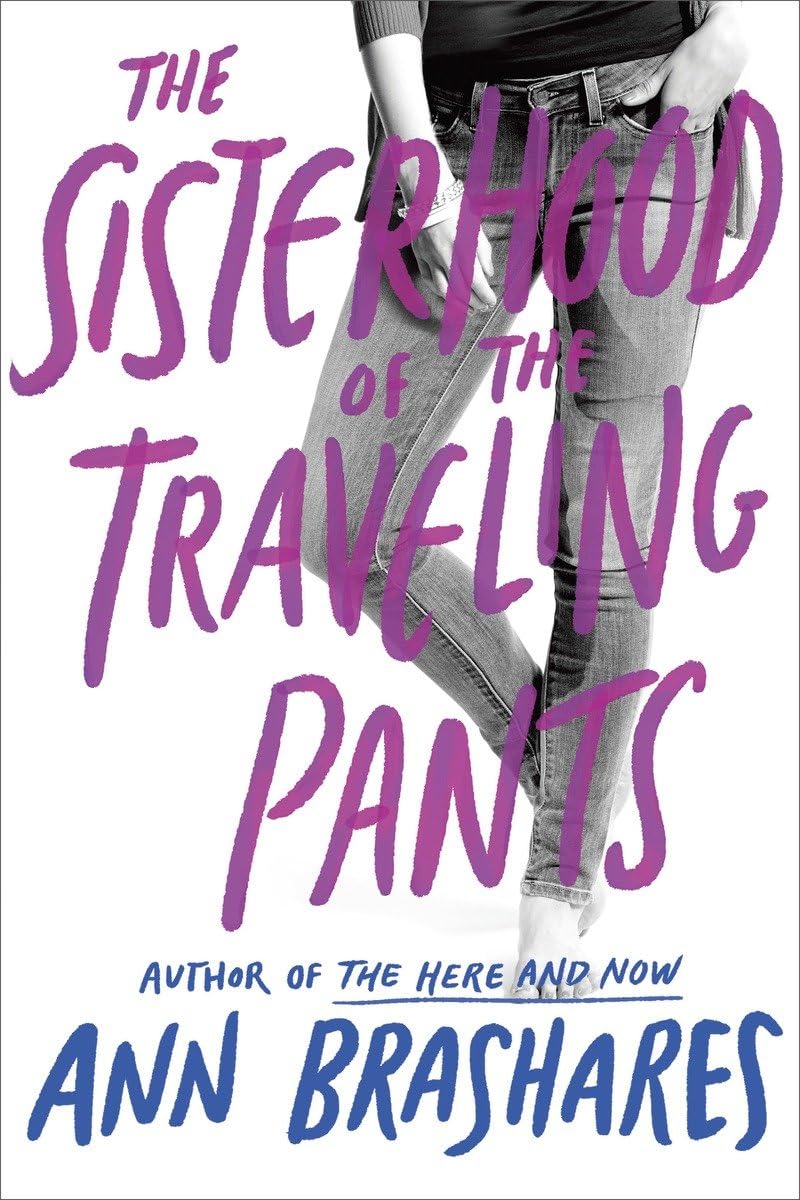

The Story in Brief
Carmen Lowell, Tibby Rollins, Lena Kaligaris, and Bridget Vreeland have been inseparable since birth, bound by their mothers' prenatal aerobics class and sixteen years of shared history in Bethesda, Maryland. On the eve of their first summer apart, they discover a pair of thrift-store jeans that impossibly fits all four of them despite their different body types—Carmen's curvy Puerto Rican frame, Tibby's slight build, Lena's willowy Greek proportions, and Bridget's athletic legs. They decide to mail the pants between them as a talisman of their friendship while Carmen visits her father in South Carolina, Tibby stays home working at Wallman's, Lena travels to Greece to visit her grandparents, and Bridget attends soccer camp in Baja California.
Ann Brashares' 2001 debut novel became an immediate bestseller, launching a five-book series and establishing her as a major voice in young adult fiction. The 2005 Warner Bros. adaptation, directed by Ken Kwapis and starring Amber Tamblyn, America Ferrera, Blake Lively, and Alexis Bledel, earned $42 million domestically and introduced the story to a wider audience. Screenwriters Delia Ephron and Elizabeth Chandler condensed the novel's rotating first-person narratives into a more conventional ensemble structure.
The story resonated with a generation of young women navigating the transition between adolescence and adulthood, becoming a touchstone for discussions about female friendship and body positivity in YA literature.
| Character | In the Book | In the The Movie |
|---|---|---|
| Carmen Lowell America Ferrera |
A passionate, quick-tempered writer whose internal monologues reveal deep insecurity about her body and her father's abandonment. | Ferrera captures Carmen's fire but the film rushes through her emotional breakdown at her father's wedding rehearsal. |
| Tibby Rollins Amber Tamblyn |
A cynical aspiring filmmaker whose documentary project and friendship with Bailey force her to confront her defensive worldview. | Tamblyn's performance is understated, but Bailey's illness and death feel compressed, reducing Tibby's transformation. |
| Lena Kaligaris Alexis Bledel |
A shy, talented artist paralyzed by self-consciousness who slowly opens up to Kostos despite family interference. | Bledel brings quiet intensity, though the film simplifies the cultural tensions between the Kaligaris and Dounas families. |
| Bridget Vreeland Blake Lively |
A reckless, grief-stricken athlete running from her mother's suicide by pursuing an inappropriate relationship with her soccer coach. | Lively's charisma shines, but the film softens Bridget's depression and the predatory nature of her relationship with Eric. |
| Bailey Graffman Jenna Boyd |
A precocious twelve-year-old with leukemia who becomes Tibby's unlikely friend and moral compass over many chapters. | Boyd is affecting in limited screen time, but her death arrives too quickly to carry the weight it does on the page. |
Key Differences
Carmen's Father Subplot Loses Its Sting
The book dedicates extensive space to Carmen's devastation when she arrives in South Carolina to find her father Albert has a new fiancée, Lydia, and two blonde stepchildren-to-be who represent everything Carmen is not. Brashares gives Carmen pages of internal rage about being erased from her father's new life, culminating in her throwing a rock through the dining room window during the rehearsal dinner.
The film includes these plot points but rushes through Carmen's emotional unraveling. America Ferrera delivers the window-smashing scene with appropriate fury, but we don't get the weeks of simmering resentment that make that explosion inevitable. The book's Carmen writes letters to her friends detailing every slight—Lydia's redecorating, Paul's condescension, Krista's appropriation of her childhood bedroom. The movie gives us montage.
Albert's apology and reconciliation also feel abbreviated on screen. In the novel, he drives to Bethesda and they have a long, painful conversation where he admits he was a coward who ran from the responsibility of raising her. The film's version is shorter and less specific about his failures as a father.
Bridget's Darkness Gets Softened
The novel explicitly connects Bridget's pursuit of Eric, her soccer coach, to her mother's suicide three years earlier. Brashares makes clear that Bridget is running from grief by throwing herself into soccer and sex, and that her relationship with Eric—while consensual—is inappropriate and leaves her emotionally devastated. After they sleep together, Bridget shuts down completely, stops playing soccer, and spends days in bed.
Blake Lively's performance captures Bridget's manic energy, but the film presents her storyline as a more conventional summer romance. The age gap between Bridget (sixteen) and Eric (college-aged coach) is present but not interrogated. The movie shows Bridget withdrawing after sex but doesn't give us the weeks of depression that follow, or Carmen's emergency trip to Baja to retrieve her.
Most significantly, the book makes Bridget's mother's mental illness a constant shadow—Bridget fears she inherited that darkness and is terrified of slowing down enough to feel it. The film mentions the suicide but doesn't weave it into Bridget's psychology the way Brashares does.
Tibby and Bailey's Friendship Gets Compressed
In the novel, Tibby's documentary project and her reluctant friendship with Bailey unfold over the entire summer. Bailey repeatedly shows up at Wallman's, inserting herself into Tibby's life despite Tibby's initial hostility. Their relationship develops through dozens of small scenes—watching movies, discussing Tibby's footage, Bailey's observations about the people Tibby films.
The movie condenses this timeline significantly. Jenna Boyd is excellent as Bailey, but their friendship feels rushed. The book gives Bailey's illness a slow reveal—Tibby notices she's tired, then learns about the leukemia, then watches Bailey's health decline over weeks. The film compresses this into what feels like days, reducing the impact of Bailey's death on Tibby's worldview.
Tibby's documentary itself is more central to the book. She films hours of footage of Wallman's employees and customers, trying to expose the "suckiness" of ordinary life. Bailey challenges this cynicism by pointing out the beauty and dignity in the people Tibby dismisses. The film includes this theme but doesn't have time to develop it fully.
Lena's Romance Loses Its Gradual Build
Lena and Kostos's relationship in the novel is a slow burn built on stolen glances, cultural misunderstandings, and Lena's crippling self-consciousness about her body. Brashares gives us Lena's internal monologue as she struggles to accept that someone could find her beautiful. The scandal when Bapi catches Kostos "spying" on Lena while she swims naked is rooted in old family grudges between the Kaligaris and Dounas clans.
Alexis Bledel and Michael Rady have chemistry, but the film simplifies their arc into a more conventional romance. The family feud is mentioned but not deeply explored—we don't get the history of Bapi and Kostos's grandfather's falling out, or the way that old resentment poisons the present. Lena's body image issues are present but less central to her character.
The book's ending, where Lena finally works up the courage to kiss Kostos at the airport, feels earned after 200 pages of her internal struggle. The movie gets there faster, which makes the moment less powerful.
The Pants Themselves Carry Less Magic
Brashares treats the pants as genuinely magical—they fit perfectly, they arrive at the right moment, they seem to know what each girl needs. The novel leans into this magical realism without explanation or irony. Each girl writes about her experiences in letters that accompany the pants, creating a shared narrative that binds them together despite the distance.
The film includes the pants and the letter-writing but treats the magic more ambiguously. Director Ken Kwapis grounds the story in realism, which makes the pants feel more like a symbolic device than an actual enchanted object. The movie also reduces the number of times the pants circulate—in the book, they make multiple rounds, with each girl wearing them several times. The film simplifies this to one rotation per girl.
Reading the novel first gives you access to the interior lives of all four girls in a way the film cannot replicate. Brashares' rotating first-person chapters let you inhabit Carmen's rage, Tibby's cynicism, Lena's anxiety, and Bridget's manic grief. The movie captures the plot but misses the psychological depth that makes these characters feel real. If you watch first, you'll get the story's skeleton—but you'll miss the heart.
That said, the film works as a gateway to the book. America Ferrera, Amber Tamblyn, Blake Lively, and Alexis Bledel create distinct, memorable versions of these characters that can enhance your reading experience. If you've already seen the movie, the novel will feel like a richer, more emotionally complex version of a story you already love. Just be prepared for Carmen's anger to hit harder, Bridget's depression to feel darker, and Bailey's death to wreck you more thoroughly on the page.
Should You Read First?
Reading the novel first gives you access to the interior lives of all four girls in a way the film cannot replicate. Brashares' rotating first-person chapters let you inhabit Carmen's rage, Tibby's cynicism, Lena's anxiety, and Bridget's manic grief. The movie captures the plot but misses the psychological depth that makes these characters feel real. If you watch first, you'll get the story's skeleton—but you'll miss the heart.
That said, the film works as a gateway to the book. America Ferrera, Amber Tamblyn, Blake Lively, and Alexis Bledel create distinct, memorable versions of these characters that can enhance your reading experience. If you've already seen the movie, the novel will feel like a richer, more emotionally complex version of a story you already love. Just be prepared for Carmen's anger to hit harder, Bridget's depression to feel darker, and Bailey's death to wreck you more thoroughly on the page.
Ann Brashares' novel wins through its commitment to interiority—the book lives inside these girls' heads in a way film cannot match. The movie is a competent, affectionate adaptation that gets the friendship right but simplifies the pain. Read the book for the full emotional experience; watch the movie to see these characters brought to life by four actresses who genuinely seem to love each other.