The Story in Brief
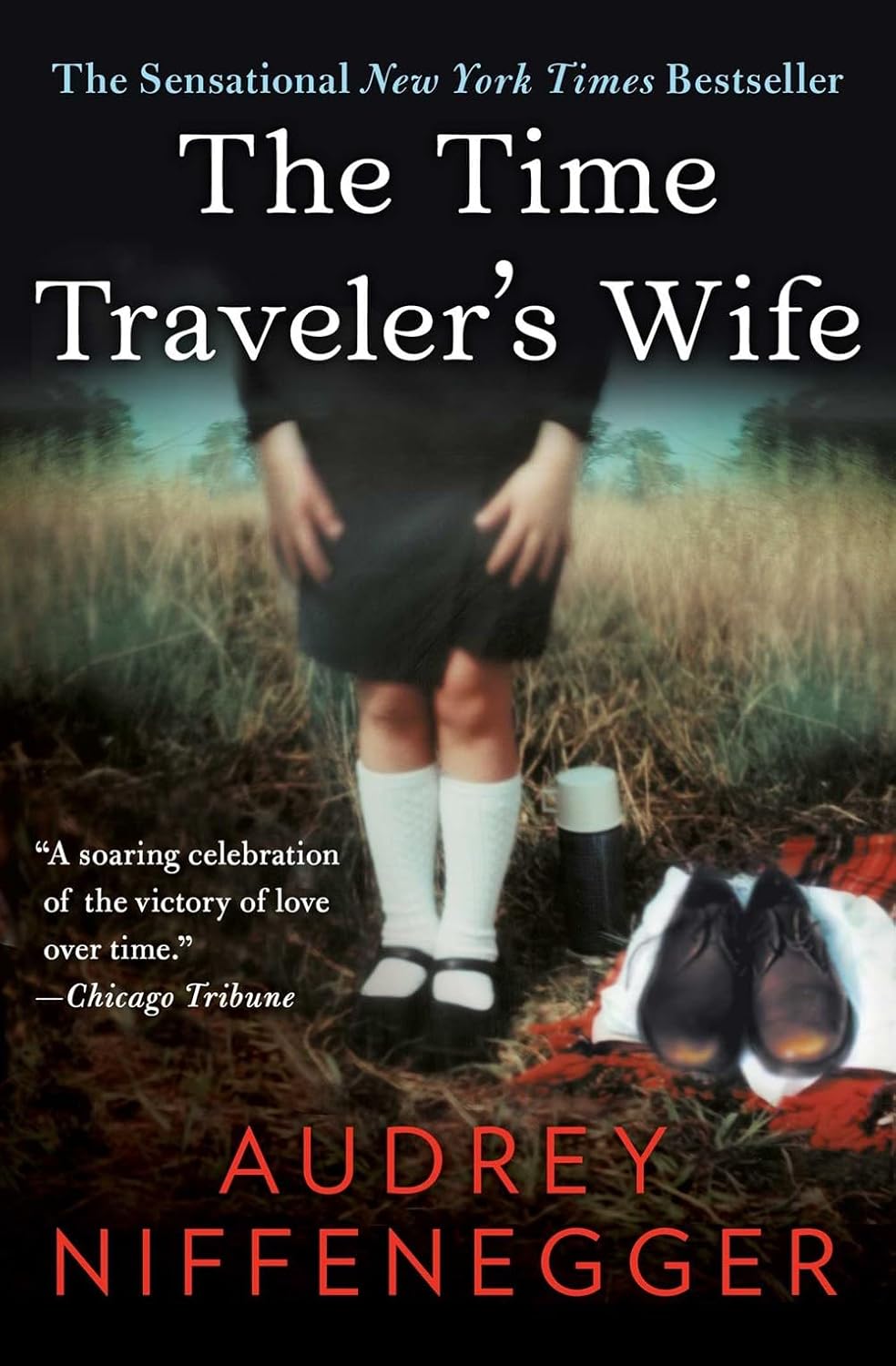
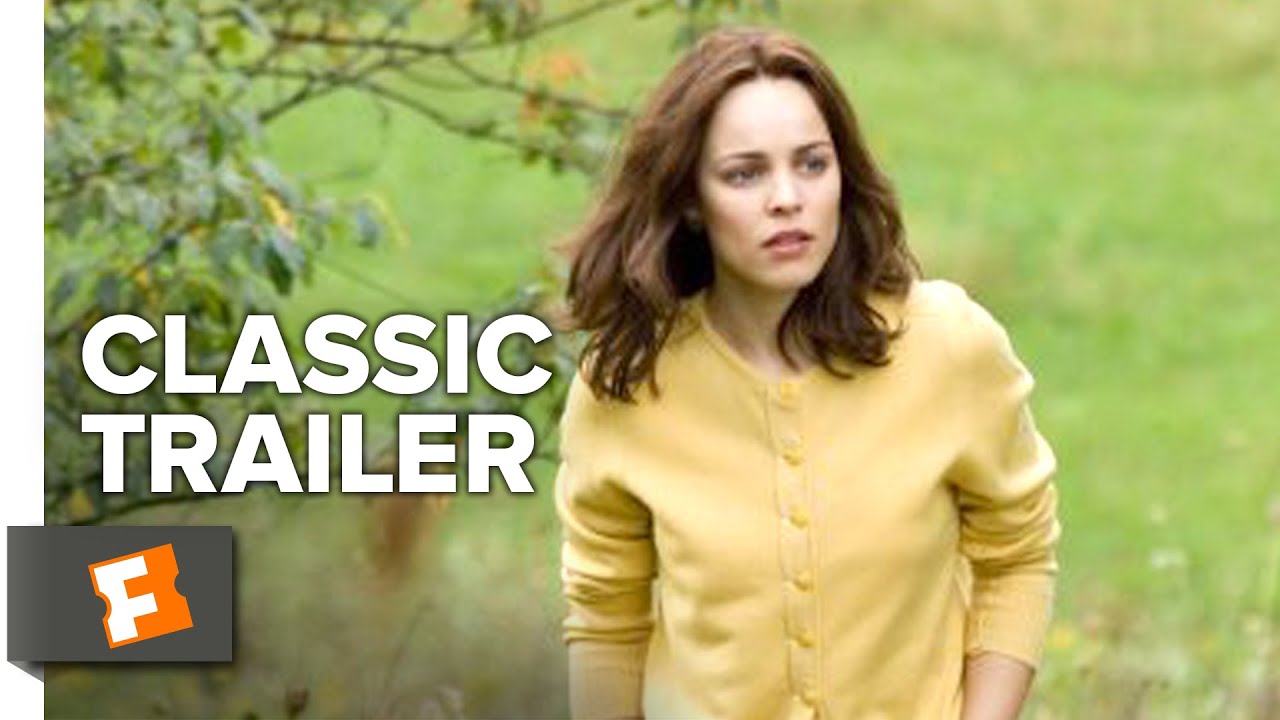
Henry DeTamble has a genetic condition that causes him to involuntarily travel through time — disappearing without warning into his own past or future, always landing naked, always having to improvise. Clare Abshire has known Henry since she was six years old, when the adult Henry began appearing in the meadow behind her family's house. When they meet in the present, she already loves him; he has no idea who she is. Audrey Niffenegger's debut novel is a love story told across fractured time, alternating Henry and Clare's perspectives as they circle each other through decades. Robert Schwentke's 2009 film, with Rachel McAdams and Eric Bana, is warm and well-intentioned and fundamentally a less interesting version of the same material.
Key Differences
The non-linear structure
Niffenegger heads every chapter with the date and the ages of both Henry and Clare — a simple device that does enormous work, constantly reminding the reader that they are seeing a moment from two different positions in each character's life. The novel's meaning accumulates through the juxtaposition of these moments: a scene of Henry and Clare as an established couple is followed by a scene of Clare meeting Henry for the first time, and the gap between them is where the novel lives. The film necessarily presents events in a more comprehensible sequence, and the architecture collapses into a conventional romance.
Clare's interiority
The novel alternates between Henry and Clare's perspectives with genuine equity — Clare's experience of loving someone who disappears without warning, of building a life around an absence that is also a presence, is given as much space as Henry's experience of the condition itself. The film centres on Henry; Clare becomes more purely the person waiting. McAdams brings considerable warmth and intelligence to the role, but she is working with less of the character than Niffenegger provides.
The ethical dimension
The novel is quietly interested in the ethics of Henry's visits to young Clare — an adult man appearing repeatedly in a child's life, forming a bond that shapes her romantic future before she can consent to it. Niffenegger raises this without resolving it, and it gives the love story a complexity that the film largely sidesteps. Clare chooses Henry knowing everything; but the novel asks whether the choice was ever fully free.
Henry's experience of time travel
The novel's Henry is pragmatic about his condition in a way that is darkly funny — he has learned to pick locks, fight, and steal clothes because he arrives naked in unpredictable places. This practical dimension gives the science fiction grounding. The film renders time travel more conventionally romantically, which loses the slightly grim daily reality Niffenegger establishes.
The ending
Both versions arrive at the same destination — Henry's fate is not a secret the film withholds — but the novel's ending carries more weight because it has spent more time establishing what is being lost. The film's final scenes are moving; the novel's are more so, because Clare's grief has been built across four hundred pages rather than compressed into two hours.
Should You Read First?
Yes — the novel's structural architecture is the experience, and no film can replicate what it feels like to read a chapter dated five years before the previous one and understand immediately how it changes everything that came before. Read first and the film becomes a warm, well-cast simplification of a richer source. The date headings alone — "Henry is 36, Clare is 26" — do more work than any film can.
Niffenegger built a novel whose emotional weight depends entirely on its non-linear structure — every scene means differently because of what surrounds it. Schwentke's film linearises the romance and loses the architecture. Read the book for the full experience. See the film for McAdams, who brings genuine feeling to a simplified version of Clare.