The Story in Brief
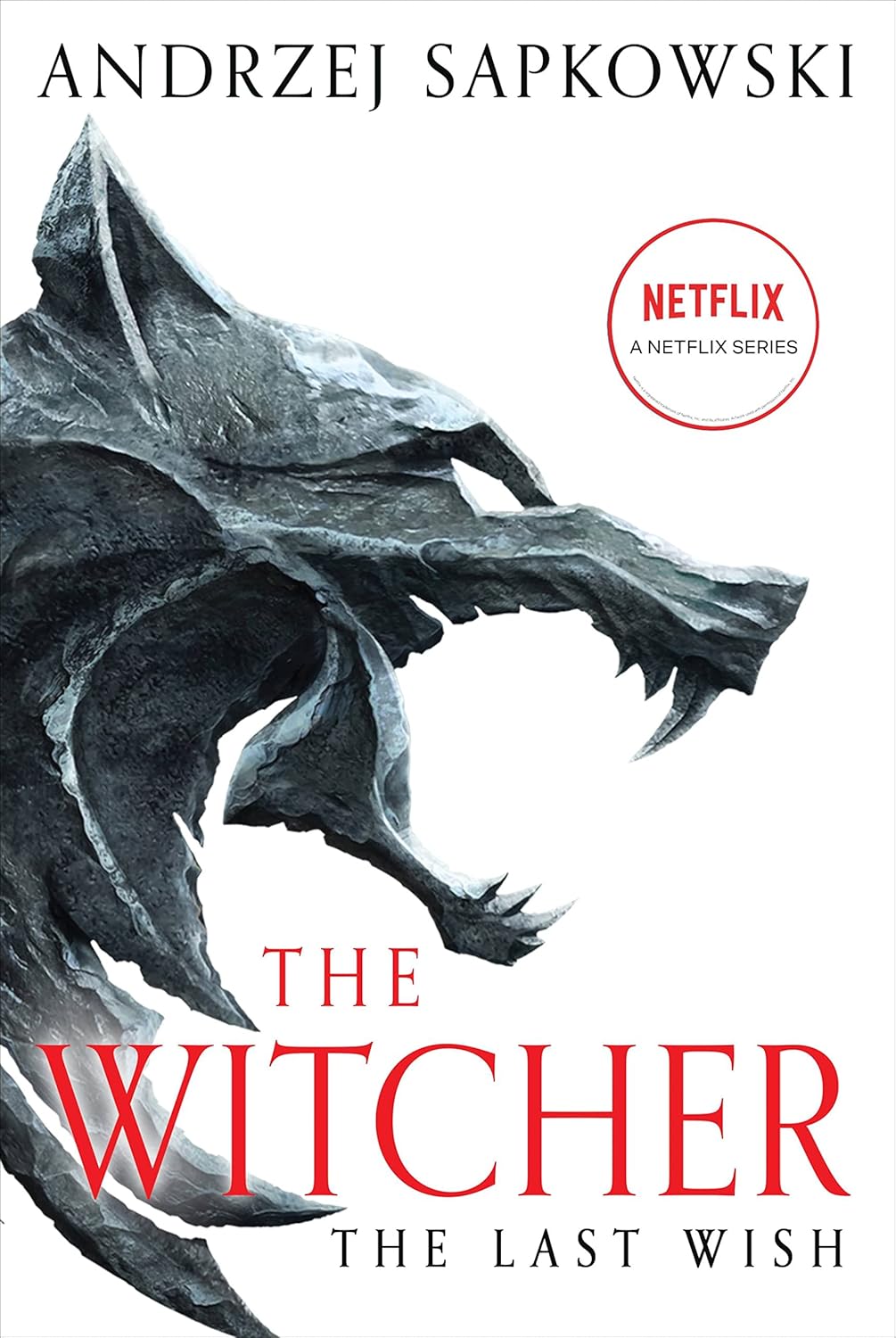
Geralt of Rivia is a Witcher — a mutant monster hunter for hire, enhanced by alchemy and training, who navigates a morally grey world where the monsters are often more sympathetic than the humans who fear them. Andrzej Sapkowski introduced Geralt in Polish short stories beginning in 1986, collected in The Last Wish (1993) and Sword of Destiny (1992), before expanding the story into a five-novel saga that follows Geralt's search for his adopted daughter Ciri, a child of destiny with powers that make her the target of empires and sorcerers alike.
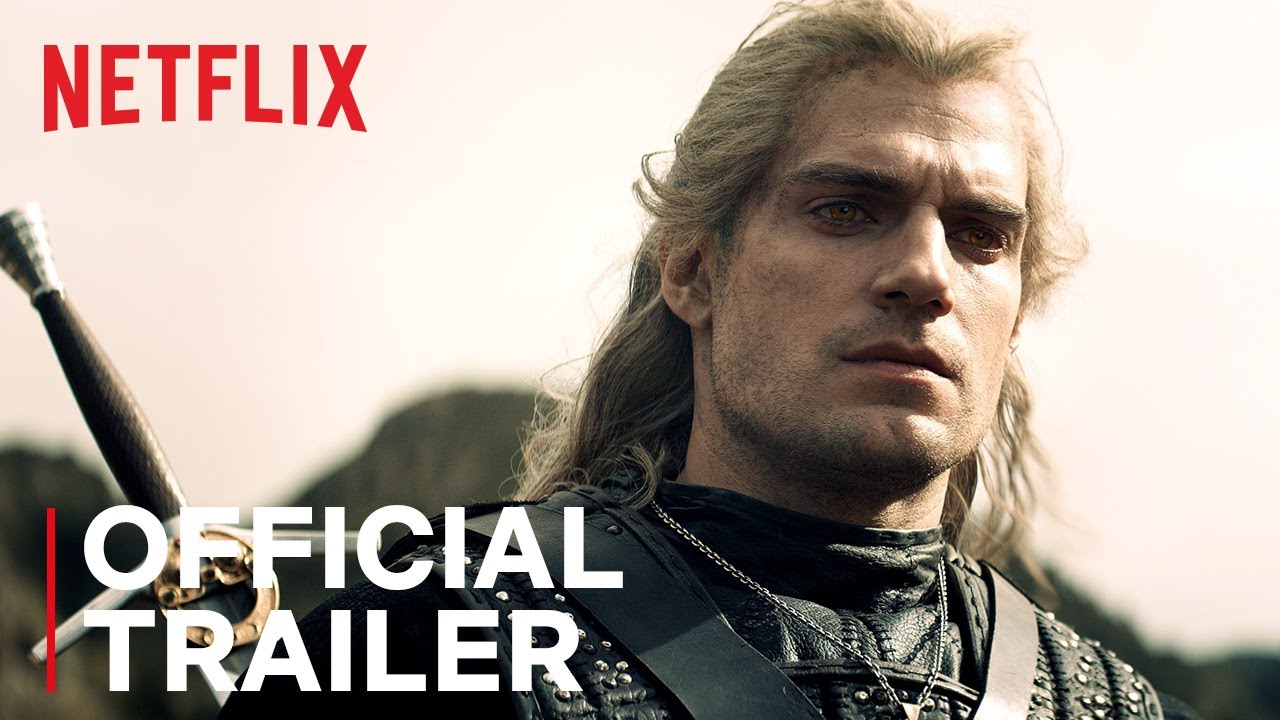
The short stories are deconstructed fairy tales — Little Red Riding Hood, Beauty and the Beast, Snow White — filtered through a lens of weary cynicism and moral complexity that is distinctively Sapkowski's. Each story presents Geralt with a contract that becomes a moral puzzle: the monster is a cursed princess, the victim hired the assassin, the hero is the real villain. Lauren Schmidt Hissrich's Netflix series, starring Henry Cavill as Geralt, Anya Chalotra as the sorceress Yennefer, and Freya Allan as Ciri, premiered in December 2019 to massive viewership and immediate renewal.
The series is ambitious, visually impressive, and structured in ways that make the books' clear storytelling considerably harder to follow on screen. It became Netflix's most-watched original series at the time and sparked renewed interest in Sapkowski's work, which had already achieved global success through CD Projekt Red's video game trilogy. The books remain the definitive version of Geralt's story — morally complex, structurally elegant, and built around a protagonist whose greatest strength is his refusal to be the hero everyone wants him to be.
| Character | In the Book | In the The Series |
|---|---|---|
| Geralt of Rivia Henry Cavill |
A Witcher who survives by refusing to take sides, speaking as little as possible, and treating monster hunting as a job rather than a calling — morally pragmatic, weary, and deliberately unheroic. | Cavill captures Geralt's deliberate silence and physical presence perfectly, though the series gradually pushes him toward more conventional heroism as the saga structure requires clearer moral alignments. |
| Yennefer of Vengerberg Anya Chalotra |
A powerful sorceress introduced as already formidable and fully formed — her hunchbacked past is mentioned but not dramatized, and her relationship with Geralt is defined by mutual respect and complicated love. | Chalotra's Yennefer gets an extensive origin story showing her transformation at Aretuza and her long arc toward power, making her more sympathetic and giving the magical world texture the books develop across multiple novels. |
| Cirilla (Ciri) Freya Allan |
A child of destiny bound to Geralt by the Law of Surprise, whose Elder Blood gives her powers that make her the target of empires — she appears late in the short stories and becomes central to the saga novels. | Allan's Ciri is introduced in the first season and given her own timeline, making her a protagonist from the start rather than the figure Geralt searches for across the early novels. |
| Jaskier (Dandelion) Joey Batey |
A bard and Geralt's closest friend, whose relentless optimism and tendency to get Geralt into trouble provide comic relief and genuine emotional grounding — loyal, vain, and more perceptive than he appears. | Batey's Jaskier is the series' breakout character, particularly after "Toss a Coin to Your Witcher" became a viral phenomenon — he captures the character's charm and the friendship's importance to Geralt's humanity. |
| Tissaia de Vries MyAnna Buring |
The rector of Aretuza who trained Yennefer, mentioned in the books but not a major presence — a figure of authority in the magical world's background. | Buring's Tissaia becomes a central character in the series, given substantial screen time and a complex relationship with Yennefer that adds emotional weight to the Aretuza sequences and the Brotherhood of Sorcerers' political maneuvering. |
Key Differences
The short story form is the essential experience
Sapkowski's best work — and the books' most essential content — is in the short story collections, not the novels. Each story is self-contained, structurally elegant, and built around a specific moral question that the fairy-tale framework raises and Geralt's pragmatism complicates. "The Lesser Evil" asks whether choosing between two evils makes you complicit in both. "A Question of Price" explores whether destiny is real or just a convenient excuse for violence. "The Last Wish" reveals that Geralt's greatest fear is not monsters but the loss of choice.
The series draws heavily on these stories but embeds them in a multi-timeline structure across three simultaneous storylines — Geralt's present, Yennefer's past, and Ciri's flight from Nilfgaard — that confuses viewers unfamiliar with the source and dilutes the clean impact of the individual stories. The books' form is the experience; the series' structure works against it. When the show adapts "The Edge of the World" or "The Last Wish," the stories lose their self-contained moral clarity because they're now puzzle pieces in a larger timeline rather than complete arguments on their own terms.
Henry Cavill's Geralt is the right casting, and his departure is the series' greatest loss
Cavill's casting was widely celebrated and the celebration was earned — he studied the books extensively, brought genuine physical commitment to the role, and captures Geralt's specific quality of deliberate silence: a man who speaks as little as possible because he has learned that most conversations lead somewhere he doesn't want to go. His "hmm" became a meme, but it's also accurate characterization. Geralt survives by saying less than he knows and doing only what he's paid for.
Cavill's performance in the Blaviken massacre sequence in the first episode establishes everything the character is — reluctant to fight, efficient when forced to, and haunted by the consequences even when he was technically right. His chemistry with Batey's Jaskier gives the series its emotional core, and his scenes with Chalotra's Yennefer capture the books' sense that these two people understand each other precisely because neither expects the other to be better than they are. His departure after Season 3 is the series' most significant loss, and the recasting with Liam Hemsworth in Season 4 represents a different challenge than the books present.
Yennefer's origin story is the series' most successful expansion
The series devotes substantial time to Yennefer of Vengerberg's origin story — her hunchbacked childhood, her sale to Aretuza, her transformation through magic and its cost (her fertility), and her long arc toward power and the realization that power doesn't fill the void she thought it would. The books mention this backstory but don't dramatize it; we meet Yennefer as she already is, formidable and fully formed, and learn her history through brief references and her own guarded comments.
Anya Chalotra's performance makes the expansion worthwhile, and the Aretuza sequences give the series' magical world a texture the books develop across multiple novels rather than upfront. Watching Yennefer's transformation — physical, magical, and emotional — makes her relationship with Geralt more comprehensible to viewers who haven't read the books, where their connection is presented as already established and complicated. This is one of the adaptation's genuine improvements on the source material, even if it contributes to the first season's timeline confusion.
The moral complexity becomes clearer moral alignments as the series progresses
Sapkowski's stories are built on a specific kind of moral ambiguity — there are rarely clear villains, the monsters are often victims, and Geralt's refusal to take sides is itself a moral position with consequences. Renfri in "The Lesser Evil" is both victim and murderer. The striga in "The Witcher" is a cursed princess. The djinn in "The Last Wish" is just granting wishes; it's not the djinn's fault that wishes are dangerous. The books' Geralt is more consistently unwilling to be heroic; he takes contracts, he gets paid, he leaves.
The series captures this in the individual episodes adapted from short stories — the Blaviken massacre, the striga, the dragon hunt — but tends toward clearer moral alignments as the saga structure takes over, requiring antagonists and alliances that the short stories deliberately avoided. Nilfgaard becomes a clear enemy. The Brotherhood of Sorcerers becomes a clear political force. Geralt becomes more willing to fight for causes rather than contracts. The series' Geralt slides toward conventional fantasy protagonist as the seasons progress, which is precisely what the books' Geralt refuses to become.
The timeline structure generated confusion the books never create
The series' first season tells Geralt's, Yennefer's, and Ciri's stories across different time periods simultaneously, with minimal signposting — a bold structural choice that generated significant viewer confusion and viral discourse about when things were happening. Geralt's timeline spans decades. Yennefer's timeline begins decades before Ciri is born. Ciri's timeline is the present. They converge in the final episode, and the convergence is meant to be revelatory, but for many viewers it was just clarifying.
The books tell these stories sequentially and clearly. The short story collections are Geralt's past. The saga novels are the present, with Ciri as the central figure and Geralt searching for her. Yennefer's backstory is referenced but not dramatized. If the timeline confusion was the main thing that frustrated you about the series, the books will be a relief; the structure is straightforward and the storytelling clear. Sapkowski trusts his readers to follow a linear narrative. The series assumes viewers will enjoy the puzzle. Many did not.
Yes — start with The Last Wish, which is the essential Witcher text and will take you a weekend. The short stories are the best of Sapkowski's work, and reading them first means encountering Geralt as he was designed — through individual moral puzzles, not saga structure. You'll understand why "The Lesser Evil" matters, why the Law of Surprise is dangerous, and why Geralt's relationship with Yennefer is built on mutual recognition of each other's damage. The series assumes you know these things or will figure them out from context; the books make them clear.
If you watch the series first, you'll spend the first season confused about timelines and wondering why everyone treats Geralt like a legend when he seems to just be a guy with a sword. If you read The Last Wish first, you'll understand that Geralt is a legend precisely because he refuses to act like one, and the series' timeline structure will make more sense because you'll recognize which stories are being told when. The series is a worthwhile companion for Cavill's performance alone; the books are the richer world.
Should You Read First?
Yes — start with The Last Wish, which is the essential Witcher text and will take you a weekend. The short stories are the best of Sapkowski's work, and reading them first means encountering Geralt as he was designed — through individual moral puzzles, not saga structure. You'll understand why "The Lesser Evil" matters, why the Law of Surprise is dangerous, and why Geralt's relationship with Yennefer is built on mutual recognition of each other's damage. The series assumes you know these things or will figure them out from context; the books make them clear.
If you watch the series first, you'll spend the first season confused about timelines and wondering why everyone treats Geralt like a legend when he seems to just be a guy with a sword. If you read The Last Wish first, you'll understand that Geralt is a legend precisely because he refuses to act like one, and the series' timeline structure will make more sense because you'll recognize which stories are being told when. The series is a worthwhile companion for Cavill's performance alone; the books are the richer world.
Sapkowski's short story collections are among the finest fantasy writing of the past thirty years — mordant, morally serious, and built around a protagonist whose refusal to be heroic is itself a form of heroism. The Netflix series is visually ambitious, well-cast in Cavill, and structured in ways that obscure the books' clarity. The books give you Geralt as he was meant to be experienced: one monster, one contract, one moral compromise at a time. Read The Last Wish first, watch the series for Cavill and Batey's chemistry, then read the saga novels to understand the world the series is trying to build. The books win because they trust you to sit with moral ambiguity; the series wants to give you a hero, and Geralt was never supposed to be one.