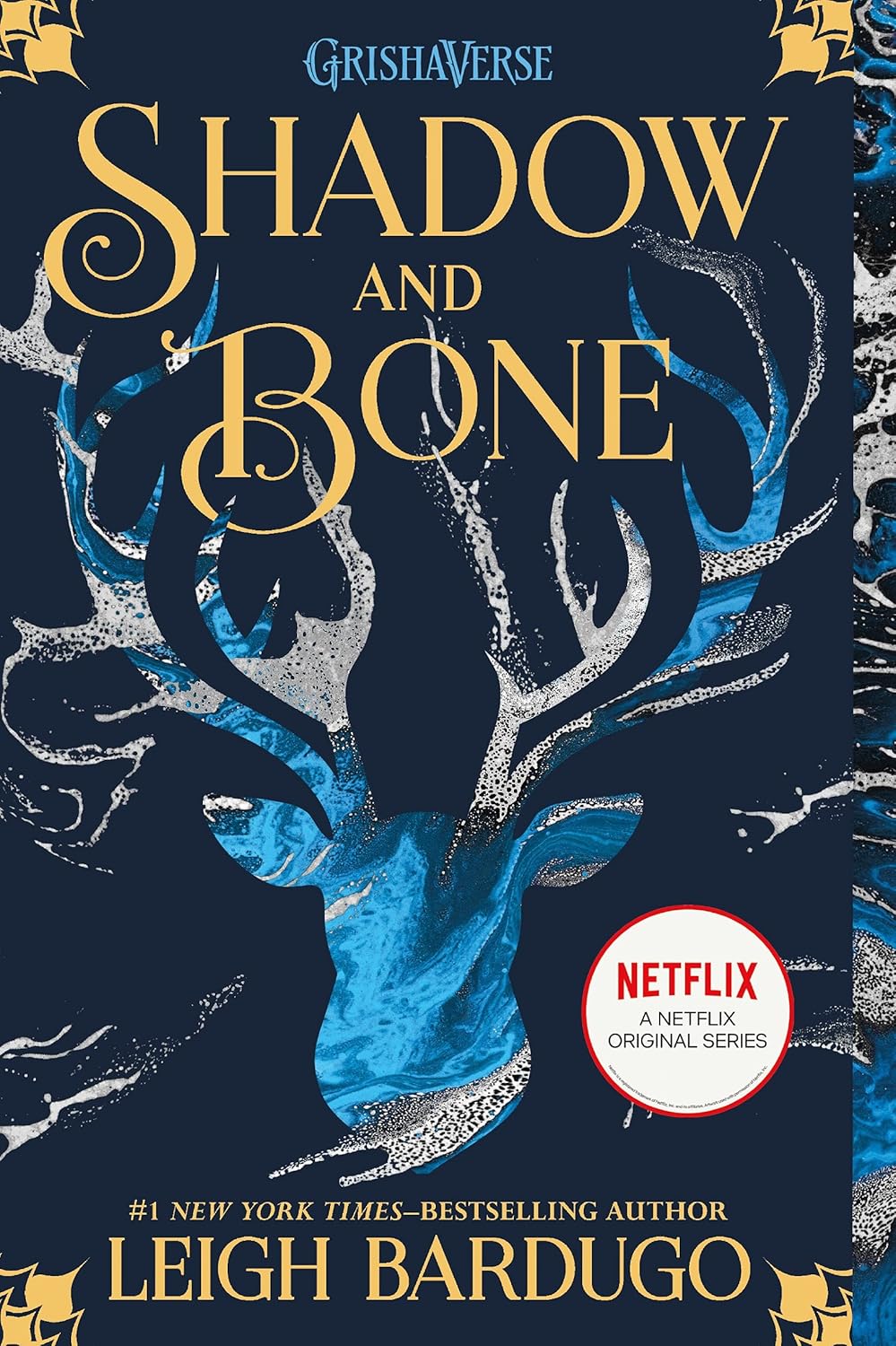

The Story in Brief
Alina Starkov is an orphan and junior cartographer in the First Army of Ravka, a fictional nation inspired by Tsarist Russia, divided by a region of perpetual darkness called the Shadow Fold. When her convoy crosses the Fold and is attacked by volcra — winged monsters that hunt in the dark — Alina discovers she is a Grisha with a rare power over light. She is taken to the Little Palace to train under General Kirigan, the Darkling, Ravka's most powerful Grisha, whose interest in her proves complicated and ultimately dangerous.
Leigh Bardugo's 2012 debut introduced the Grishaverse, which she has since expanded across six novels and multiple short story collections. Eric Heisserer's Netflix adaptation makes an audacious structural choice: combining Alina's story with characters from Bardugo's later Six of Crows duology — Kaz Brekker, Inej Ghafa, and Jesper Fahey — creating a parallel storyline that the novels don't share. The series premiered in April 2021 to strong viewership and critical praise for its world-building and ensemble cast, though it was cancelled after two seasons in 2023.
The Grishaverse has become one of YA fantasy's most commercially successful franchises, with Bardugo's books selling millions of copies worldwide and inspiring a devoted fanbase particularly passionate about the morally complex characters of Six of Crows.
| Character | In the Book | In the The Series |
|---|---|---|
| Alina Starkov Jessie Mei Li |
An orphan cartographer who discovers she's the Sun Summoner, struggling with self-doubt and her attraction to the Darkling. | Made half-Shu in the adaptation, adding racial prejudice to her outsider status; Mei Li brings warmth and vulnerability to the role. |
| The Darkling / General Kirigan Ben Barnes |
A centuries-old Shadow Summoner who manipulates Alina for his own purposes, presented as a charismatic but ultimately villainous figure. | Barnes plays him with layered ambiguity, making him genuinely menacing and genuinely compelling in equal measure. |
| Malyen Oretsev Archie Renaux |
Alina's childhood friend and tracker, whose relationship with her is complicated by her new power and status. | Renaux portrays Mal as more immediately sympathetic than some readers found the book version, particularly in early episodes. |
| Kaz Brekker Freddy Carter |
Does not appear in Shadow and Bone; protagonist of Six of Crows, set years later. | A criminal prodigy from Ketterdam, introduced as a younger version; Carter's performance is widely considered the series' standout. |
| Inej Ghafa Amita Suman |
Does not appear in Shadow and Bone; protagonist of Six of Crows. | A spy known as the Wraith, working with Kaz; Suman brings grace and moral clarity to the role. |
| Jesper Fahey Kit Young |
Does not appear in Shadow and Bone; protagonist of Six of Crows. | A sharpshooter with a gambling problem and hidden Grisha abilities; Young provides much of the series' humor and heart. |
Key Differences
The Six of Crows integration
The series introduces Kaz Brekker, Inej Ghafa, and Jesper Fahey into the same timeline as Alina's story, despite these characters appearing in books set years later.
This shouldn't work chronologically, and Heisserer adjusts the timeline to make it fit. It works spectacularly well: the Crows are the series' most beloved characters, Freddy Carter, Amita Suman, and Kit Young are perfectly cast, and their storyline — a heist to kidnap Alina — gives the series a propulsive energy that the novel's more focused narrative doesn't have. The Crows' scenes in Ketterdam, particularly Kaz's interactions with gang leader Pekka Rollins, establish a criminal underworld that feels fully realized.
Readers coming from the books will need to accept the timeline liberties; everyone else will simply enjoy the best parts of two books simultaneously.
Ben Barnes as the Darkling
Barnes plays General Kirigan with a layered ambiguity that makes him more complex than the novel's version.
The casting of Ben Barnes as the Darkling is the series' other great creative success. Barnes is genuinely menacing and genuinely compelling, and the series builds his relationship with Alina into something more nuanced than the novel manages in its first volume. His scenes with Alina in the Little Palace — particularly their conversations about power and belonging — crackle with tension that feels both romantic and dangerous. When his true intentions are revealed, Barnes makes the betrayal land with real emotional weight.
Readers who found the Darkling's arc in the trilogy satisfying may find the series' version adds new dimensions; those who didn't may find Barnes more sympathetic than they want him to be.
Alina's identity and racial prejudice
The series makes Alina half-Shu and builds her experience of racism in Ravka into a significant part of her character.
This is an addition the novel doesn't include, reflecting actress Jessie Mei Li's background, and it deepens Alina's outsider status in ways that feel thematically coherent. The series shows Ravkan soldiers mocking her appearance, calling her "rice-eater," and treating her as inherently suspicious. When she arrives at the Little Palace, her Shu heritage continues to mark her as different even among other Grisha.
Mei Li brings warmth and vulnerability to the role; the series' Alina is somewhat more immediately sympathetic than the novel's, and her journey toward self-acceptance carries additional weight.
The Grishaverse's visual world-building
The series renders Bardugo's carefully constructed world with impressive production design on a Netflix budget.
Bardugo's novel constructs the Grishaverse with considerable care — the three orders of Grisha (Corporalki, Etherealki, Materialki), the Small Science that powers their abilities, the political tension between Ravka and its neighbours Fjerda and Shu Han, the folklore of the Shadow Fold and Sankt Ilya. The series makes this world immediately visible: the Little Palace's opulent interiors, the color-coded keftas that denote Grisha orders, the Shadow Fold's swirling darkness and shrieking volcra.
First-time readers of the novel will find the world more extensively explained through Alina's perspective; series-first viewers will find it more immediately immersive.
The novel's focused intimacy
The book maintains a single, tightly focused perspective on Alina's discovery of her power that the series necessarily dilutes.
The novel's intimacy with Alina's experience — her self-doubt, her complicated friendship with Genya, her gradual understanding of what the Darkling actually wants from her — is split in the series by the parallel Crows storyline, however much better that storyline is. Bardugo's prose stays close to Alina's internal voice, tracking her transformation from self-effacing cartographer to someone who must accept her own power. The series gives us multiple perspectives, which enriches the world but reduces the intensity of Alina's personal journey.
Fans of Alina specifically may prefer the novel's undivided attention to her story.
Read the novel first for Alina's focused story and the Grishaverse's careful world-building — then read Six of Crows before or after the series, since the Crows are the series' best argument for the Grishaverse as a whole. The novel explains the Small Science and Grisha orders more thoroughly than the series has time for, and Bardugo's prose gives you Alina's internal voice in ways the adaptation can only approximate.
The series is an excellent entry point if you want to see whether the Grishaverse appeals to you before committing to multiple books. Watch first, then read to understand why Bardugo's fans are so devoted to these characters — and why the Crows, in particular, inspired Netflix to take the risk of combining two separate storylines into one ambitious adaptation.
Should You Read First?
Read the novel first for Alina's focused story and the Grishaverse's careful world-building — then read Six of Crows before or after the series, since the Crows are the series' best argument for the Grishaverse as a whole. The novel explains the Small Science and Grisha orders more thoroughly than the series has time for, and Bardugo's prose gives you Alina's internal voice in ways the adaptation can only approximate.
The series is an excellent entry point if you want to see whether the Grishaverse appeals to you before committing to multiple books. Watch first, then read to understand why Bardugo's fans are so devoted to these characters — and why the Crows, in particular, inspired Netflix to take the risk of combining two separate storylines into one ambitious adaptation.
Bardugo's debut is an assured, world-building-rich YA fantasy with one of the genre's great villains in the Darkling. The series adds the Crows — characters Bardugo herself has said she considers her best work — and the combination produces something that may be more entertaining than either source alone. The novel wins on focused intimacy and careful world-building; the series wins on ensemble cast and visual spectacle. Read first, then watch to see what happens when you give Kaz Brekker a Netflix budget and let Ben Barnes smolder as a centuries-old shadow manipulator.