The Story in Brief
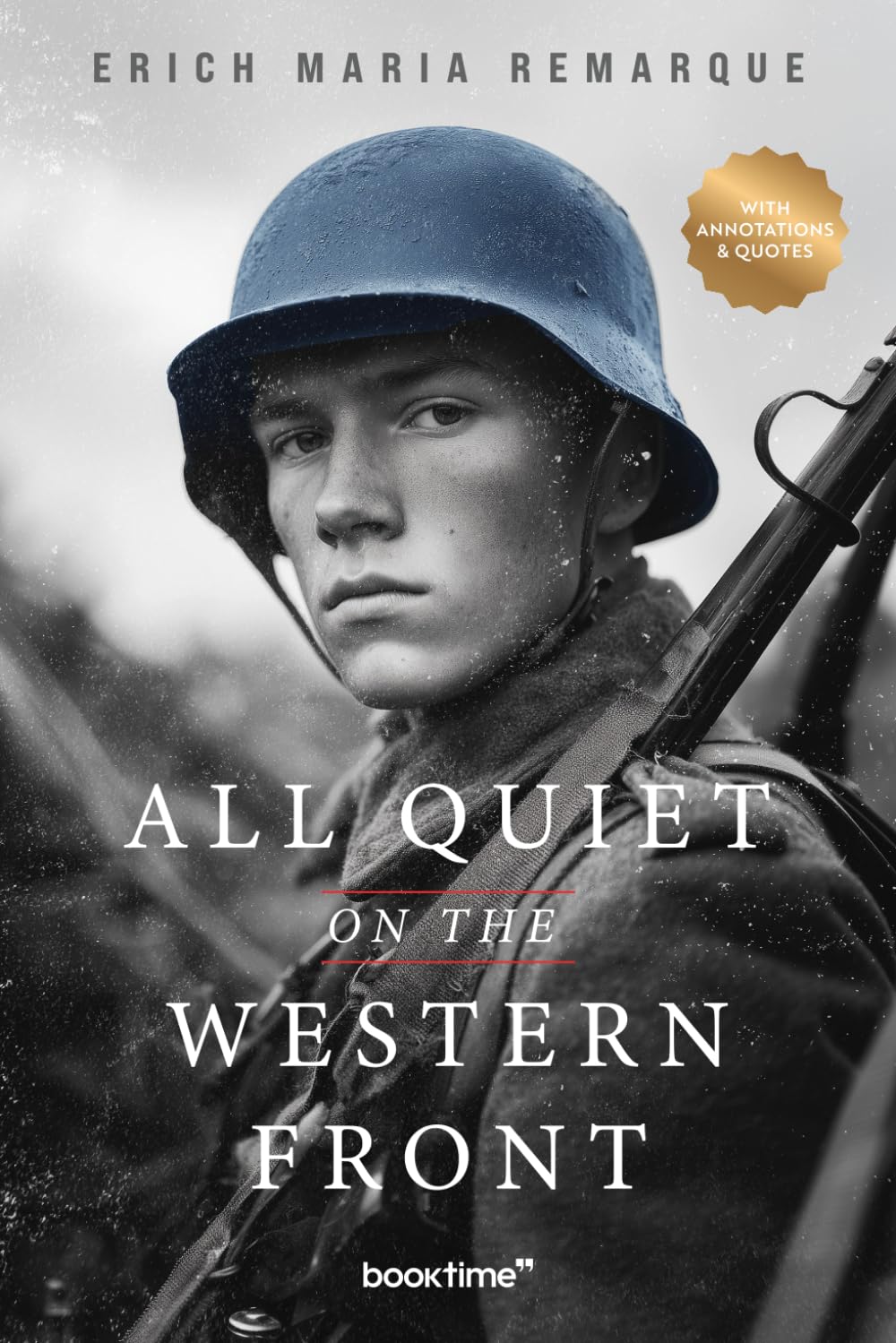
Paul Bäumer is nineteen years old when he enlists with his classmates in the German army at the outbreak of World War I, swept up by a wave of patriotic rhetoric delivered by his schoolmaster Kantorek that dissolves on contact with the Western Front. The novel follows Paul and his comrades — Stanislaus Katczinsky (Kat), Albert Kropp, Tjaden, Müller, and Franz Kemmerich — through two years of industrialised slaughter, watching them stripped of everything that defined them before the war: youth, hope, the ability to imagine a future beyond the trenches.
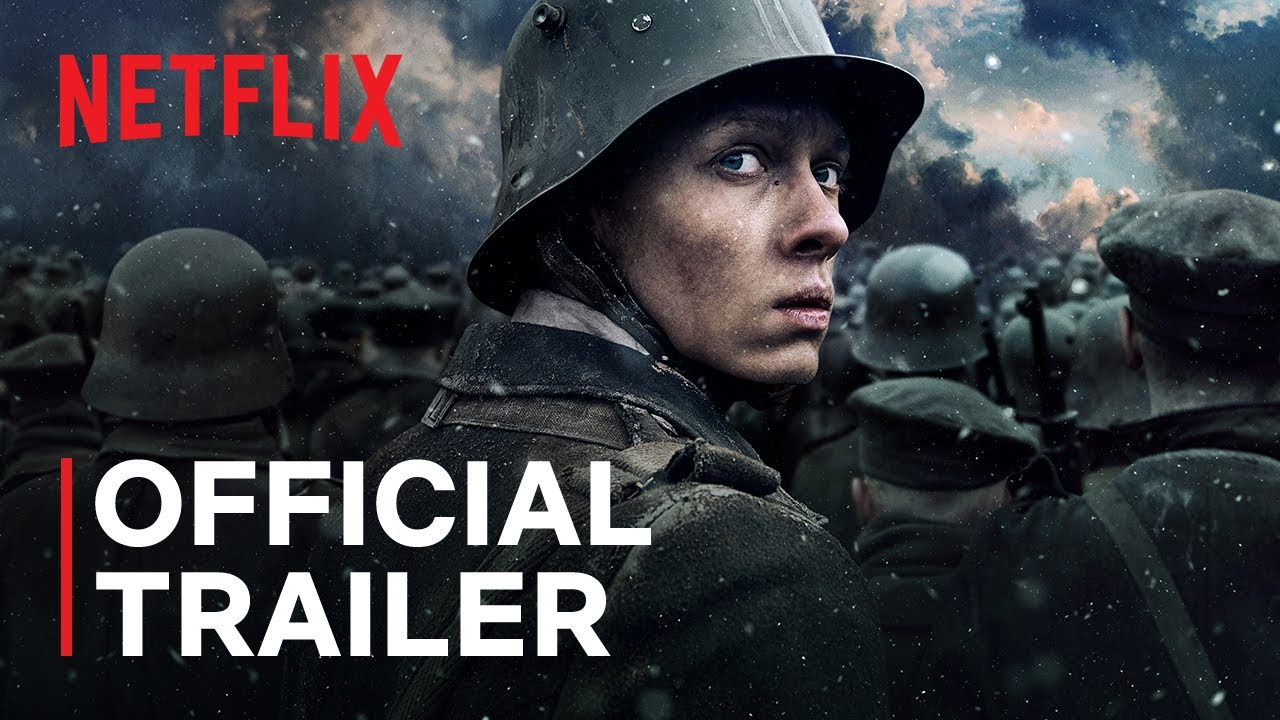
Erich Maria Remarque published the novel in 1929, drawing directly on his own service on the Western Front where he was wounded by shrapnel in 1917. It became one of the most important anti-war texts of the twentieth century, promptly banned by the Nazis in 1933 for its pacifism and unflinching portrayal of German suffering. Edward Berger's 2022 German-language Netflix adaptation — the first German-language film of the novel, which had previously only been adapted in English — won four Academy Awards including Best International Feature Film and Best Cinematography.
The film is the most formally ambitious and visually overwhelming screen version of this material ever made, and its restoration of the German perspective — German soldiers speaking German, made by Germans — corrects a ninety-year absence that had made previous adaptations feel like observations of the war rather than experiences of it.
| Character | In the Book | In the The Movie |
|---|---|---|
| Paul Bäumer Felix Kammerer |
The novel's first-person narrator, a nineteen-year-old who enlists with his classmates and gradually loses the ability to imagine life beyond the war. | Kammerer's performance is almost entirely physical — his face does the work the novel's narration does, showing Paul's dissolution without the interior voice. |
| Stanislaus Katczinsky (Kat) Albrecht Schuch |
A forty-year-old soldier and Paul's mentor, resourceful and pragmatic, who becomes a father figure to the younger men before dying from shrapnel hours before the armistice. | Schuch plays Kat with the same weary competence, and his death scene — Paul carrying him through the forest — is one of the film's most devastating sequences. |
| Albert Kropp Aaron Hilmer |
Paul's classmate and closest friend, a clear-headed thinker who survives being wounded and loses a leg. | The film reduces Kropp's role significantly, making him less central to Paul's emotional arc than he is in the novel. |
| Matthias Erzberger Daniel Brühl |
Does not appear in the novel. | Berger adds the historical figure of Erzberger, the German politician who negotiated the armistice, creating a parallel narrative that frames Paul's death against the bureaucratic negotiations ending the war. |
| General Friedrichs Devid Striesow |
Does not appear in the novel. | An invented character representing the German military leadership's refusal to accept defeat, ordering final attacks even as the armistice is being signed. |
Key Differences
The German perspective restored
All previous major screen adaptations of the novel were made in English — most notably the celebrated 1930 Lewis Milestone film — which created an inherent strangeness in watching German soldiers speak English on the Western Front.
Berger's film is made in German, by Germans, and this restoration of the novel's original perspective transforms the material: the audience is positioned with Paul rather than against him, inside German experience rather than observing it. For a novel written as a German soldier's account of what the war actually was, this seems so obviously correct it is startling that it took ninety years.
The armistice negotiation subplot
The film adds an entirely new narrative thread showing Matthias Erzberger (Daniel Brühl) negotiating the November 1918 armistice with French officials while Paul is still dying in the trenches.
This addition is the film's boldest creative choice and its most controversial: it frames the waste of Paul's death against the bureaucratic indifference of the men who could have stopped the killing hours earlier. The novel doesn't make this argument explicitly; the film makes it the climax.
Berger intercuts the armistice signing with General Friedrichs ordering a final, pointless attack in the last hours before the ceasefire takes effect — an invented character representing the military leadership's refusal to accept defeat. It works, and it goes further than Remarque went.
Paul's interiority and the first-person voice
Remarque's novel is narrated in Paul's first person — his observations, his grief, his gradual understanding that the men who sent him here had nothing useful to tell him about what he would find.
The novel's voice is its central achievement: young, increasingly hollow, punctuated by moments of beauty that survive the war's efforts to kill them. Felix Kammerer's performance captures Paul's dissolution visually — his face does the work the novel's narration does — but the prose voice is irreplaceable.
The film cannot give you the specific quality of Paul's inner life as he watches himself become someone he doesn't recognise. Passages like Paul's return home on leave, where he realises he can no longer speak to his family about what he's seen, lose their precision without the narration.
The combat sequences and visual scale
Berger's battle sequences are among the most viscerally effective depictions of World War I combat ever filmed — the mud, the tanks, the gas, the flamethrowers, the specific mechanical horror of industrial warfare rendered without any of the heroic framing that war films often struggle to avoid.
The novel describes the same horror in prose that is deliberately matter-of-fact about atrocity, which is its own formal achievement. Remarque's descriptions of rats in the trenches, of bodies used as sandbags, of men screaming for hours in no man's land are precise and unadorned.
Both versions refuse to make the killing beautiful; the film makes it overwhelming in ways that prose, which can be set down, cannot. The sound design — the constant mechanical grinding, the screaming, the silence after an artillery barrage — is as important as the visuals.
The ending and the butterfly
Remarque's ending — Paul killed on a quiet day in October 1918, weeks before the armistice, reaching toward a butterfly — is one of literature's most famous final passages: the army report noting nothing of significance has happened on the day a generation ended.
The film uses the butterfly and the armistice framing simultaneously, which makes Paul's death resonate against the very moment when it could have been prevented. Berger shows Paul reaching for the butterfly in a crater while Erzberger signs the armistice agreement, and then shows General Friedrichs ordering the final attack that kills Paul in the last hours before the ceasefire.
Both endings are devastating; the film's is more operatic, the novel's more precise. Readers will feel the difference; neither is the wrong choice.
Yes — the novel's first-person narration is the experience of being inside a young man's disillusionment in real time, and it is best encountered before the film's visual weight fills in that space. Remarque's prose voice — matter-of-fact about horror, capable of sudden beauty, increasingly hollow as Paul loses the ability to imagine a future — is the novel's irreplaceable achievement. Read first for Paul's voice, for the passages where he tries to explain the war to his family and realises he can't, for the moment when he kills a French soldier in a shell hole and spends hours with the body.
Watch Berger's film for the combat sequences and the armistice framing — which adds something Remarque didn't write and does it honourably. The film's visual scale and sound design create an overwhelming sensory experience that prose cannot replicate, and the restoration of the German perspective makes this the first adaptation that feels like it's made from inside the experience rather than observing it. Both are essential; the novel first.
Should You Read First?
Yes — the novel's first-person narration is the experience of being inside a young man's disillusionment in real time, and it is best encountered before the film's visual weight fills in that space. Remarque's prose voice — matter-of-fact about horror, capable of sudden beauty, increasingly hollow as Paul loses the ability to imagine a future — is the novel's irreplaceable achievement. Read first for Paul's voice, for the passages where he tries to explain the war to his family and realises he can't, for the moment when he kills a French soldier in a shell hole and spends hours with the body.
Watch Berger's film for the combat sequences and the armistice framing — which adds something Remarque didn't write and does it honourably. The film's visual scale and sound design create an overwhelming sensory experience that prose cannot replicate, and the restoration of the German perspective makes this the first adaptation that feels like it's made from inside the experience rather than observing it. Both are essential; the novel first.
Remarque's novel is one of the essential anti-war texts of the twentieth century — intimate, furious, and narrated by a young man watching his generation disappear. Berger's film is the most complete screen realisation of this material yet made: formally bold, authentically German, and willing to push the novel's argument further than Remarque did. The book gives you Paul's voice; the film gives you the war's scale. Read the novel for the interior collapse; watch the film for the first adaptation that finally speaks the language of the men who died there.