The Story in Brief
The Antichrist has been born and misplaced — swapped at birth with an ordinary English boy named Adam Young who has grown up in the village of Tadfield, happily unaware of his destiny to end the world. An angel named Aziraphale and a demon named Crowley, who have been on Earth since the Garden of Eden and have grown rather fond of humanity, would prefer that Armageddon not happen. The Four Horsemen of the Apocalypse are assembling. Anathema Device, a witch and descendant of Agnes Nutter, possesses a book of prophecies. Newton Pulsifer, a hapless computer engineer, joins the Witchfinder Army. Various other parties — including the angel Gabriel and the demon Beelzebub — have opinions about how the end times should proceed.
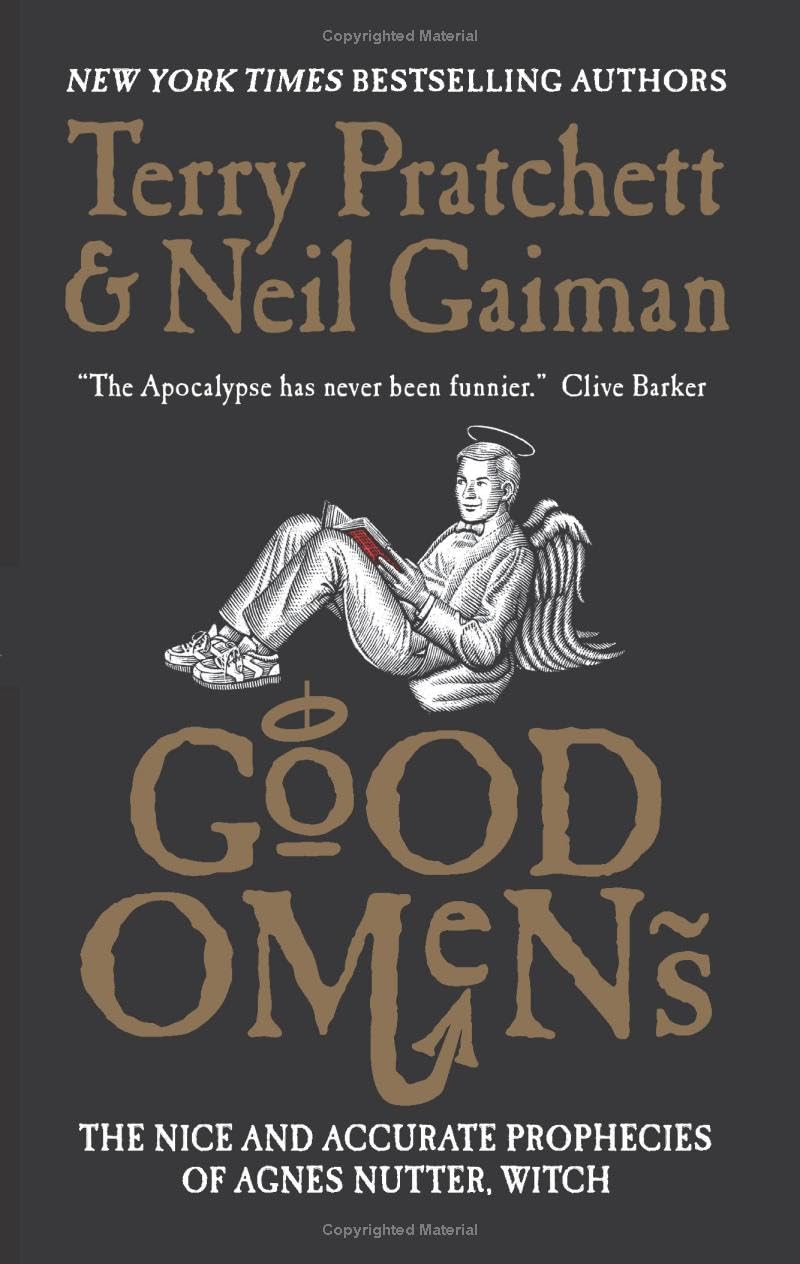
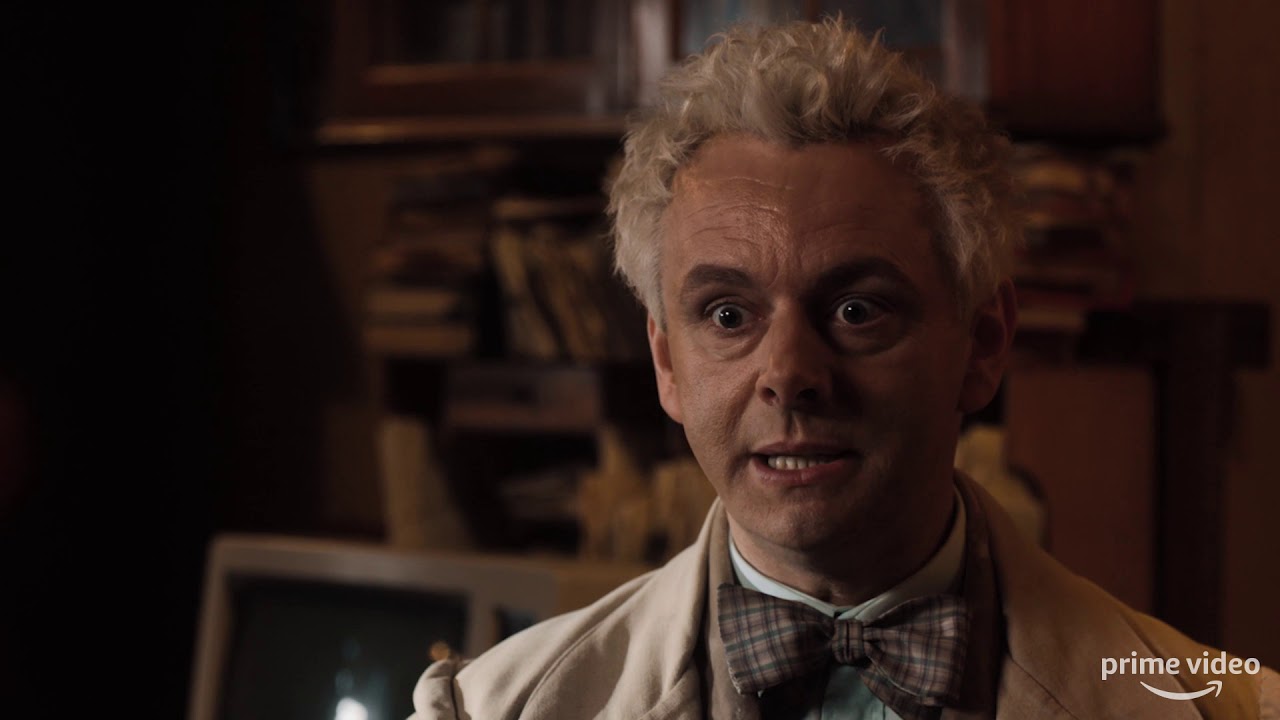
Terry Pratchett and Neil Gaiman wrote Good Omens together in 1990, trading chapters and pages by mail and phone, producing something that reads with the voice of both men simultaneously — a novel full of footnotes, digressions, theological comedy, and genuine warmth. Gaiman adapted it himself for Amazon Prime in 2019, with Michael Sheen as Aziraphale and David Tennant as Crowley, and the result is one of the most faithful and affectionate book adaptations of recent years. The series was a critical and commercial success, earning a second season in 2023 based on original material Gaiman and Pratchett had once discussed.
The novel remains a landmark of comic fantasy — a book about the end of the world that argues for kindness, free will, and the specific pleasures of being human. The series stands beside it as proof that faithful adaptation is possible when the author controls the process.
| Character | In the Book | In the The Series |
|---|---|---|
| Aziraphale Michael Sheen |
A fussy, bookish angel who runs a rare book shop in Soho and has gone native after six thousand years on Earth. | Sheen plays him as perpetually anxious, deeply kind, and utterly convincing as someone who loves humanity more than Heaven does. |
| Crowley David Tennant |
A demon who sauntered vaguely downwards during the Fall, now drives a vintage Bentley and prefers tempting humans to actual torture. | Tennant gives him rock-star sunglasses, a languid drawl, and a secret sentimentality that makes the character's affection for Aziraphale unmistakable. |
| Adam Young Sam Taylor Buck |
The Antichrist, raised as a normal boy in Tadfield, who decides at the last moment that he'd rather keep the world as it is. | Buck plays him with the right mix of childhood innocence and dawning cosmic power, though the series gives him less page time than the novel does. |
| Anathema Device Adria Arjona |
A practical witch and descendant of Agnes Nutter, armed with a book of prophecies and determined to prevent the apocalypse. | Arjona plays her as competent and exasperated, though the series streamlines her subplot with Newt Pulsifer. |
| Newton Pulsifer Jack Whitehall |
A hapless computer engineer whose presence causes technology to malfunction, recruited by the last Witchfinder. | Whitehall leans into Newt's bumbling charm, making him a comic foil to Anathema's competence. |
| Sergeant Shadwell Michael McKean |
The leader of the Witchfinder Army, which consists of himself and Newt, sustained by Aziraphale's money and his own paranoia. | McKean plays him as a Scottish crank with surprising depths, particularly in his relationship with Madame Tracy. |
Key Differences
The Footnotes Are Gone
Pratchett and Gaiman's novel is full of footnotes — sometimes longer than the text they annotate — in the Pratchett tradition of using the margin as a second stage for jokes, digressions, and observations that don't fit into the main narrative. One footnote explains the M25 motorway as a demonic sigil. Another discusses the naming conventions of Tibetan monks. A third offers a recipe for crêpes.
These footnotes are untranslatable to screen, and their absence is the most significant loss in the adaptation. The series compensates with Frances McDormand's voiceover narration as the voice of God, which captures some of the novel's omniscient tone and dry wit, but the specific pleasure of following a Pratchett-Gaiman footnote down its rabbit hole cannot be replicated. The footnotes are where the novel's dual authorship is most visible — you can feel Pratchett's satirical machinery working alongside Gaiman's mythological digressions.
Michael Sheen and David Tennant Embody the Leads
The casting is among the finest in recent fantasy television. Sheen's Aziraphale — fussy, bookish, perpetually anxious, deeply kind — and Tennant's Crowley — languid, stylish, exasperated, secretly sentimental — are exactly the characters the novel describes, given bodies and voices that expand rather than constrain them.
The chemistry between the two actors does something the novel can suggest but not quite show: the specific texture of a six-thousand-year friendship between people who are not supposed to be friends. Sheen plays Aziraphale's love of humanity as genuine rather than abstract, and Tennant gives Crowley a rock-star swagger that never quite hides his affection for the angel. Their scenes together — particularly the opening sequence in Eden and the body-swap climax — are the series' heart.
Gaiman Adapts His Own Work
Gaiman wrote the series himself and served as showrunner, which makes it less an adaptation than an author's second version of their own work — filtered through television's requirements but with full creative authority. This shows throughout: the choices about what to keep, expand, and cut feel motivated rather than commercial, and the series handles the novel's theological comedy with the same lightness the book achieves.
It also means certain additions — particularly the extended cold open showing Aziraphale and Crowley's meetings throughout history, and the expanded episode six, "The Very Last Day of the Rest of Their Lives" — feel genuinely Gaimanesque rather than interpolated. The series trusts the novel's structure and tone in ways studio-driven adaptations rarely do. Gaiman made the series as an act of love for Pratchett, who died in 2015 before production began, and that devotion is visible in every frame.
Adam and the Them Get Less Screen Time
The novel devotes considerable space to Adam Young and his gang of childhood friends — Pepper, Wensleydale, and Brian, collectively known as the Them — playing in Tadfield and gradually coming to terms with Adam's nature as the Antichrist. These sections have a Gaiman-esque quality of English childhood nostalgia mixed with cosmic horror: Adam can reshape reality with a thought, but mostly he wants to play with his dog and avoid going home for tea.
The series handles this material well but somewhat more briefly, prioritising Aziraphale and Crowley's storyline in ways that shift the novel's balance. The book gives Adam's sections equal weight with the angel-and-demon plot; the series treats them as important but secondary. This is a defensible choice — Sheen and Tennant are the draw — but readers of the novel will notice the difference. The Them's final confrontation with the Horsemen is less developed on screen than on the page.
The Pratchett Dimension Is Muted
Reading the novel, you can often feel where Pratchett ends and Gaiman begins — the satirical machinery, the specific rhythm of the jokes, the footnotes' relationship to English social comedy. Pratchett's voice is in the Witchfinder Army subplot, in the descriptions of the Four Horsemen updating their methods for the modern age, in the way the novel treats bureaucracy (both celestial and infernal) as fundamentally absurd.
The series is necessarily more purely Gaiman, since Pratchett died before it was made. This is not a criticism of the series, which Gaiman made as an act of love for his collaborator, but readers of the novel will sometimes feel the absence of Pratchett's specific comic sensibility in ways the screen version cannot replace. The novel is a duet; the series is a solo performance in memory of a partner. Both are beautiful, but they're not quite the same thing.
Yes — but this is one of the closer calls on this site. The novel's footnotes and its dual authorial voice are irreplaceable, and they're best encountered before Sheen and Tennant colonise your imagination of Aziraphale and Crowley. The book also gives Adam Young and the Them more space, and its satirical edge is sharper. Read first, then watch the series as the warmest possible companion.
That said, the series is faithful enough that watching first won't ruin the book — Gaiman's adaptation preserves the novel's structure, tone, and theological comedy with rare fidelity. If you watch first, you'll still find plenty to love in the novel's footnotes, its Pratchett-esque digressions, and its specific comic rhythms. Both versions are worth loving. This is one of the rare cases where the adaptation earns its place beside the source.
Should You Read First?
Yes — but this is one of the closer calls on this site. The novel's footnotes and its dual authorial voice are irreplaceable, and they're best encountered before Sheen and Tennant colonise your imagination of Aziraphale and Crowley. The book also gives Adam Young and the Them more space, and its satirical edge is sharper. Read first, then watch the series as the warmest possible companion.
That said, the series is faithful enough that watching first won't ruin the book — Gaiman's adaptation preserves the novel's structure, tone, and theological comedy with rare fidelity. If you watch first, you'll still find plenty to love in the novel's footnotes, its Pratchett-esque digressions, and its specific comic rhythms. Both versions are worth loving. This is one of the rare cases where the adaptation earns its place beside the source.
Pratchett and Gaiman's novel is a sustained comic masterpiece that uses the end of the world to make arguments about friendship, free will, and the specific pleasures of being human. The series is the most faithful and affectionate adaptation this site has encountered — Gaiman adapting his own work with Sheen and Tennant as its heart. The book's footnotes are irreplaceable; the series gives you something the book cannot — the sight of a six-thousand-year friendship made flesh. Both are essential. Read the book for Pratchett's footnotes and satirical machinery. Watch the series for Sheen and Tennant's chemistry and Gaiman's devotion to his late collaborator. Too close to call.