The Story in Brief
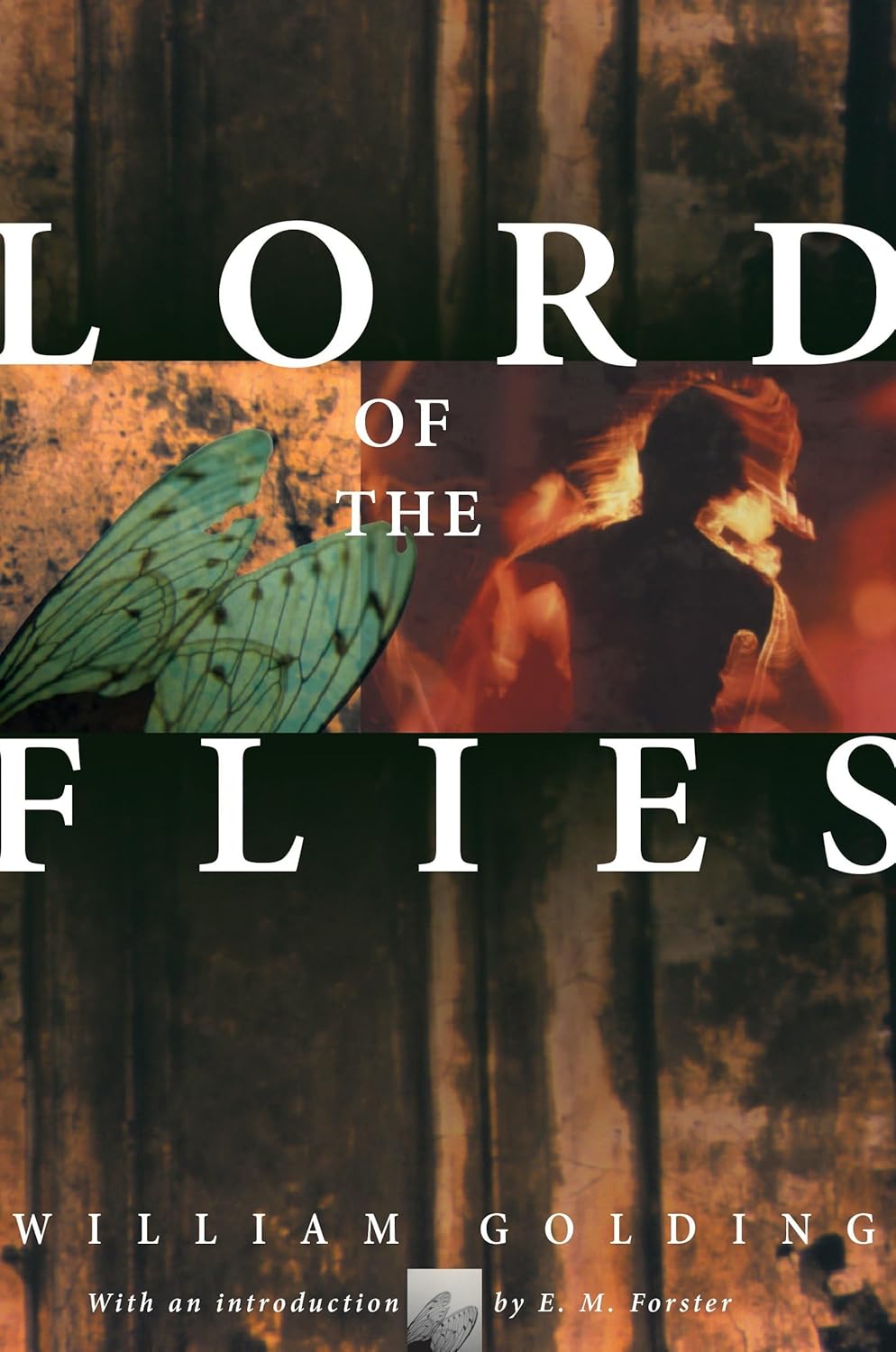
A group of British schoolboys are stranded on an uninhabited island after their plane is shot down during a wartime evacuation. They attempt to govern themselves — electing a leader, establishing rules, maintaining a signal fire. The attempt fails. Within weeks the boys have divided into a democracy and a tribe, and the tribe has killed. William Golding's 1954 novel is one of the most widely read works in the English language and one of the most argued-about: an allegory about civilisation and savagery that some readers find profound and others find reductive. Peter Brook's 1963 film, shot in black and white in Puerto Rico with non-professional child actors, is a raw, sincere adaptation. There is also a 1990 American remake that updates the premise to military cadets — it is not recommended.
Key Differences
Golding's narrative voice
Golding writes in a prose of controlled irony — the novel begins in the register of an adventure story, the kind of island narrative that boys of that era would have read with pleasure, and slowly corrupts it. The gap between the adventure-story style and the horror being described is where the novel's argument lives. Brook's film, working in images, loses this ironic layering — the horror is presented directly rather than through a style that implicates the reader in the boys' initial excitement.
The non-professional cast
Brook deliberately cast non-professional boys and used improvisation, which gives the film an authenticity that professional child actors might have smoothed over. The performances are uneven and sometimes stilted, but the rawness serves the material — these look and sound like actual children rather than actors playing children, and the violence feels correspondingly more real. This is a case where a limitation becomes an aesthetic choice.
Simon
Simon — the quiet, visionary boy who understands what the beast actually is before anyone else — is the novel's most complex character, and his death is its moral centre. Golding renders his understanding through a hallucinatory encounter with the pig's head that is one of the novel's most powerful passages. Brook approximates this but cannot render the full strangeness of Golding's prose in that sequence. Simon's death, filmed in near-darkness, is the film's most harrowing scene.
Piggy and the conch
The conch — the shell that grants its holder the right to speak — is the novel's central symbol of democratic order, and its destruction alongside Piggy's death is the allegory's most explicit moment. Both versions handle this with appropriate weight. Piggy's glasses — repeatedly stolen for their fire-making utility — are given more symbolic attention in the novel, where they stand for rational thought being appropriated by those who want only its practical benefits.
The 1990 remake
The American remake relocates the story to US military cadets and adds adult authority figures who already know about civilisation's fragility. This fundamentally misunderstands Golding's point, which depends on the boys being products of a society that believes it has transcended barbarism. The 1963 Brook film is the version to watch. The 1990 film can be safely ignored.
Should You Read First?
Yes — Golding's prose irony is the argument, and the film presents the events without the narrative frame that makes them an indictment rather than simply a story. Read first to understand what Golding is doing, then watch Brook's film as a raw, occasionally powerful illustration of the same events in a different register.
Golding wrote a novel that argues for something dark about human nature — and the argument is made through prose that implicates the reader in the boys' excitement before turning it to horror. Brook's 1963 film is a sincere, raw adaptation that presents the events without the ironic frame that makes them resonant. The novel is the essential version. Read it. See the 1963 film. Ignore the 1990 remake entirely.