
The Story in Brief
Kenna Rowan walks out of prison after five years for vehicular manslaughter — the car accident that killed her boyfriend Scotty. She returns to the small town where her four-year-old daughter Diem lives with Scotty's parents, Grace and Patrick, who have refused all contact and won't let Kenna near the child she's never been allowed to know.
The only person who shows her unexpected compassion is Ledger Ward, a local bar owner and Scotty's best friend, who's been a surrogate uncle to Diem. Ledger is torn between loyalty to Grace and Patrick and his growing feelings for Kenna, whose guilt and grief mirror his own. Hoover's novel alternates between their perspectives, building a romance grounded in shared damage.
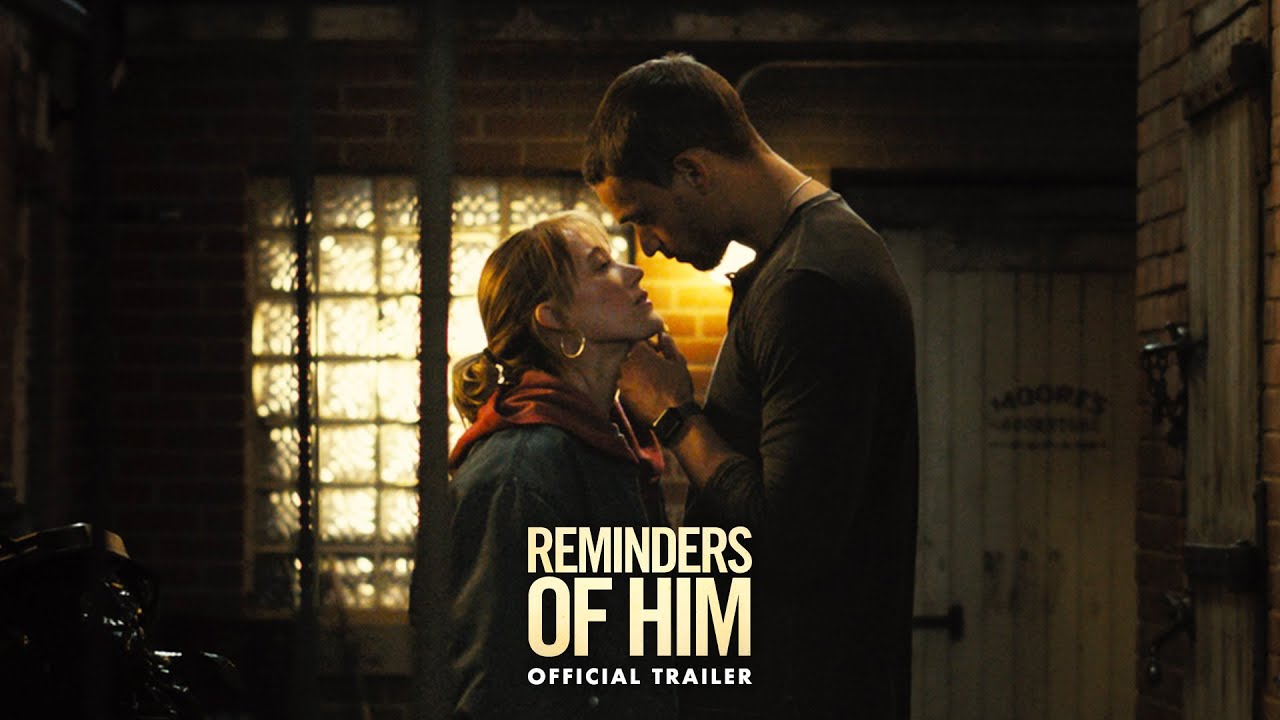
Published in January 2022, Reminders of Him became one of Hoover's most widely read novels on BookTok, praised for its emotional honesty and criticized by some for romanticizing a relationship built on secrecy. Vanessa Caswill's film adaptation, starring Maika Monroe and Tyriq Withers, premiered March 13, 2026, to respectful reviews that noted Monroe's against-type casting and the difficulty of translating Hoover's interior voice to screen.
| Character | In the Book | In the Film |
|---|---|---|
| Kenna Rowan Maika Monroe |
Emotionally volatile, openly grieving, writes letters to Scotty processing her guilt and love for Diem. | More contained and watchful; Monroe plays grief as something held tightly rather than expressed freely. |
| Ledger Ward Tyriq Withers |
Scotty's best friend, torn between loyalty to Grace and Patrick and his attraction to Kenna; his perspective reveals his own unresolved grief. | Withers captures Ledger's quiet decency and the weight of divided loyalties with understated precision. |
| Diem Isla Merrick-Lawless |
Four years old, innocent of the damage around her, rendered with specificity and care by Hoover. | Merrick-Lawless is natural and unaffected; the film handles the child casting with the same care as the novel. |
| Grace Carrie Coon |
Scotty's mother, grieving and protective, refuses to forgive Kenna or allow her access to Diem. | Coon brings depth to Grace's anger, making her more than an obstacle — she's a mother protecting what's left. |
| Scotty Seen in flashbacks |
Kenna's boyfriend, killed in the accident; his presence is felt through Kenna's letters and Ledger's memories. | Appears briefly in flashbacks; the film uses him sparingly, trusting the weight of his absence. |
Key Differences
The dual perspective is flattened into a single throughline
Hoover's novel alternates between Kenna's and Ledger's perspectives, giving the reader access to both sides of their complicated feelings simultaneously. This structure builds dramatic irony — we know what each character is thinking and feeling even when they can't say it to each other. It's what makes the romance feel earned rather than convenient.
Caswill's screenplay condenses this into a more conventional single throughline, staying closer to Kenna's point of view. We lose Ledger's interior conflict and the novel's careful balance. The film compensates with Withers' performance, but it's not the same as having direct access to his thoughts. The dual perspective is what made the book's emotional architecture work.
Maika Monroe reinterprets Kenna as contained rather than volatile
Monroe is best known for horror — It Follows, Longlegs, Watcher — and she brings a quality of watchful containment to Kenna that is interesting casting against type. Hoover's Kenna is more openly emotionally volatile, her grief and guilt expressed freely on the page.
Monroe plays her grief as something held tightly, a woman who's learned in prison not to show too much. It's a valid interpretation, but it changes the character's energy. Hoover's Kenna is raw; Monroe's is guarded. Both are damaged, but the texture is different. Fans of the book may find Monroe's Kenna harder to access, but the performance is precise and committed.
Kenna's letters to Scotty are reduced to occasional voiceover
The novel includes full letters that Kenna writes to Scotty throughout the story, processing her guilt, her love for him, and her desperate hope to know Diem. These letters are the novel's most emotionally direct material and give the reader access to Kenna's grief in a way that no amount of good acting can fully replicate.
The film uses them sparingly as voiceover, excerpting lines rather than presenting them whole. It's a practical choice — too much voiceover would feel literary and inert — but it's also a significant loss. The letters are where Hoover's prose voice is most present, and that voice is what carries the emotional weight of the CoHo formula. Without it, the film feels more mechanical.
The romance feels more formulaic without Hoover's prose voice
Hoover's CoHo formula — romance built on grief and guilt, with characters whose damage is specific and whose love is redemptive — works consistently on the page because her prose voice carries the emotional weight. She writes interior monologue that makes the reader feel the characters' longing and conflict in real time.
On screen, without that voice, the formula can feel more mechanical. Caswill's direction finds visual equivalents with some success — lingering shots of Kenna watching Diem from a distance, Ledger's hesitation before touching her — but the film can't replicate the immediacy of Hoover's first-person narration. The romance still works, but it feels more like a well-executed genre exercise than an emotional experience.
Grace is given more dimension in Carrie Coon's performance
In the novel, Grace is Scotty's grieving mother who refuses to forgive Kenna or allow her access to Diem. She's an obstacle, and while Hoover gives her understandable motivations, she's not a fully developed character — she's the force that keeps Kenna from her daughter.
Carrie Coon brings depth to Grace that makes her more than an obstacle. Her anger is specific and lived-in; she's a mother protecting what's left of her son. Coon's performance adds weight to the film's final act, when Grace must decide whether to let Kenna into Diem's life. It's one of the places where the film improves on the book.
Should You Read First?
Yes. Hoover's dual perspective and Kenna's letters are what give the novel its emotional precision. The film is a sincere and well-cast adaptation that loses some of this interiority. Without the novel's prose voice, the CoHo formula feels more mechanical, and the romance less immediate. Monroe's performance is interesting, but it's a reinterpretation rather than a direct translation.
Read first and the film becomes a moving companion piece — you'll bring the novel's interior life to the screen and appreciate what Caswill and her cast accomplish within the constraints of the medium. Watch first and you'll get a competent romance that may not fully explain why the book connected with so many readers. Fans of the book will find Monroe's Kenna interesting even where she differs from the page, and Coon's Grace is worth the price of admission.
Hoover wrote one of her most emotionally complete novels — grief and romance in careful balance, with a dual perspective that makes the reader feel both sides of the longing. Caswill made a faithful, well-cast film that loses some of the novel's interiority and retains its emotional core. The book is the richer experience. The film is worth seeing for Monroe's contained performance and Coon's dimensional Grace. Read first, then watch to see how the story translates — and where it doesn't.