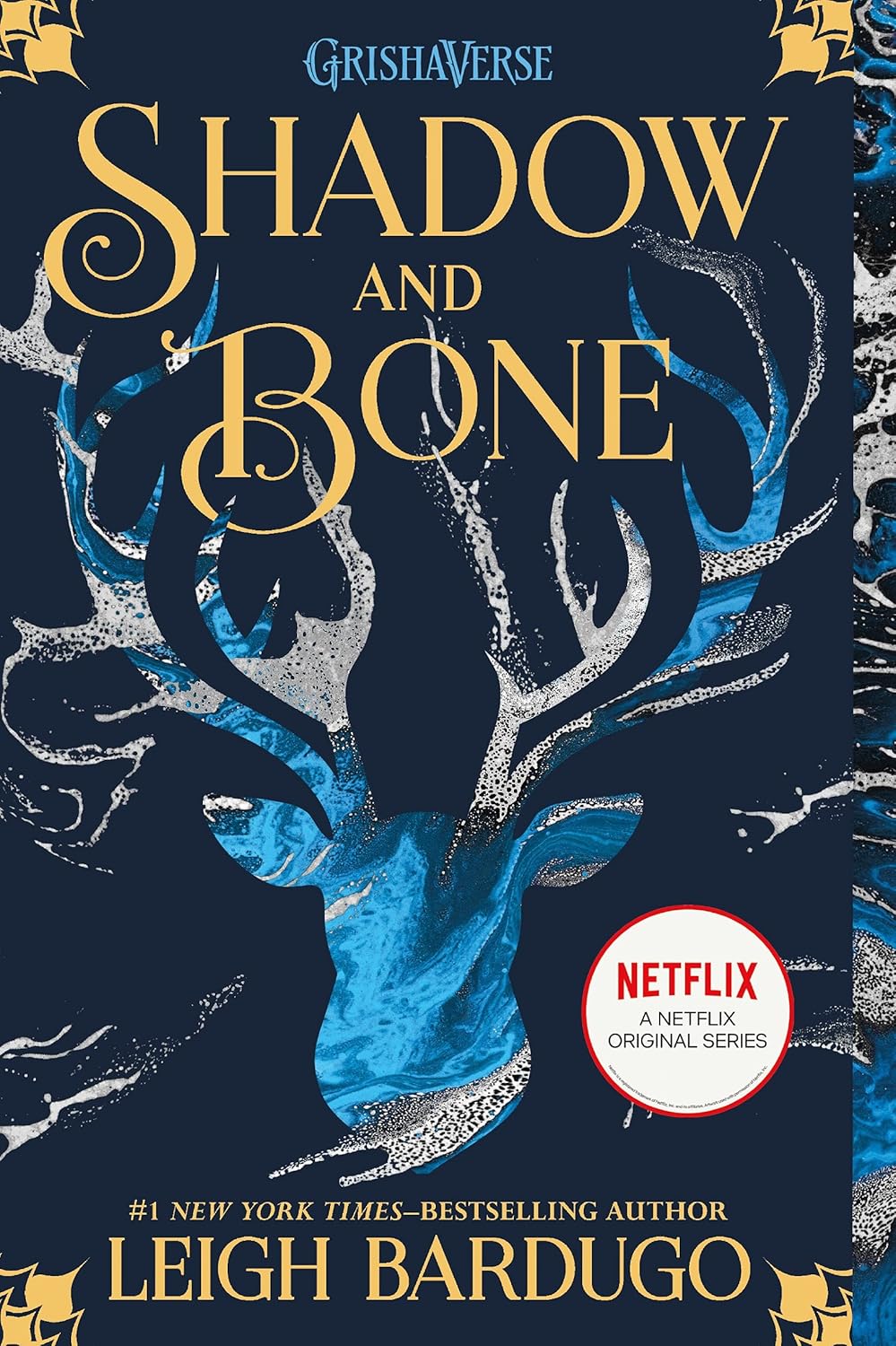

The Story in Brief
Alina Starkov is an orphan and junior cartographer in the First Army of Ravka, a fictional nation inspired by Tsarist Russia, divided by a region of perpetual darkness called the Shadow Fold. When her convoy crosses the Fold and is attacked, Alina discovers she is a Grisha — a practitioner of the Small Science — with a rare and potentially world-changing power over light. She is taken to the Little Palace to train under the Darkling, Ravka's most powerful Grisha, whose interest in her proves complicated. Leigh Bardugo's 2012 debut introduced the Grishaverse, which she has since expanded across six novels. Eric Heisserer's Netflix adaptation makes an audacious structural choice: combining Alina's story with characters from Bardugo's later, widely beloved Six of Crows duology, creating a parallel storyline that the novels don't share.
Key Differences
The Six of Crows integration
The series' boldest decision is introducing Kaz Brekker, Inej Ghafa, and Jesper Fahey — the protagonists of Bardugo's Six of Crows, set years after Shadow and Bone — into the same timeline, with a mission that intersects with Alina's story. This shouldn't work chronologically, and Heisserer adjusts the timeline to make it fit. It works spectacularly well: the Crows are the series' most beloved characters, Freddy Carter, Amita Suman, and Kit Young are perfectly cast, and their storyline gives the series a propulsive energy that the novel's more focused narrative doesn't have. Readers coming from the books will need to accept the timeline liberties; everyone else will simply enjoy the best parts of two books simultaneously.
Ben Barnes as the Darkling
The casting of Ben Barnes as General Kirigan — the Darkling — is the series' other great creative success. Barnes plays the character with a layered ambiguity that the novel's more conventionally villainous version doesn't quite achieve: he is genuinely menacing and genuinely compelling, and the series builds his relationship with Alina into something more complex than the novel manages in its first volume. Readers who found the Darkling's arc in the trilogy satisfying may find the series' version adds new dimensions; those who didn't may find Barnes more sympathetic than they want him to be.
Alina's identity
The series makes Alina half-Shu — of East Asian heritage, reflecting actress Jessie Mei Li's background — and builds her experience of racial prejudice in Ravka into a significant part of her story. This is an addition the novel doesn't include, and it deepens Alina's outsider status in ways that feel thematically coherent. Mei Li brings warmth and vulnerability to the role; the series' Alina is somewhat more immediately sympathetic than the novel's.
The Grishaverse's world-building
Bardugo's novel constructs the Grishaverse with considerable care — the Grisha orders, the Small Science, the political tension between Ravka and its neighbours, the folklore of the Shadow Fold. The series renders this world beautifully on a Netflix budget, and the production design of the Little Palace and the Fold is among the best fantasy world-building on streaming television. First-time readers of the novel will find the world more extensively explained; series-first viewers will find it more immediately visible.
The novel's focus
The book has a quality the series, in gaining the Crows, necessarily loses: a single, tightly focused perspective on Alina's discovery of her power and her complicated attraction to the Darkling. The novel's intimacy with Alina's experience — her self-doubt, her relationships with Mal and Genya, her gradual understanding of what the Darkling actually wants — is diluted in the series by the parallel Crows storyline, however much better that storyline is. Fans of Alina specifically may prefer the novel's undivided attention.
Should You Read First?
Read the novel first for Alina's focused story and the Grishaverse's careful world-building — then read Six of Crows before or after the series, since the Crows are the series' best argument for the Grishaverse as a whole. The series is an excellent entry point; the books are a richer world to live in.
Bardugo's debut is an assured, world-building-rich YA fantasy with one of the genre's great villains in the Darkling. The series adds the Crows — characters Bardugo herself has said she considers her best work — and the combination produces something that may be more entertaining than either source alone. The novel wins on focused intimacy; the series wins on ensemble. Read first, then watch to see what happens when you give Kaz Brekker a Netflix budget.