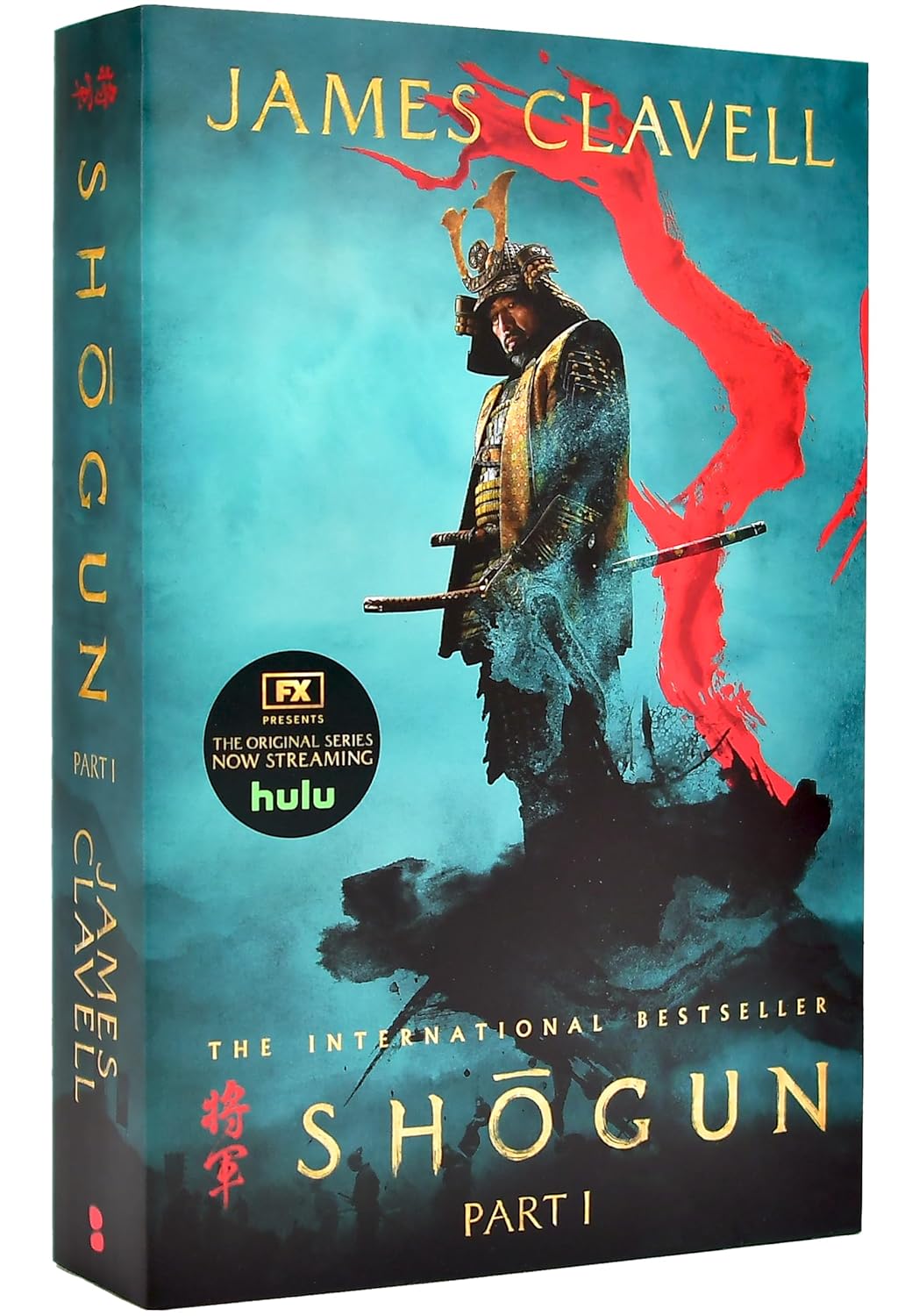
The Story in Brief
In 1600, an English navigator named John Blackthorne is the sole survivor of a Dutch expedition that has reached Japan — the first Englishman to do so. He is captured, bewildered, and eventually taken into the service of Lord Toranaga, a powerful daimyo maneuvering for dominance in the political chaos that preceded the Battle of Sekigahara.
Over the next year, Blackthorne — renamed Anjin-san, the Pilot — begins the long process of understanding a civilisation that operates by entirely different rules from his own. He is aided by Lady Toda Mariko, a Christian convert and translator who carries the burden of her father's betrayal and becomes the emotional centre of both versions of this story.
James Clavell's 1975 novel was one of the bestselling books of its decade, a thousand-page epic that introduced Western readers to feudal Japan through the eyes of a bewildered outsider. The 2024 FX series, produced by Hiroyuki Sanada and created by Rachel Kondo and Caillin Puckett, won eighteen Emmy Awards and is widely considered one of the finest historical dramas ever made for television. It is also, in one crucial respect, a better work than its source.
| Character | In the Book | In the The Series |
|---|---|---|
| John Blackthorne / Anjin-san Cosmo Jarvis |
The novel's primary perspective — an English navigator whose gradual education in Japanese culture structures the entire narrative. | Jarvis plays Blackthorne as physically capable but culturally adrift, his incomprehension used as a dramatic tool rather than the story's organizing principle. |
| Lord Yoshii Toranaga Hiroyuki Sanada |
A compelling strategist in the novel, but seen primarily through Blackthorne's limited understanding of his motives and methods. | Sanada's performance is the series' greatest achievement — a man whose stillness contains multitudes, whose every decision is three moves ahead of everyone else. |
| Lady Toda Mariko Anna Sawai |
Blackthorne's translator and love interest, significant but primarily existing in relation to the protagonist's journey. | Sawai won the Emmy for Outstanding Lead Actress, expanding Mariko into a full protagonist with her own interior life and tragic arc. |
| Kashigi Yabushige Tadanobu Asano |
A minor daimyo caught between loyalty and ambition, a secondary figure in the novel's political landscape. | Asano makes Yabushige a tragicomic figure — perpetually scheming, perpetually outmaneuvered, and ultimately sympathetic in his failures. |
| Ishido Takehiro Hira |
Toranaga's primary antagonist, the regent holding Osaka Castle and blocking Toranaga's path to power. | Hira plays Ishido as a man who believes himself the story's hero — defending the heir, maintaining order, opposing a usurper. |
Key Differences
The shift of perspective
The series gives equal weight to Toranaga, Mariko, and the Japanese characters' own perspectives rather than filtering everything through Blackthorne's viewpoint. Clavell's novel is primarily told from Blackthorne's perspective — Japan is experienced as he experiences it, strange and gradually comprehensible, filtered through a Western navigator's slow education in a civilisation he can barely begin to understand.
The series makes a decisive structural change: it includes subtitled Japanese dialogue that is not translated for the audience whenever Blackthorne is not present. This means we understand the Japanese court's politics more fully than Blackthorne does, and the series becomes a more complete portrait of the world rather than a foreigner's account of it.
This is both a departure from the source and an improvement on it — the novel's Eurocentric perspective is a product of its time, and the series corrects it without losing the experience of cultural dislocation that makes the story work.
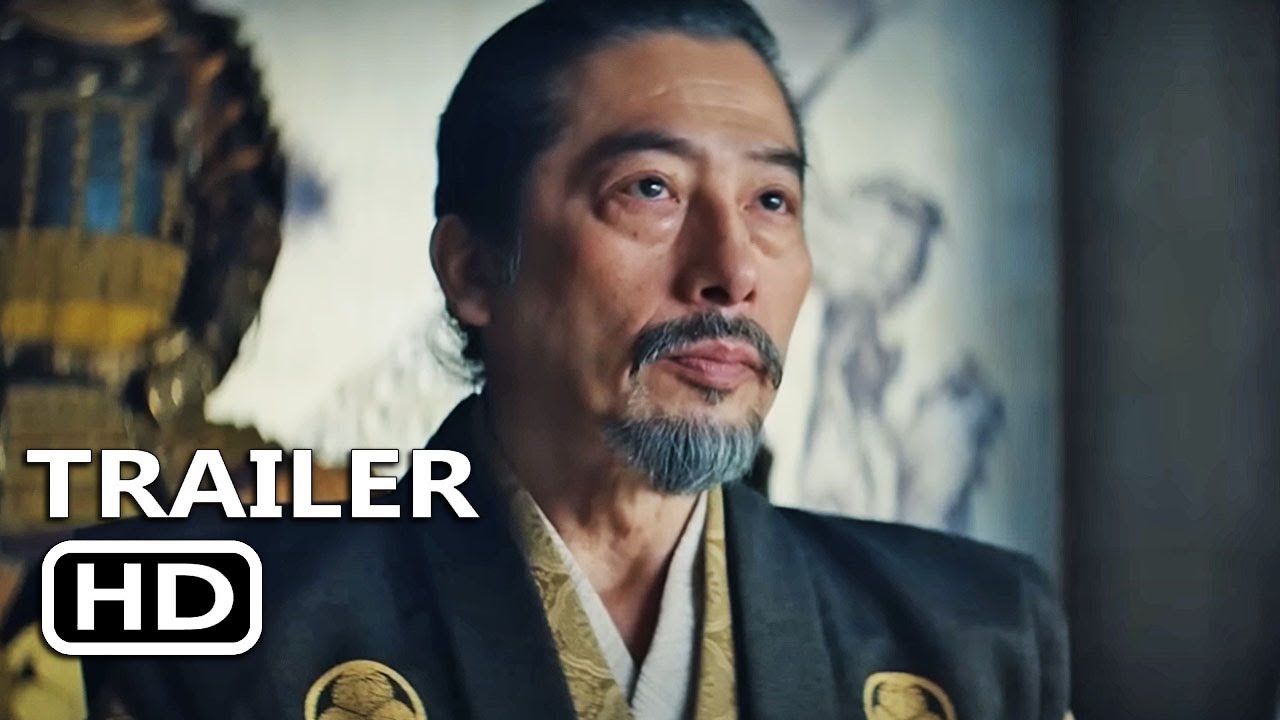
Hiroyuki Sanada as Toranaga
Sanada's Toranaga is the series' greatest achievement — one of television's finest performances of strategic intelligence. The novel's Toranaga is a compelling figure, but he remains somewhat opaque because we see him primarily through Blackthorne's limited understanding. Sanada produced the series specifically to give Japanese characters the full depth and complexity they deserved, and his performance delivers on that ambition.
His Toranaga is a man whose stillness contains multitudes, whose every decision is three moves ahead of everyone else in the room. When he feigns weakness to lure his enemies into overconfidence, when he sacrifices a piece to win the board, when he allows Mariko's death to serve his larger strategy — Sanada makes these choices legible without ever explaining them.
Lady Mariko's expanded role
Anna Sawai's Mariko becomes the series' true protagonist in a way the novel never quite allows. The novel's Mariko is significant but primarily exists in relation to Blackthorne — she is his translator, his guide, his love interest. The series expands her into a full character with her own interior life, her own arc, and her own tragic destiny.
Sawai plays Mariko with a precisely controlled grief — a woman carrying the burden of her father's betrayal, trapped between her Christian faith and her duty to Toranaga, in love with a man she cannot have. Her final act of defiance at Osaka Castle becomes the series' emotional climax, and Sawai won the Emmy for Outstanding Lead Actress in a Drama Series for a performance that made Mariko unforgettable.
The novel's scope and texture
Clavell's thousand pages give the world of feudal Japan a density that ten episodes cannot fully replicate. The novel includes extensive detail on the specific customs, hierarchies, religious conflicts, economic structures, and daily textures of a civilisation at a particular historical moment. The breadth is itself an achievement: readers emerge from it feeling they have been somewhere and learned something, not just followed a plot.
The series necessarily compresses this. It never feels thin — the production design and attention to period detail are extraordinary — but readers of the novel will notice the missing texture of the world's margins. The novel's digressions into Portuguese trade politics, the mechanics of rice taxation, the specific rituals of the tea ceremony — these give Clavell's Japan a lived-in quality that the series can only gesture toward.
The language question
The series' decision to conduct a substantial portion of its dialogue in Japanese without translation for the audience is one of the most formally daring choices in recent prestige television. It places the audience in Blackthorne's position of outsider trying to read a world through gesture and tone, which is exactly the novel's central experience.
When Toranaga and his advisors discuss strategy in Japanese while Blackthorne sits uncomprehending, when Mariko translates selectively and we see what she chooses to omit, when entire scenes unfold without subtitles — the series makes incomprehension a dramatic tool. This is a case where the adaptation found a cinematic equivalent to a literary experience that seemed untranslatable to screen.
The honest answer here is closer than usual: the series is genuinely excellent enough that watching first produces a complete and satisfying experience. You will not feel lost, and you will not feel like you're missing the "real" version. The series stands on its own as one of the best historical dramas ever made for television.
That said, read first for the novel's scope and for Blackthorne's perspective at full length — for the thousand pages of immersion in a world that the series can only compress. Watch first if you want to encounter Toranaga and Mariko as the series builds them, which may be the better version of those characters. Either order works. Both are essential.
Should You Read First?
The honest answer here is closer than usual: the series is genuinely excellent enough that watching first produces a complete and satisfying experience. You will not feel lost, and you will not feel like you're missing the "real" version. The series stands on its own as one of the best historical dramas ever made for television.
That said, read first for the novel's scope and for Blackthorne's perspective at full length — for the thousand pages of immersion in a world that the series can only compress. Watch first if you want to encounter Toranaga and Mariko as the series builds them, which may be the better version of those characters. Either order works. Both are essential.
Clavell's novel is an epic immersion in feudal Japan — a thousand pages of world-building and cultural collision that earns its scale. The 2024 series is the best screen version of this material by an enormous margin, and in giving its Japanese characters full interiority and equal dramatic weight, it becomes something arguably more complete than its source. The book wins on scope and texture. The series wins on perspective and performance. Read first; watch to see a rare adaptation that improves on its source's most important failure.