The Story in Brief
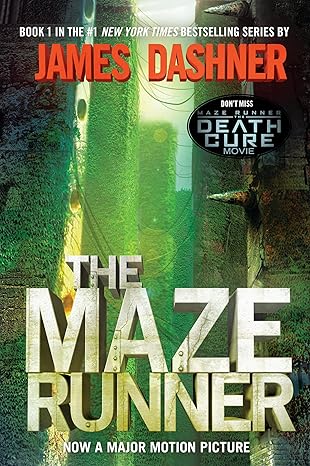
Thomas wakes up in a metal box with no memory of who he is, rising into a clearing called the Glade — a self-sustaining community of boys who arrived the same way, surrounded by a massive, ever-shifting maze that closes its doors every night and is patrolled by mechanical creatures called Grievers. The Gladers have established their own society, their own rules, their own language. Thomas immediately wants to be a Maze Runner — one of the boys who maps the maze each day before the walls close. Then a girl arrives, the first ever, with a message: everything is about to change. James Dashner's 2009 novel is a propulsive, inventively constructed mystery. Wes Ball's 2014 film is one of the better YA adaptations of the post-Hunger Games era — lean, genuinely tense, and smart enough to trust its premise.
Key Differences
The immersive ignorance
Dashner's central formal achievement is that Thomas's ignorance is total and genuine — he knows nothing about the Glade, the maze, or his own past, and neither do we. The novel builds the Gladers' world through Thomas's learning of it, and this slow accumulation of rules, hierarchy, slang, and history gives the Glade a texture that feels earned. The film necessarily shows us the Glade as a visual space from the beginning, which gives us information Thomas doesn't yet have and slightly undermines the mystery of arriving somewhere that has its own deep history.
The Glade's society
One of the novel's genuine pleasures is the detail of the society the boys have built — the jobs, the rules, the punishments, the specific culture that has developed among boys who arrived with no memories but still managed to create something functional and surprisingly ordered. The film gives this social texture less room than it deserves, prioritising the maze and the action over the anthropology of the Glade. Readers will know the world more fully; viewers will find it more immediately exciting.
Dylan O'Brien as Thomas
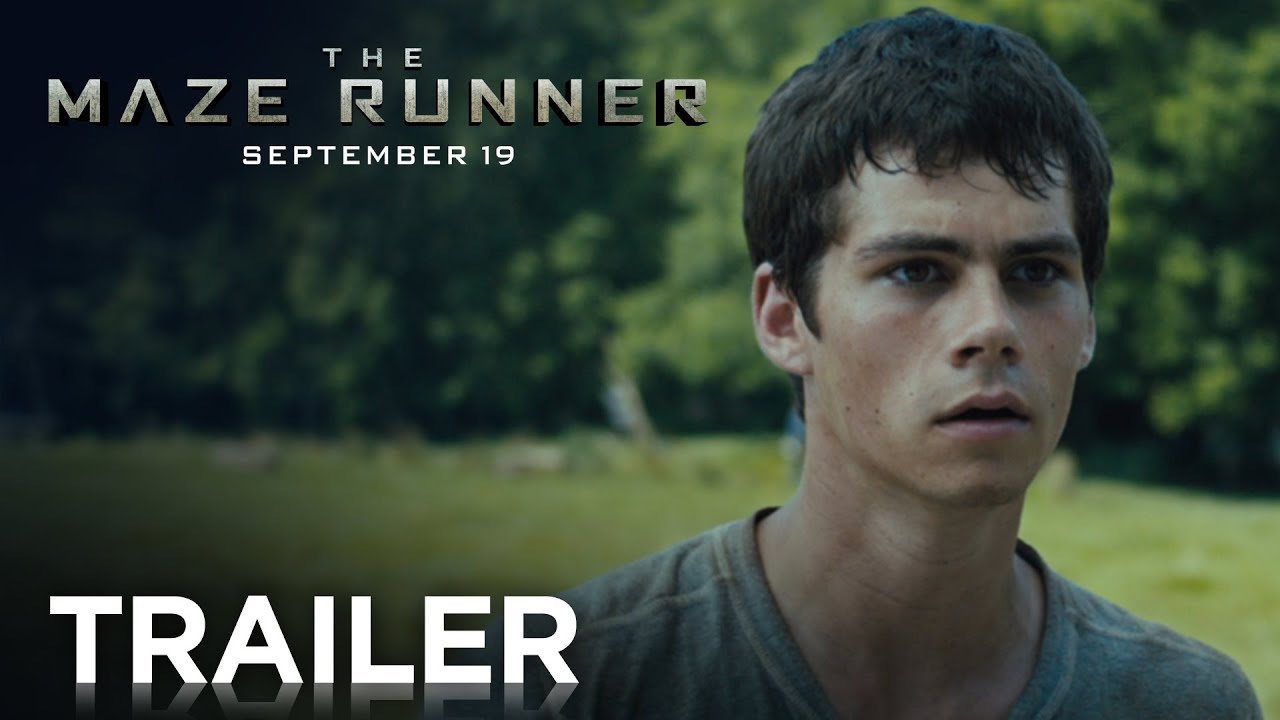
O'Brien is excellent casting — he has a quality of determined curiosity that suits Thomas perfectly, and he carries the physical demands of the runner sequences with convincing commitment. The film's Thomas is somewhat more conventionally heroic than the novel's, whose internal monologue includes more doubt and more frustration. O'Brien makes Thomas immediately likeable; Dashner makes him more interesting by making him occasionally wrong.
Teresa's role
Kaya Scodelario plays Teresa with what the film allows her, which is less than the novel provides. Teresa's telepathic connection with Thomas — present in the book — is dropped from the film, which simplifies their relationship into something more conventionally dramatic. The telepathy is one of the novel's stranger elements and its removal makes the film more grounded and Teresa less distinctive. Novel readers will notice her absence from the story's stranger dimensions.
The ending
The film's ending is somewhat more action-forward than the novel's equivalent, compressing the escape sequence and its aftermath into a more kinetic climax. Both versions set up the sequel effectively, but the novel's ending carries more of the moral weight of what the characters have lost to get out. The film moves faster and lingers less — which is often the right call for YA adaptation, and occasionally costs the story something.
Should You Read First?
Yes — the novel's slow immersion in the Glade's world is the experience that the film, necessarily, compresses. Read first to arrive in the Glade the way Thomas does, knowing nothing, learning everything gradually. The film is a confident, well-made adaptation that works perfectly well as a standalone, but the book gives you more of the world you're arriving in.
Dashner builds his mystery through genuine ignorance — Thomas's and ours — and the slow revelation of the Glade's society gives the novel a texture the film can only gesture at. Ball's adaptation is lean, tense, and better than most YA films of its era, with O'Brien as exactly the right Thomas. The book is the fuller experience; the film is the more immediately exciting one. Read first.